


Beyond sarcopenia: Characterization and integration of skeletal muscle quantity and radiodensity in a curable breast cancer population
- PMID: 29139618
- PMCID: PMC6414810
- DOI: 10.1111/tbj.12952
Beyond sarcopenia: Characterization and integration of skeletal muscle quantity and radiodensity in a curable breast cancer population
Abstract
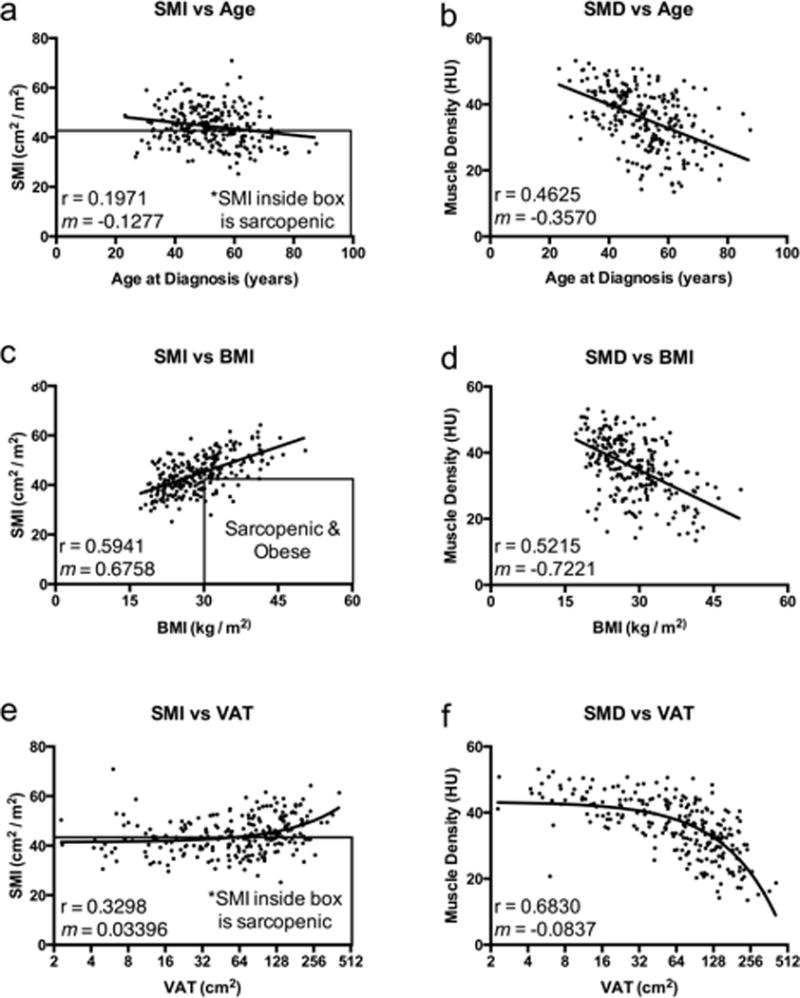
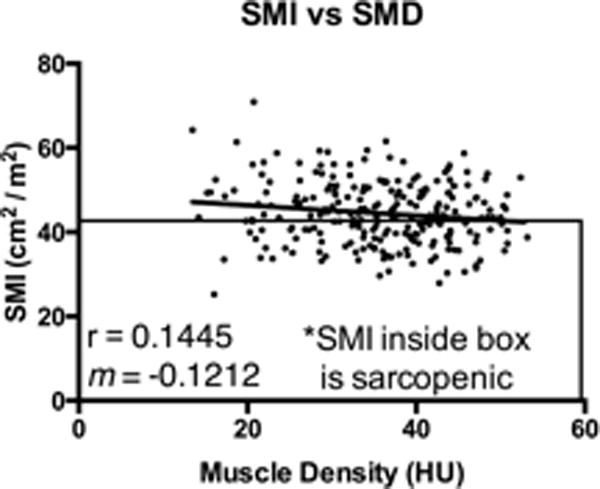
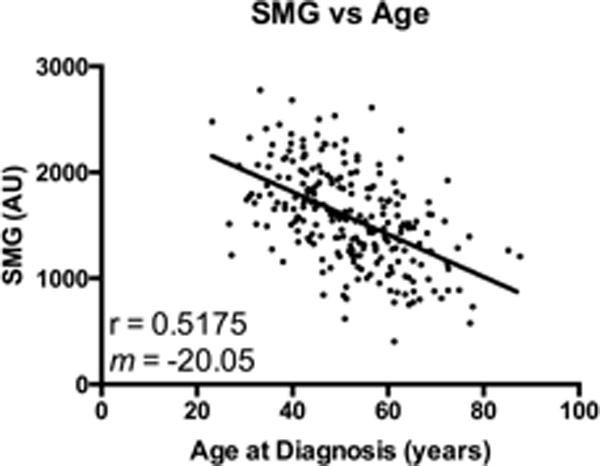
Skeletal muscle loss, commonly known as sarcopenia, is highly prevalent and prognostic of adverse outcomes in oncology. However, there is limited information on adults with early breast cancer and examination of other skeletal muscle indices, despite the potential prognostic importance. This study characterizes and examines age-related changes in body composition of adults with early breast cancer and describes the creation of a novel integrated muscle measure. Female patients diagnosed with stage I-III breast cancer with abdominal computerized tomography (CT) scans within 12 weeks from diagnosis were identified from local tumor registry (N = 241). Skeletal muscle index (muscle area per height [cm2 /m2 ]), skeletal muscle density, and subcutaneous and visceral adipose tissue areas, were determined from CT L3 lumbar segments. We calculated a novel integrated skeletal measure, skeletal muscle gauge, which combines skeletal muscle index and density (SMI × SMD). 241 patients were identified with available CT imaging. Median age 52 years and range of 23-87. Skeletal muscle index and density significantly decreased with age. Using literature based cut-points, older adults (≥65 years) had significantly higher proportions of sarcopenia (63 vs 28%) and myosteatosis (90 vs 11%) compared to younger adults (<50 years). Body mass index was positively correlated with skeletal muscle index and negatively correlated with muscle density. Skeletal muscle gauge correlated better with increasing age (ρ = 0.52) than with either skeletal muscle index (ρ = 0.20) or density (ρ = 0.46). Wide variations and age-related changes in body composition metrics were found using routinely obtained abdominal CT imaging. Skeletal muscle index and density provide independent, complementary information, and the product of the two metrics, skeletal muscle gauge, requires further research to explore its impact on outcomes in women with curable breast cancer.
Keywords: aging; breast cancer; geriatric oncology; sarcopenia; skeletal muscle index.
© 2017 Wiley Periodicals, Inc.
Figures
References
-
- Siegel RL, Miller KD, Jemal A. Cancer statistics, 2016. CA Cancer J Clin. 2016;66(1):7–30. - PubMed
-
- Wildiers H, Kunkler I, Biganzoli L, Fracheboud J, Vlastos G, Bernard-Marty C, et al. Management of breast cancer in elderly individuals: recommendations of the International Society of Geriatric Oncology. Lancet Oncol. 2007;8(12):1101–15. - PubMed
-
- Prado CM, Baracos VE, McCargar LJ, Reiman T, Mourtzakis M, Tonkin K, et al. Sarcopenia as a determinant of chemotherapy toxicity and time to tumor progression in metastatic breast cancer patients receiving capecitabine treatment. Clin Cancer Res. 2009;15(8):2920–6. - PubMed
Publication types
MeSH terms
Grants and funding
LinkOut - more resources
Full Text Sources
Other Literature Sources
Medical
