Bionomics and Spatial Distribution of Triatomine Vectors of Trypanosoma cruzi in Texas and Other Southern States, USA
- PMID: 29141765
- PMCID: PMC5928729
- DOI: 10.4269/ajtmh.17-0526
Bionomics and Spatial Distribution of Triatomine Vectors of Trypanosoma cruzi in Texas and Other Southern States, USA
Abstract
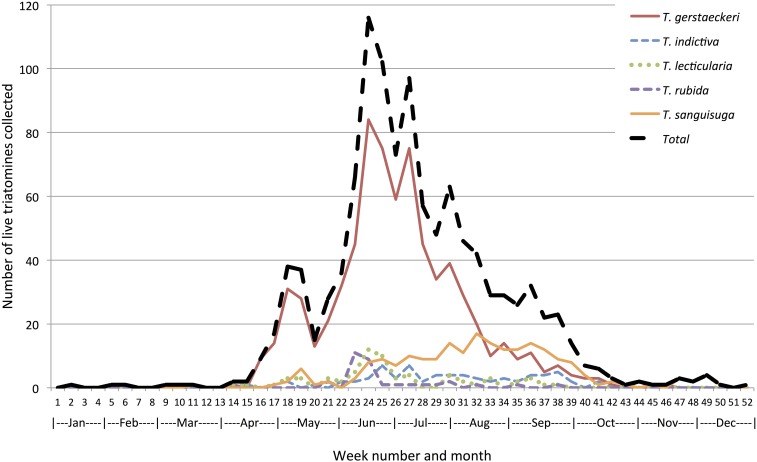
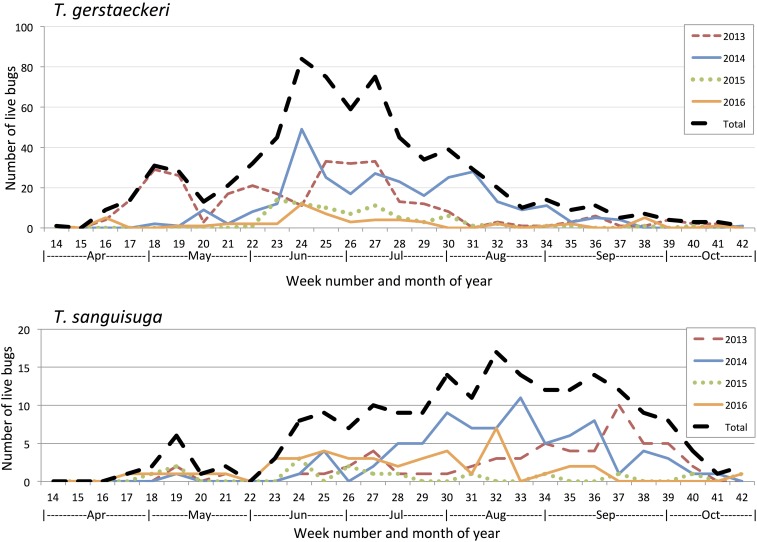
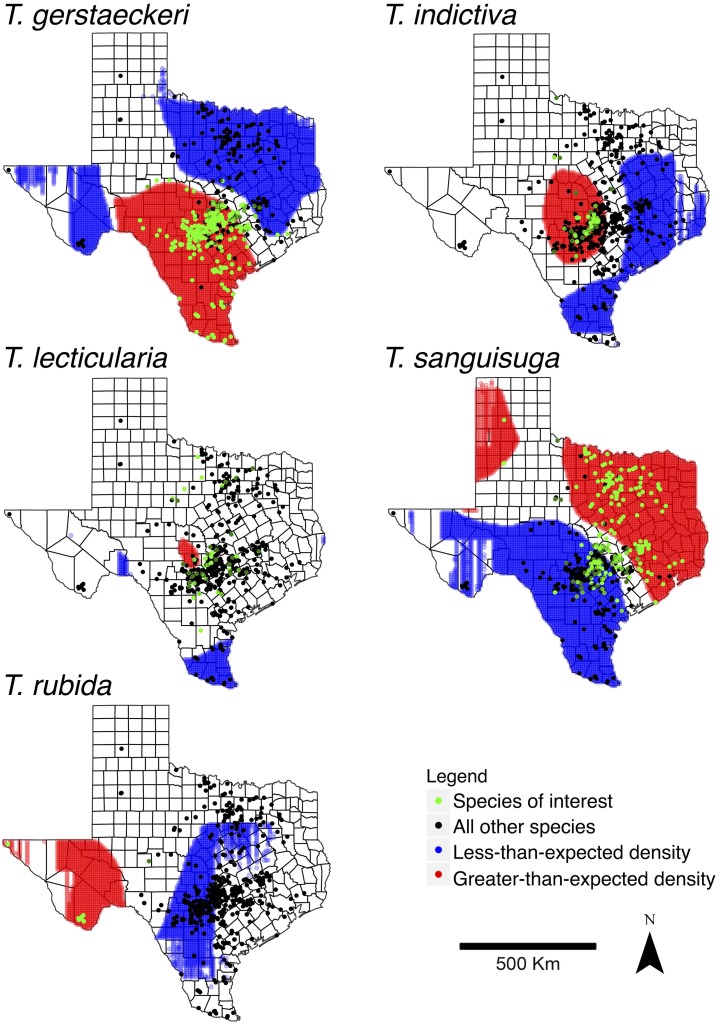
Defining spatial and temporal occurrences of triatomine vectors of Trypanosoma cruzi, the agent of Chagas disease, in the US is critical for public health protection. Through a citizen science program and field collections from 2012 to 2016, we collected 3,215 triatomines, mainly from Texas. Using morphological and molecular approaches, we identified seven Triatoma species and report sex, length, and blood engorgement status. Many citizen-collected triatomines (92.9%) were encountered indoors, in peridomestic settings, or in dog kennels and represent spillover transmission risk of T. cruzi to humans and domestic animals. The most commonly collected species were Triatoma gerstaeckeri and Triatoma sanguisuga. Adult T. gerstaeckeri were collected from May to September, peaking from June to July, whereas adult T. sanguisuga were active later, from June to October, peaking from July to September. Based on cross correlation analyses, peaks of captures varied by species and across years. Point pattern analyses revealed unique occurrences of T. sanguisuga in north and east Texas, T. gerstaeckeri in south and west Texas, Triatoma indictiva and Triatoma lecticularia in central Texas, and Triatoma rubida in west Texas. These relatively unique spatial occurrences suggest associations with different suitable habitats and serve as a basis for future models evaluating the ecological niches of different vector species. Understanding the temporal and spatial heterogeneity of triatomines in the southern United States will improve targeted interventions of vector control and will guide public outreach and education to reduce human and animal contact with vectors and reduce the risk of exposure to T. cruzi.
Figures
References
-
- World Health Organization , 2015. Chagas disease in Latin America: an epidemiological update based on 2010 estimates. Wkly Epidemiol Rec 6: 33–44. - PubMed
-
- Lent H, Wygodzinsky P, 1979. Revision of the Triatominae (Hemiptera, Reduviidae), and their significance as vectors of Chagas’ disease. Bull Am Mus Nat Hist 163: 123–520.
-
- Wozniak EJ, Lawrence G, Gorchakov R, Alamgir H, Dotson E, Sissel B, Murray KO, 2015. The biology of the triatomine bugs native to south central Texas and assessment of the risk they pose for autochthonous Chagas disease exposure. J Parasitol 101: 520–528. - PubMed
Publication types
MeSH terms
LinkOut - more resources
Full Text Sources
Other Literature Sources