


A Prospective Randomized Study Comparing Unipolar Versus Bipolar Hysteroscopic Myomectomy in Infertile Women
- PMID: 29142447
- PMCID: PMC5672724
- DOI: 10.4103/jhrs.JHRS_134_16
A Prospective Randomized Study Comparing Unipolar Versus Bipolar Hysteroscopic Myomectomy in Infertile Women
Abstract
Study objective: To compare the operative and reproductive outcome of hysteroscopic myomectomy using unipolar resectoscope versus bipolar resectoscope in patients with infertility and menorrhagia.
Design: Randomized, prospective, parallel, comparative, single-blinded study.
Design classification: Canadian Task Force classification I.
Setting: Tertiary care institute.
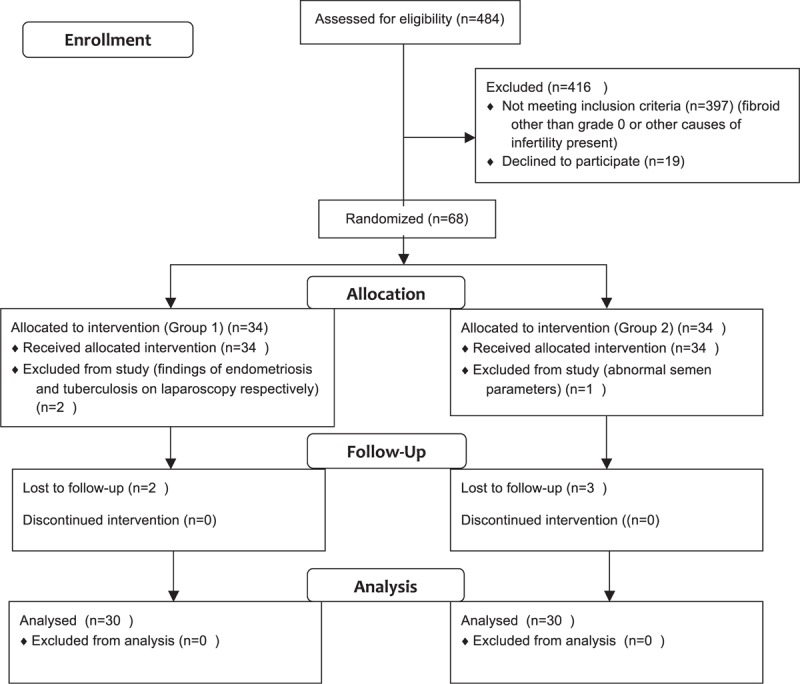
Patients: Sixty women with submucous myoma and infertility.
Interventions: Hysteroscopic myomectomy performed with unipolar resectoscope or bipolar resectoscope.
Measurements: Primary outcome measures were the pregnancy-related indicators. Secondary outcome measures were the operative parameters, harmful outcomes related to the procedure, and comparison of improvement levels in the menstrual pattern after surgery between the two groups.
Main results: A total of 60 patients were randomized into two groups of equal size. Baseline characteristics were not significantly different between the two groups. Reduction in sodium level from pre- to postsurgery was significantly (P = 0.001) higher in the unipolar group. Nine patients (30%) in the unipolar group had hyponatremia in the postoperative period compared to none in the bipolar group (P = 0.002). However, there was no significant difference in the other operative parameters between the two groups. In both the groups, a significant improvement in the menstrual symptoms was observed after myomectomy. Pregnancy-related outcomes were similar in both the groups.
Conclusion: The use of bipolar resectoscope for hysteroscopic myomectomy is associated with lesser risk of hyponatremia compared to unipolar resectoscope. Bipolar resectoscopic myomectomy is found to be an effective and safer alternative to unipolar resectoscopy with similar reproductive outcome.
Keywords: Bipolar; myomectomy; reproductive outcome; resectoscope; unipolar.
Conflict of interest statement
There are no conflicts of interest.
Figures
References
-
- Ubaldi F, Tournaye H, Camus M, Van der Pas H, Gepts E, Devroey P. Fertility after hysteroscopic myomectomy. Hum Reprod Update. 1995;1:81–90. - PubMed
-
- Practice Committee of the American Society for Reproductive Medicine. Myomas and reproductive function. Fertil Steril. 2004;82(Suppl 1):S111–6. - PubMed
-
- Pritts EA. Fibroids and infertility: A systematic review of the evidence. Obstet Gynecol Surv. 2001;56:483–91. - PubMed
-
- Neuwirth RS, Amin HK. Excision of submucus fibroids with hysteroscopic control. Am J Obstet Gynecol. 1976;126:95–9. - PubMed
-
- LaMorte AI, Lalwani S, Diamond MP. Morbidity associated with abdominal myomectomy. Obstet Gynecol. 1993;82:897–900. - PubMed
LinkOut - more resources
Full Text Sources
Other Literature Sources