


Cell Line Secretome and Tumor Tissue Proteome Markers for Early Detection of Colorectal Cancer: A Systematic Review
- PMID: 29144439
- PMCID: PMC5704174
- DOI: 10.3390/cancers9110156
Cell Line Secretome and Tumor Tissue Proteome Markers for Early Detection of Colorectal Cancer: A Systematic Review
Abstract
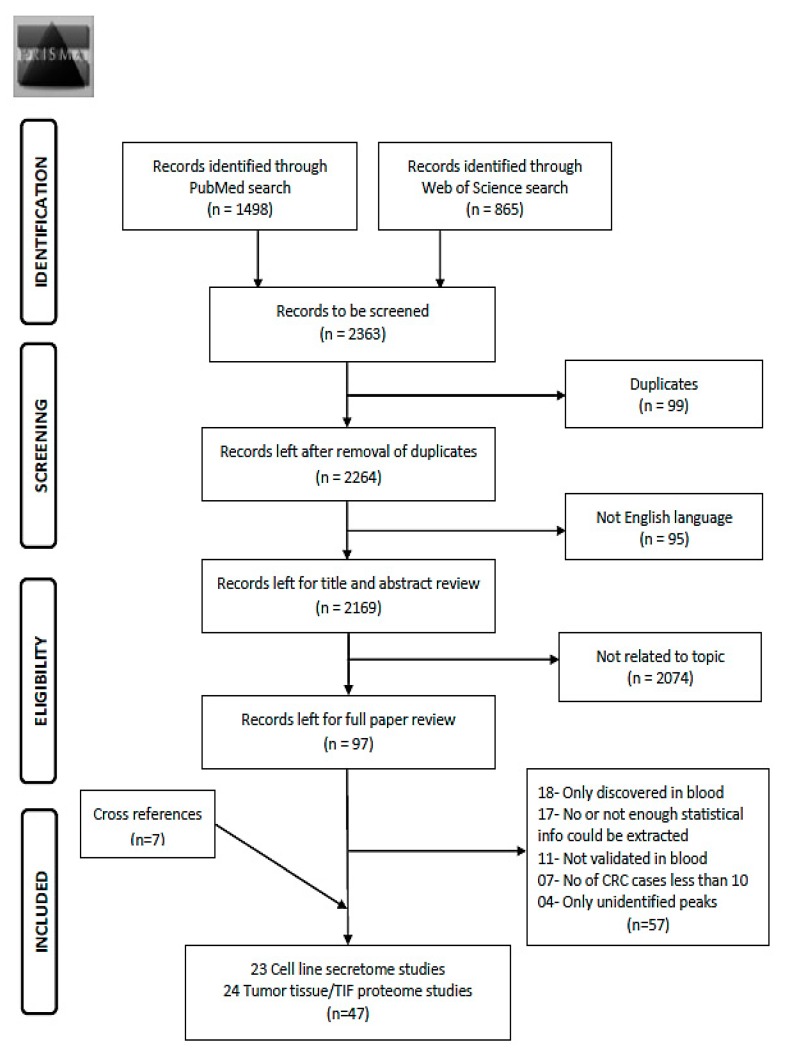
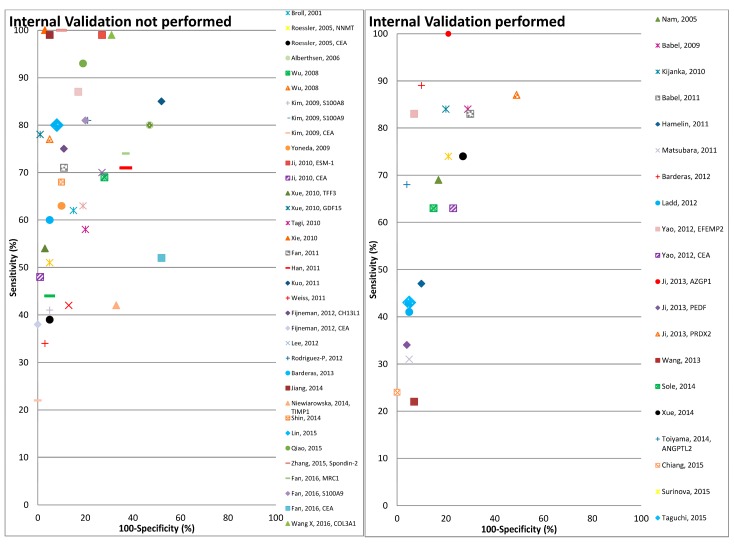
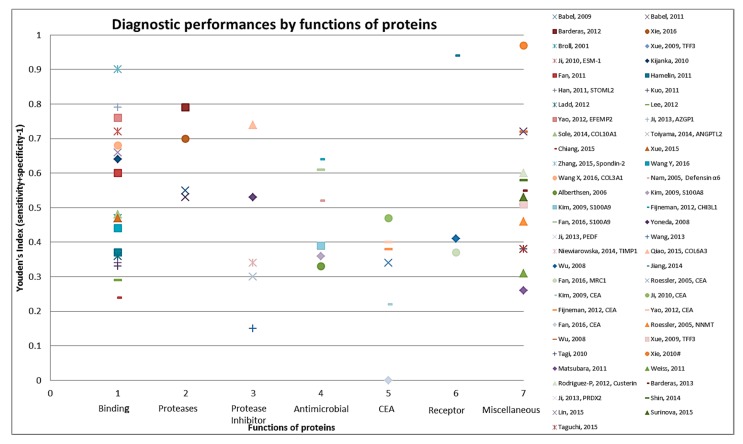
Objective: In order to find low abundant proteins secretome and tumor tissue proteome data have been explored in the last few years for the diagnosis of colorectal cancer (CRC). In this review we aim to summarize the results of studies evaluating markers derived from the secretome and tumor proteome for blood based detection of colorectal cancer. Methods: Observing the preferred reporting items for systematic reviews and meta-analysis (PRISMA) guidelines PubMed and Web of Science databases were searched systematically for relevant studies published up to 18 July 2017. After screening for predefined eligibility criteria a total of 47 studies were identified. Information on diagnostic performance indicators, methodological procedures and validation was extracted. Functions of proteins were identified from the UniProt database and the the Quality Assessment of Diagnostic Accuracy Studies-2 (QUADAS-2) tool was used to assess study quality. Results: Forty seven studies meeting inclusion criteria were identified. Overall, 83 different proteins were identified, with carcinoembryonic Antigen (CEA) being by far the most commonly reported (reported in 24 studies). Evaluation of the markers or marker combinations in blood samples from CRC cases and controls yielded apparently very promising diagnostic performances, with area under the curve >0.9 in several cases, but lack of internal or external validation, overoptimism due to overfitting and spectrum bias due to evaluation in clinical setting rather than screening settings are major concerns. Conclusions: Secretome and tumor proteome-based biomarkers when validated in blood yield promising candidates. However, for discovered protein markers to be clinically applicable as screening tool they have to be specific for early stages and need to be validated externally in larger studies with participants recruited in true screening setting.
Keywords: colorectal cancer; early diagnosis; secretome; sensitivity; specificity; tumor tissue proteome.
Conflict of interest statement
Research on colorectal cancer screening conducted at the German Cancer Institute has been or is currently being partly funded by industrial research grants from Epigenomics, Roche Diagnostics and Applied Proteomics. None of these funders had any role in design and conduct of the study, collection, management, analysis, and interpretation of the data, and preparation, review, or approval of the manuscript.
Figures
References
-
- Brenner H., Stock C., Hoffmeister M. Effect of screening sigmoidoscopy and screening colonoscopy on colorectal cancer incidence and mortality: Systematic review and meta-analysis of randomised controlled trials and observational studies. BMJ. 2014;348:g2467. doi: 10.1136/bmj.g2467. - DOI - PMC - PubMed
Publication types
LinkOut - more resources
Full Text Sources
Other Literature Sources
Molecular Biology Databases
