


The MEROPS database of proteolytic enzymes, their substrates and inhibitors in 2017 and a comparison with peptidases in the PANTHER database
- PMID: 29145643
- PMCID: PMC5753285
- DOI: 10.1093/nar/gkx1134
The MEROPS database of proteolytic enzymes, their substrates and inhibitors in 2017 and a comparison with peptidases in the PANTHER database
Abstract
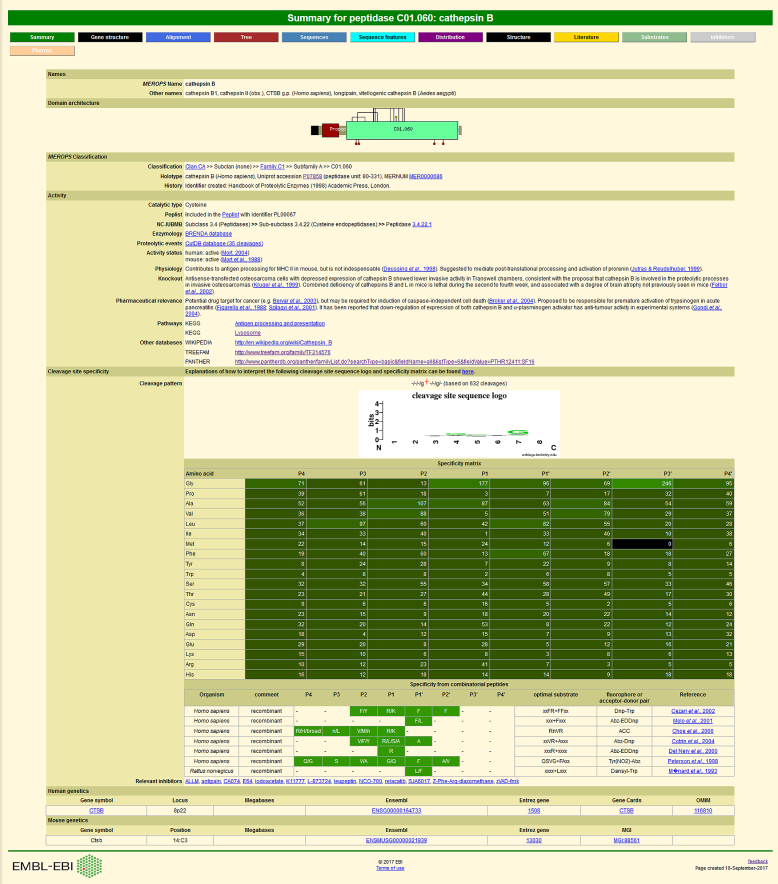
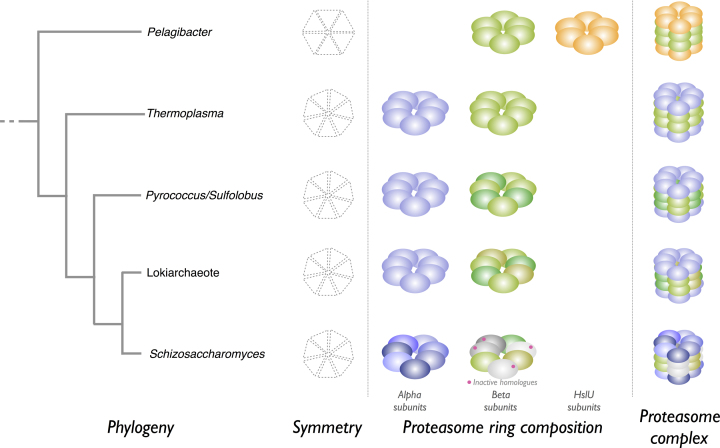
The MEROPS database (http://www.ebi.ac.uk/merops/) is an integrated source of information about peptidases, their substrates and inhibitors. The hierarchical classification is: protein-species, family, clan, with an identifier at each level. The MEROPS website moved to the EMBL-EBI in 2017, requiring refactoring of the code-base and services provided. The interface to sequence searching has changed and the MEROPS protein sequence libraries can be searched at the EMBL-EBI with HMMER, FastA and BLASTP. Cross-references have been established between MEROPS and the PANTHER database at both the family and protein-species level, which will help to improve curation and coverage between the resources. Because of the increasing size of the MEROPS sequence collection, in future only sequences of characterized proteins, and from completely sequenced genomes of organisms of evolutionary, medical or commercial significance will be added. As an example, peptidase homologues in four proteomes from the Asgard superphylum of Archaea have been identified and compared to other archaean, bacterial and eukaryote proteomes. This has given insights into the origins and evolution of peptidase families, including an expansion in the number of proteasome components in Asgard archaeotes and as organisms increase in complexity. Novel structures for proteasome complexes in archaea are postulated.
© The Author(s) 2017. Published by Oxford University Press on behalf of Nucleic Acids Research.
Figures
References
-
- Barrett A.J., Rawlings N.D.. ‘Species’ of peptidases. Biol. Chem. 2007; 388:1151–1157. - PubMed
Publication types
MeSH terms
Substances
Grants and funding
LinkOut - more resources
Full Text Sources
Other Literature Sources
Molecular Biology Databases
Research Materials
