


Upper urinary tract stone disease in patients with poor performance status: active stone removal or conservative management?
- PMID: 29145832
- PMCID: PMC5691806
- DOI: 10.1186/s12894-017-0293-4
Upper urinary tract stone disease in patients with poor performance status: active stone removal or conservative management?
Abstract
Background: It remains controversial as to whether active stone removal should be performed in patients with poor performance status because of their short life expectancy and perioperative risks. Our objectives were to evaluate treatment outcomes of active stone removal in patients with poor performance status and to compare life prognosis with those managed conservatively.
Methods: We retrospectively reviewed 74 patients with Eastern Cooperative Oncology Group performance status 3 or 4 treated for upper urinary tract calculi at our four hospitals between January 2009 and March 2016. Patients were classified into either surgical treatment group or conservative management group based on the presence of active stone removal. Stone-free rate and perioperative complications in surgical treatment group were reviewed. In addition, we compared overall survival and stone-specific survival between the two groups. Cox proportional hazards analysis was performed to investigate predictors of overall survival and stone-specific survival.
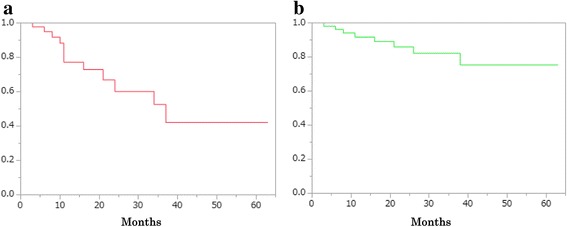
Results: Fifty-two patients (70.3%) underwent active stone removal (surgical treatment group) by extracorporeal shock wave lithotripsy (n = 6), ureteroscopy (n = 39), percutaneous nephrolithotomy (n = 6) or nephrectomy (n = 1). The overall stone-free rate was 78.8% and perioperative complication was observed in nine patients (17.3%). Conservative treatment was undergone by 22 patients (29.7%) (conservative management group). Two-year overall survival rates in surgical treatment and conservative management groups were 88.0% and 38.4%, respectively (p < 0.01) and two-year stone-specific survival rates in the two groups were 100.0% and 61.3%, respectively (p < 0.01). On multivariate analysis, stone removal was not significant, but was considered a possible favorable predictor for overall survival (p = 0.07). Moreover, stone removal was the only independent predictor of stone-specific survival (p < 0.01).
Conclusions: Active stone removal for patients with poor performance status could be performed safely and effectively. Compared to conservative management, surgical stone treatment achieved longer overall survival and stone-specific survival.
Keywords: Extracorporeal shock wave lithotripsy; Percutaneous nephrolithotomy; Poor performance status; Prognosis; Ureteroscopy; Urolithiasis.
Conflict of interest statement
Ethics approval and consent to participate
This study was approved by the institutional review board of Wakayama Medical University. While written informed consent to participate in this study was not obtained from patients since this study was a retrospective observational study for ordinary medical practice, information about this clinical study was disclosed on the WMUH web page and displayed at the hospital’s visitor consultation rooms.
Consent for publication
Not applicable.
Competing interests
The authors declare that they have no competing interests.
Publisher’s Note
Springer Nature remains neutral with regard to jurisdictional claims in published maps and institutional affiliations.
Figures

References
-
- United Nations World Population Prospects:The 2012 Revision (http://esa.un.org/unpd/wpp/).
-
- Slot KB, Berge E, Dorman P, Lewis S, Dennis M, Sandercock P. Impact of functional status at six months on long term survival in patients with ischaemic stroke: prospective cohort studies. BMJ (Clinical research ed) 2008;336(7640):376–379. doi: 10.1136/bmj.39456.688333.BE. - DOI - PMC - PubMed
Publication types
MeSH terms
Grants and funding
LinkOut - more resources
Full Text Sources
Other Literature Sources
