


Future perspectives in melanoma research "Melanoma Bridge", Napoli, November 30th-3rd December 2016
- PMID: 29145885
- PMCID: PMC5691855
- DOI: 10.1186/s12967-017-1341-2
Future perspectives in melanoma research "Melanoma Bridge", Napoli, November 30th-3rd December 2016
Abstract
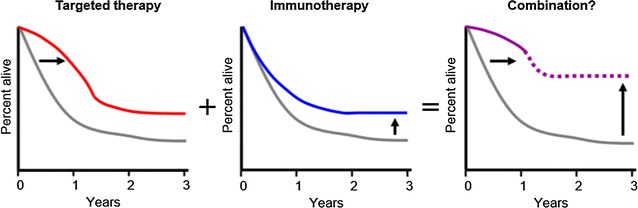
Major advances have been made in the treatment of cancer with targeted therapy and immunotherapy; several FDA-approved agents with associated improvement of 1-year survival rates became available for stage IV melanoma patients. Before 2010, the 1-year survival were quite low, at 30%; in 2011, the rise to nearly 50% in the setting of treatment with Ipilimumab, and rise to 70% with BRAF inhibitor monotherapy in 2013 was observed. Even more impressive are 1-year survival rates considering combination strategies with both targeted therapy and immunotherapy, now exceeding 80%. Can we improve response rates even further, and bring these therapies to more patients? In fact, despite these advances, responses are heterogeneous and are not always durable. There is a critical need to better understand who will benefit from therapy, as well as proper timing, sequence and combination of different therapeutic agents. How can we better understand responses to therapy and optimize treatment regimens? The key to better understanding therapy and to optimizing responses is with insights gained from responses to targeted therapy and immunotherapy through translational research in human samples. Combination therapies including chemotherapy, radiotherapy, targeted therapy, electrochemotherapy with immunotherapy agents such as Immune Checkpoint Blockers are under investigation but there is much room for improvement. Adoptive T cell therapy including tumor infiltrating lymphocytes and chimeric antigen receptor modified T cells therapy is also efficacious in metastatic melanoma and outcome enhancement seem likely by improved homing capacity of chemokine receptor transduced T cells. Tumor infiltrating lymphocytes therapy is also efficacious in metastatic melanoma and outcome enhancement seem likely by improved homing capacity of chemokine receptor transduced T cells. Understanding the mechanisms behind the development of acquired resistance and tests for biomarkers for treatment decisions are also under study and will offer new opportunities for more efficient combination therapies. Knowledge of immunologic features of the tumor microenvironment associated with response and resistance will improve the identification of patients who will derive the most benefit from monotherapy and might reveal additional immunologic determinants that could be targeted in combination with checkpoint blockade. The future of advanced melanoma needs to involve education and trials, biobanks with a focus on primary tumors, bioinformatics and empowerment of patients and clinicians.
Keywords: Biomarkers; Cancer; Checkpoint blockade updates; Combination therapies; Immunotherapy; Melanoma.
Figures
References
-
- Stone HB, Peters LJ, Milas L. Effect of host immune capability on radiocurability and subsequent transplantability of a murine fibrosarcoma. J Natl Cancer Inst. 1979;63(5):1229–1235. - PubMed
Publication types
MeSH terms
Substances
Grants and funding
LinkOut - more resources
Full Text Sources
Other Literature Sources
Medical
Research Materials
