Cognitive trajectories from infancy to early adulthood following birth before 26 weeks of gestation: a prospective, population-based cohort study
- PMID: 29146572
- PMCID: PMC5890637
- DOI: 10.1136/archdischild-2017-313414
Cognitive trajectories from infancy to early adulthood following birth before 26 weeks of gestation: a prospective, population-based cohort study
Abstract
Objective: To determine the trajectory of cognitive test scores from infancy to adulthood in individuals born extremely preterm compared with term-born individuals.
Design: A prospective, population-based cohort study.
Setting: 276 maternity units in the UK and Ireland.
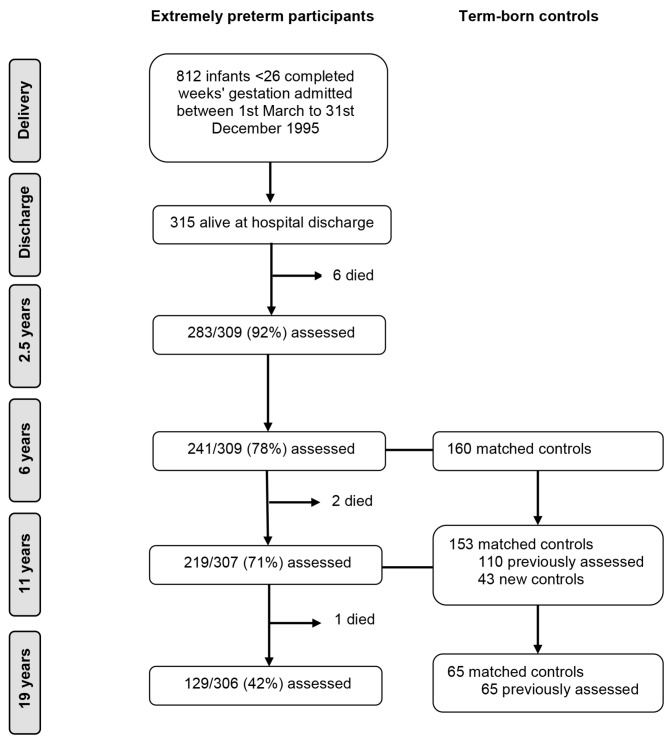
Patients: 315 surviving infants born less than 26 completed weeks of gestation recruited at birth in 1995 and 160 term-born classroom controls recruited at age 6.
Main outcome measures: Bayley Scales of Infant Development-Second Edition (age 2.5); Kaufman Assessment Battery for Children (ages 6/11); Wechsler Abbreviated Scale of Intelligence-Second Edition (age 19).
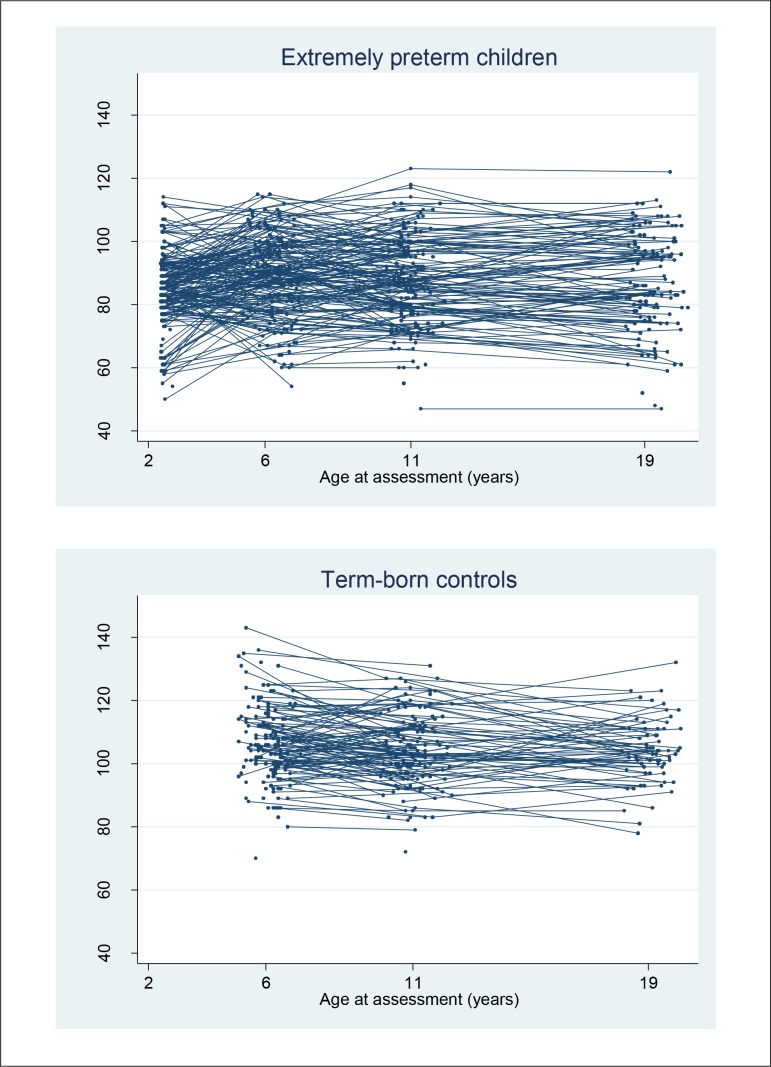
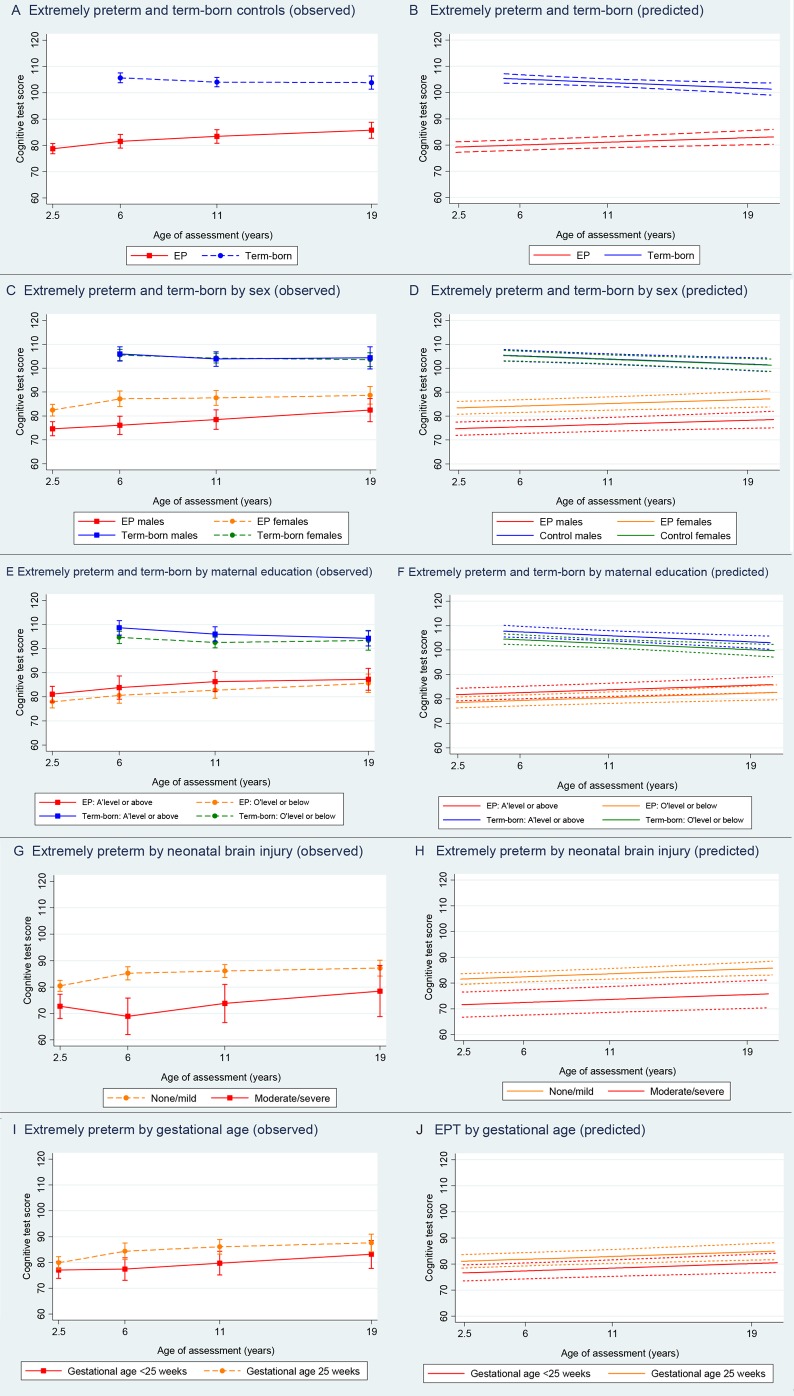
Results: The mean cognitive scores of extremely preterm individuals over the period were on average 25.2 points below their term-born peers (95% CI -27.8 to -22.6) and remained significantly lower at every assessment. Cognitive trajectories in term-born boys and girls did not differ significantly, but the scores of extremely preterm boys were on average 8.8 points below those of extremely preterm girls (95% CI -13.6 to -4.0). Higher maternal education elevated scores in both groups by 3.2 points (95% CI 0.8 to 5.7). Within the extremely preterm group, moderate/severe neonatal brain injury (mean difference: -10.9, 95% CI -15.5 to -6.3) and gestational age less than 25 weeks (mean difference: -4.4, 95% CI -8.4 to -0.4) also had an adverse impact on cognitive function.
Conclusions: There is no evidence that impaired cognitive function in extremely preterm individuals materially recovers or deteriorates from infancy through to 19 years. Cognitive test scores in infancy and early childhood reflect early adult outcomes.
Keywords: epidemiology; neonatology; neurodevelopment.
© Article author(s) (or their employer(s) unless otherwise stated in the text of the article) 2018. All rights reserved. No commercial use is permitted unless otherwise expressly granted.
Conflict of interest statement
Competing interests: None declared.
Figures
References
-
- Farooqi A, Hägglöf B, Sedin G, et al. Chronic conditions, functional limitations, and special health care needs in 10- to 12-year-old children born at 23 to 25 weeks’ gestation in the 1990s: a Swedish national prospective follow-up study. Pediatrics 2006;118:e1466–77. 10.1542/peds.2006-1070 - DOI - PubMed
Publication types
MeSH terms
Grants and funding
LinkOut - more resources
Full Text Sources
Other Literature Sources
Medical