


'When it goes back to my normal I suppose': a qualitative study using online focus groups to explore perceptions of 'control' among people with eczema and parents of children with eczema in the UK
- PMID: 29146642
- PMCID: PMC5695402
- DOI: 10.1136/bmjopen-2017-017731
'When it goes back to my normal I suppose': a qualitative study using online focus groups to explore perceptions of 'control' among people with eczema and parents of children with eczema in the UK
Abstract
Objective: To inform the development of a core outcome set for eczema by engaging with people with eczema and parents of children with eczema to understand their experiences and understanding of the concept 'eczema control'.
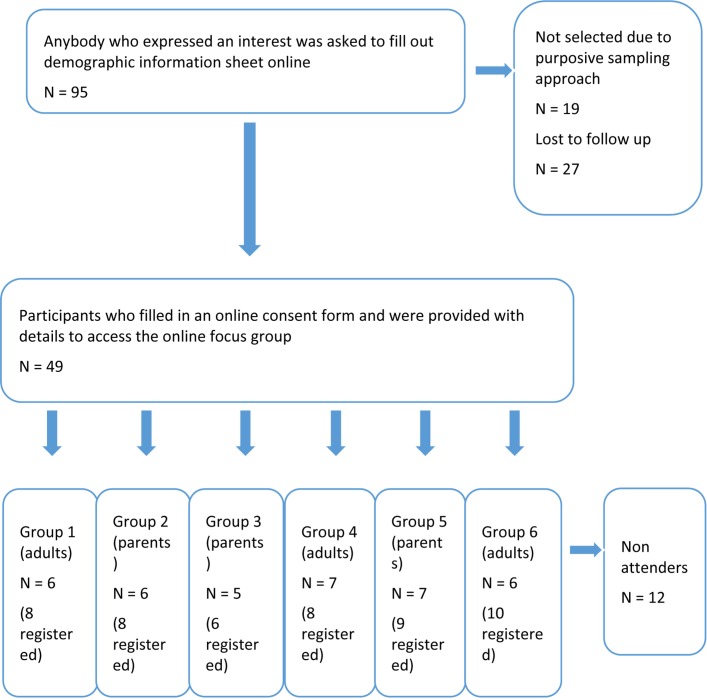
Design: 37 participants took part in a total of six semi-structured online focus groups held in a typed chatroom with 5-7 participants per group. Three groups involved adults with eczema and three groups involved parents of children with eczema. Framework analysis was used for data analysis.
Setting: A community-based sample was recruited from across the UK via social media and email.
Participants: 19 adults aged 17-61 years (15/19 female, 16/19 white) and 18 parents of children with eczema aged 9 months-17 years (9/18 female, 18/19 white).
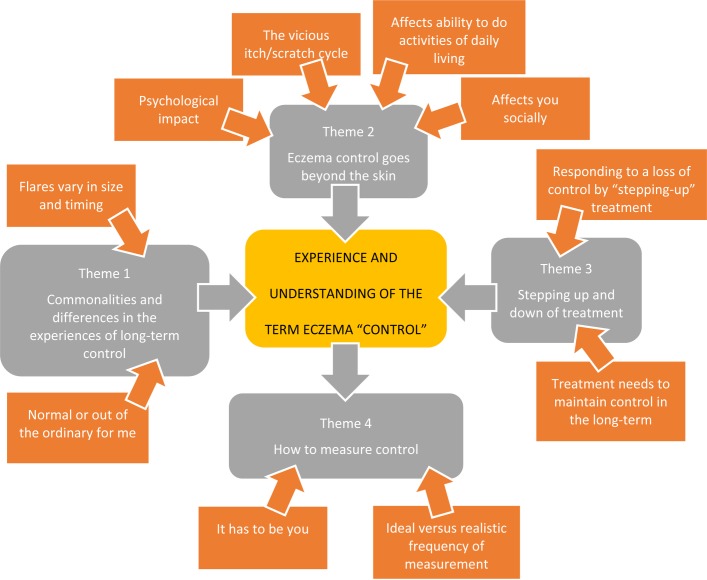
Results: Four main themes were identified:(1) 'Commonalities and differences in the experiences of control': a reduction in symptoms such as itch and sleep loss characterised eczema control, but what level was acceptable differed across participants;(2) 'Eczema control goes beyond the skin': psychological factors, social factors, the constant scratching and the impact on everyday activities are a variety of ways an individual can be impacted;(3) 'Stepping up and down of treatment': participants' stepped-up treatment in response to loss of control, but several factors complicated this behaviour. Control needed to be maintained after stepped-up treatment ended to be acceptable; and (4) 'How to measure control': self-report was generally preferred to allow frequent measurements and to capture unobservable features. Although most thought their eczema needed to be measured frequently, many also felt that this was not always realistic or desirable.
Conclusions: 'Eczema control' is a complex experience for people with eczema and parents of children with the condition. These experiences could have important implications on how long-term control should be measured in eczema clinical trials and clinical practice.
Keywords: dermatology; eczema; qualitative research.
© Article author(s) (or their employer(s) unless otherwise stated in the text of the article) 2017. All rights reserved. No commercial use is permitted unless otherwise expressly granted.
Conflict of interest statement
Competing interests: LMH, KST and JC are members of the Harmonising Outcome Measures in Eczema (HOME) long-term control working group.
Figures
References
-
- Schofield J, Grindlay D, Williams H. Skin conditions in the UK: a health care needs assessment. University of Nottingham: Centre of Evidence Based Dermatology, 2009.
MeSH terms
Grants and funding
LinkOut - more resources
Full Text Sources
Other Literature Sources
Medical
Research Materials
