


EGFR mutation correlates with uninflamed phenotype and weak immunogenicity, causing impaired response to PD-1 blockade in non-small cell lung cancer
- PMID: 29147605
- PMCID: PMC5674946
- DOI: 10.1080/2162402X.2017.1356145
EGFR mutation correlates with uninflamed phenotype and weak immunogenicity, causing impaired response to PD-1 blockade in non-small cell lung cancer
Abstract
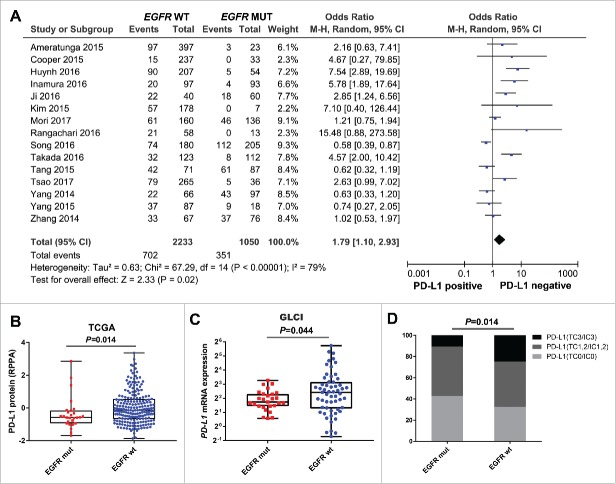
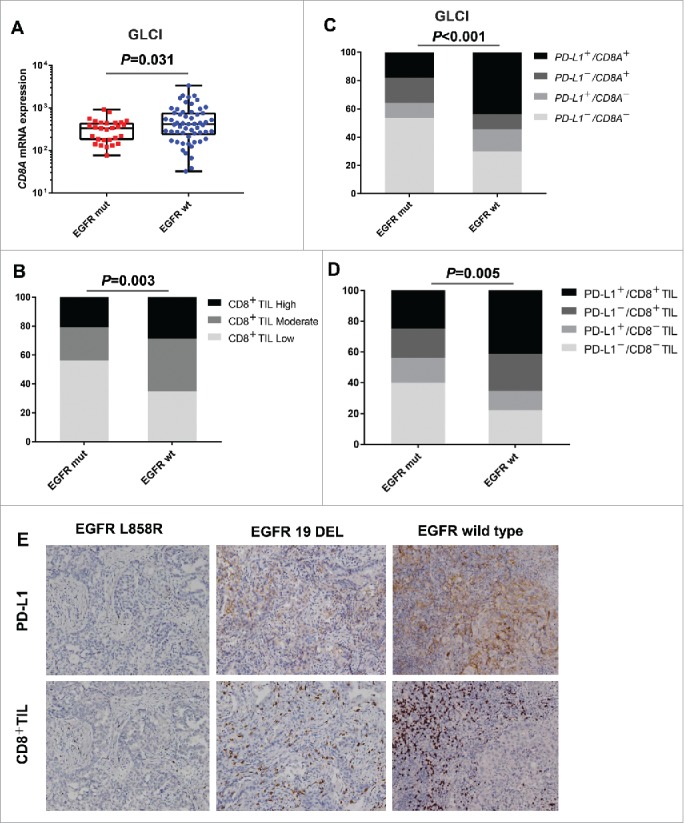
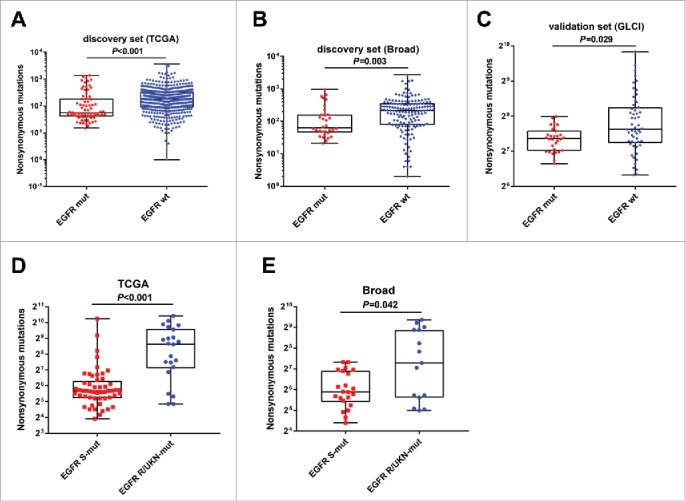
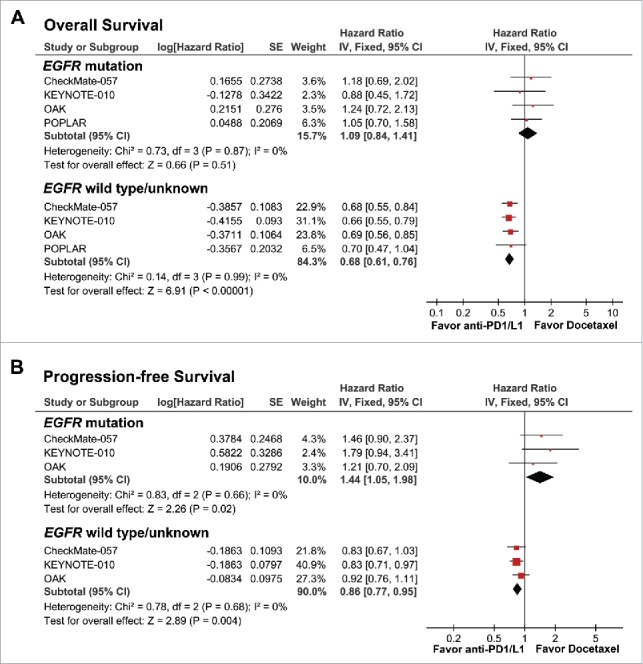
Patients with EGFR mutations showed unfavorable response to programmed cell death-1 (PD-1) blockade immunotherapy in non-small cell lung cancer (NSCLC). Yet the underlying association between EGFR mutation and immune resistance remains largely unclear. We performed an integrated analysis of PD-ligand 1(PD-L1)/CD8 expression and mutation profile based on the repository database and resected early-stage NSCLC in Guangdong Lung Cancer Institute (GLCI). Meanwhile, 2 pool-analyses were set to clarify the correlation between EGFR mutation and PD-L1 expression, and the association of EGFR status with response to anti-PD-1/L1 therapy. Pool-analysis of 15 public studies suggested that patients with EGFR mutations had decreased PD-L1 expression (odds ratio: 1.79, 95% CI: 1.10-2.93; P = 0.02). Analysis of The Cancer Genome Atlas (TCGA) and the GCLI cohort confirmed the inverse correlation between EGFR mutation and PD-L1 expression. Furthermore, patients with EGFR mutation showed a lack of T-cell infiltration and shrinking proportion of PD-L1+/CD8+ TIL (P = 0.034). Importantly, patients with EGFR mutations, especially the sensitive subtype, showed a significantly decreased mutation burden, based on analysis of the discovery and validation sets. Finally, a pool-analysis of 4 randomized control trials confirmed that patients with EGFR mutation did not benefit from PD-1/L1 inhibitors (Hazard ratio [HR] = 1.09, P = 0.51) while patients with EGFR wild-type did (HR = 0.73, P < 0.00001). This study provided evidence of a correlation between EGFR mutations and an uninflamed tumor microenvironment with immunological tolerance and weak immunogenicity, which caused an inferior response to PD-1 blockade in NSCLCs.
Keywords: EGFR; mutation burden; non-small cell lung cancer; programmed cell death protein-1; uninflamed.
Figures
References
-
- Chen N, Fang W, Zhan J, Hong S, Tang Y, Kang S, Zhang Y, He X, Zhou T, Qin T, et al.. Upregulation of pd-l1 by egfr activation mediates the immune escape in egfr-driven NSCLC: Implication for optional immune targeted therapy for NSCLC patients with egfr mutation. J Thorac Oncol 2015; 10:910-23. PMID:25658629. doi: 10.1097/JTO.0000000000000500 - DOI - PubMed
-
- Hong S, Chen N, Fang W, Zhan J, Liu Q, Kang S, He X, Liu L, Zhou T, Huang J, et al.. Upregulation of PD-L1 by EML4-ALK fusion protein mediates the immune escape in ALK positive NSCLC: Implication for optional anti-PD-1/PD-L1 immune therapy for ALK-TKIs sensitive and resistant NSCLC patients. Oncoimmunology 2016; 5:e1094598. PMID:27141355. doi: 10.1080/2162402X.2015.1094598 - DOI - PMC - PubMed
Publication types
LinkOut - more resources
Full Text Sources
Other Literature Sources
Medical
Research Materials
Miscellaneous
