


Rethinking Unconventional Translation in Neurodegeneration
- PMID: 29149615
- PMCID: PMC5728172
- DOI: 10.1016/j.cell.2017.10.042
Rethinking Unconventional Translation in Neurodegeneration
Abstract
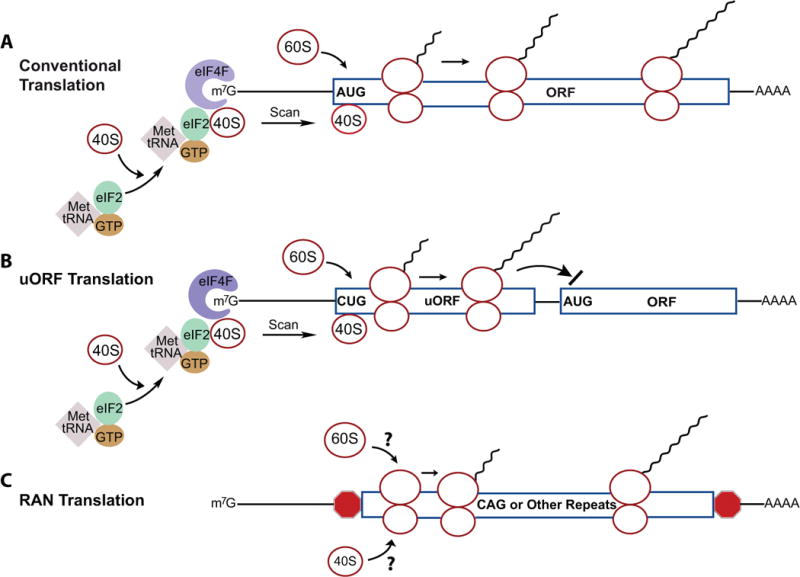
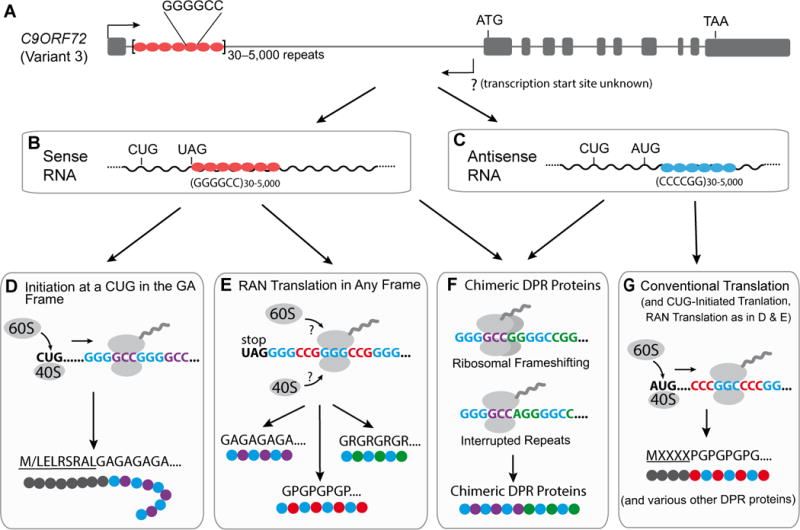
Eukaryotic translation is tightly regulated to ensure that protein production occurs at the right time and place. Recent studies on abnormal repeat proteins, especially in age-dependent neurodegenerative diseases caused by nucleotide repeat expansion, have highlighted or identified two forms of unconventional translation initiation: usage of AUG-like sites (near cognates) or repeat-associated non-AUG (RAN) translation. We discuss how repeat proteins may differ due to not just unconventional initiation, but also ribosomal frameshifting and/or imperfect repeat DNA replication, expansion, and repair, and we highlight how research on translation of repeats may uncover insights into the biology of translation and its contribution to disease.
Keywords: ALS; C9ORF72; dipeptide repeat proteins; frontotemporal dementia; near-cognate start codon; repeat expansion; translation; upstream open reading frame.
Copyright © 2017 Elsevier Inc. All rights reserved.
Figures
References
MeSH terms
Substances
Grants and funding
LinkOut - more resources
Full Text Sources
Other Literature Sources
Medical
Miscellaneous
