


A cross-sectional examination of psychological distress, positive mental health and their predictors in medical students in their clinical clerkships
- PMID: 29149850
- PMCID: PMC5693565
- DOI: 10.1186/s12909-017-1035-8
A cross-sectional examination of psychological distress, positive mental health and their predictors in medical students in their clinical clerkships
Abstract
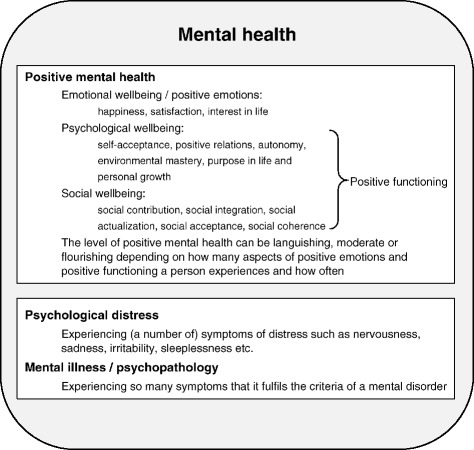
Background: Medical students can experience the transition from theory to clinical clerkships as stressful. Scientific literature on the mental health of clinical clerkship students is scarce and mental health is usually defined as absence of psychological distress without assessing psychological, emotional and social wellbeing, together called 'positive mental health'. This cross-sectional study examines the prevalence of psychological distress and positive mental health and explores possible predictors in a Dutch sample of clinical clerkship students.
Methods: Fourth-year medical students in their first year of clinical clerkships were invited to complete an online questionnaire assessing demographics, psychological distress (Brief Symptom Inventory), positive mental health (Mental Health Continuum- SF), dysfunctional cognitions (Irrational Beliefs Inventory) and dispositional mindfulness skills (Five Facet Mindfulness Questionnaire). Multiple linear regression analysis was used to explore relationships between psychological distress, positive mental health (dependent variables) and demographics, dysfunctional cognitions and dispositional mindfulness skills (predictors).
Results: Of 454 eligible students, 406 (89%) completed the assessment of whom 21% scored in the clinical range of psychological distress and 41% reported a flourishing mental health. These proportions partially overlap each other. Female students reported a significantly higher mean level of psychological distress than males. In the regression analysis the strongest predictors of psychological distress were 'acting with awareness' (negative) and 'worrying' (positive). Strongest predictors of positive mental health were 'problem avoidance' (negative) and 'emotional irresponsibility' (negative).
Conclusions: The prevalence of psychopathology in our sample of Dutch clinical clerkship students is slightly higher than in the general population. Our results support conclusions of previous research that psychological distress and positive mental health are not two ends of one continuum but partially overlap. Although no conclusion on causality can be drawn, this study supports the idea that self-awareness and active, nonavoidant coping strategies are related to lower distress and higher positive mental health.
Keywords: Clinical clerkships; Medical students; Multiple linear regression; Positive mental health; Psychological distress.
Conflict of interest statement
Ethics approval and consent to participate
The study was embedded in two studies which were approved of by the medical ethical research committee Arnhem-Nijmegen. Protocol registration nr. 2010/388 and ABR nr: NL33969.091.10. Students could only continue to the online questionnaires after giving written online informed consent.
Consent for publication
Not applicable.
Competing interests
The authors declare that they have no competing interests.
Publisher’s Note
Springer Nature remains neutral with regard to jurisdictional claims in published maps and institutional affiliations.
Figures
References
MeSH terms
LinkOut - more resources
Full Text Sources
Other Literature Sources
Medical
