


Can high-flow nasal cannula reduce the rate of reintubation in adult patients after extubation? A meta-analysis
- PMID: 29149868
- PMCID: PMC5693546
- DOI: 10.1186/s12890-017-0491-6
Can high-flow nasal cannula reduce the rate of reintubation in adult patients after extubation? A meta-analysis
Abstract
Background: The effects of high flow nasal cannula (HFNC) on adult patients after extubation remain controversial. We aimed to further determine the effectiveness of HFNC in comparison to noninvasive positive pressure ventilation (NIPPV) and conventional oxygen therapy (COT).
Methods: The Pubmed, Embase, Medline, Cochrane Central Register of Controlled Trails (CENTRAL) as well as the Information Sciences Institute (ISI) Web of Science were searched for all the controlled study comparing HFNC with NIPPV and COT in adult patients after extubation. The primary outcome was rate of reintubation and the secondary outcomes were intensive care unit (ICU) mortality and length of ICU stay (ICU LOS).
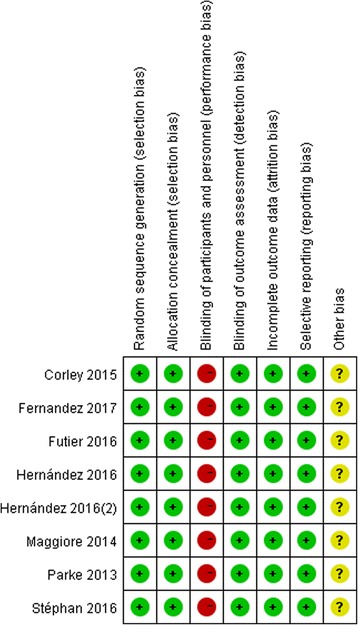
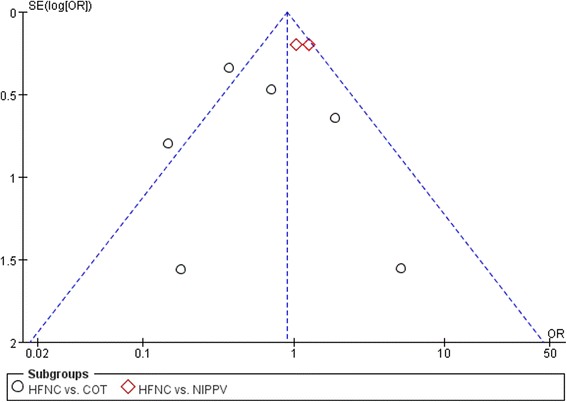
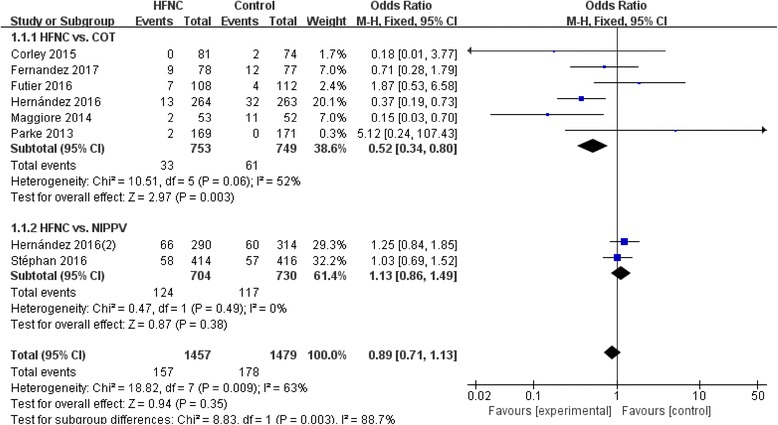
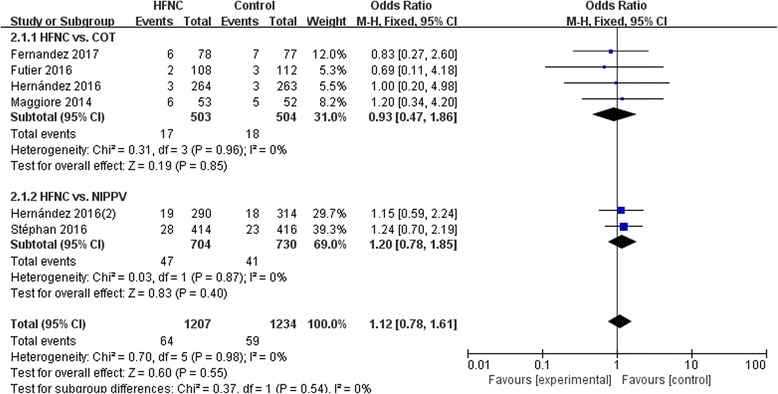
Results: Eight trials with a total of 2936 patients were pooled in our final studies. No significant heterogeneity was found in outcome measures. Compared with COT, HFNC was associated with lower rate of reintubation (Z = 2.97, P = 0.003), and the same result was found in the comparison between HFNC and NIPPV (Z = 0.87, P = 0.38). As for the ICU mortality and ICU LOS, we did not find any advantage of HFNC over COT or NIPPV.
Conclusions: In patients after extubation, HFNC is a reliable alternative of NIPPV to reduce rate of reintubation compared with COT.
Keywords: Adult; High flow nasal cannula; Meta-analysis; Mortality; Post-extubation; Prognosis.
Conflict of interest statement
Ethics approval and consent to participate
Each enrolled trial was approved by the corresponding institutional Ethical Committee, and all participants provided written informed consent.
Consent for publication
Not applicable.
Competing interests
None of all authors have any financial or non-financial competing interests in this manuscript.
Publisher’s Note
Springer Nature remains neutral with regard to jurisdictional claims in published maps and institutional affiliations.
Figures



References
-
- Kollef MH. What is ventilator-associated pneumonia and why is it important? Respir Care. 2005;50(6):714–721. - PubMed
Publication types
MeSH terms
Substances
Grants and funding
LinkOut - more resources
Full Text Sources
Other Literature Sources
Medical
Miscellaneous
