


Oxygen - the forgotten nutrient
- PMID: 29152251
- PMCID: PMC5672318
- DOI: 10.1017/jns.2017.53
Oxygen - the forgotten nutrient
Abstract
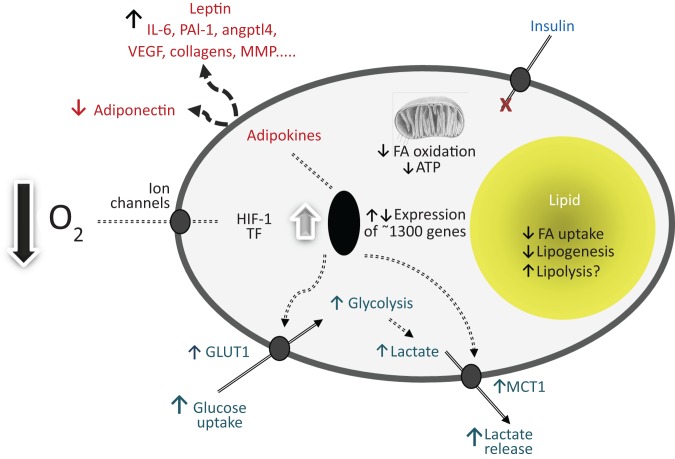
O2 is essential for the maintenance and growth of aerobic animals, similar to the essentiality of what are classically considered nutrients. Nevertheless, O2 is not customarily regarded as a nutrient, this reflecting the route by which it enters the body - through the lungs or gills in vertebrates, rather than via the mouth and gastrointestinal tract. A relative deficiency of O2 occurs at high altitudes and during deep-sea diving, to which distinct adaptations occur. Deficiency is also evident in lung diseases such as emphysema. Without O2, mitochondrial respiration and oxidative phosphorylation cannot take place. At a molecular level, cells adapt to O2 deficiency by switching from oxidative metabolism to anaerobic glycolysis and there are changes in the expression of a multiplicity of genes, driven by hypoxia-sensitive transcription factors, particularly hypoxia-inducible factor-1. It is argued that O2 should be fully included within the remit of nutritional science alongside the other essential macronutrients.
Keywords: HIF, hypoxia-inducible factor; Hypoxia; Hypoxia-inducible factor-1; Oxygen deficiency; Oxygen utilisation; pO2, O2 tension.
Figures
References
-
- Park TJ, Reznick J, Peterson BL, et al. (2017) Fructose-driven glycolysis supports anoxia resistance in the naked mole-rat. Science 356, 307–311. - PubMed
-
- Ordway GA & Garry DJ (2004) Myoglobin: an essential hemoprotein in striated muscle. J Exp Biol 207, 3441–3446. - PubMed
-
- Frayn KN (2010) Metabolic Regulation. A Human Perspective, 3rd ed. Chichester: Wiley-Blackwell.
-
- Cannon B & Nedergaard J (2004) Brown adipose tissue: function and physiological significance. Physiol Rev 84, 277–359. - PubMed
LinkOut - more resources
Full Text Sources
Other Literature Sources
