


Individualizing Prevention for Older Adults
- PMID: 29155445
- PMCID: PMC5809295
- DOI: 10.1111/jgs.15216
Individualizing Prevention for Older Adults
Abstract
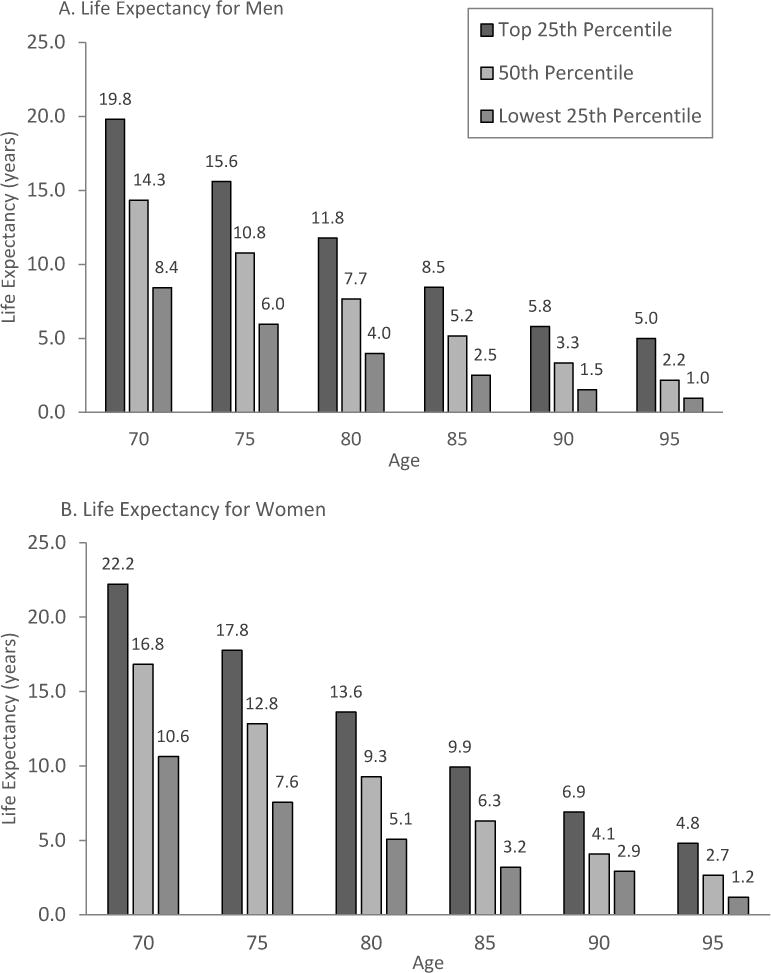
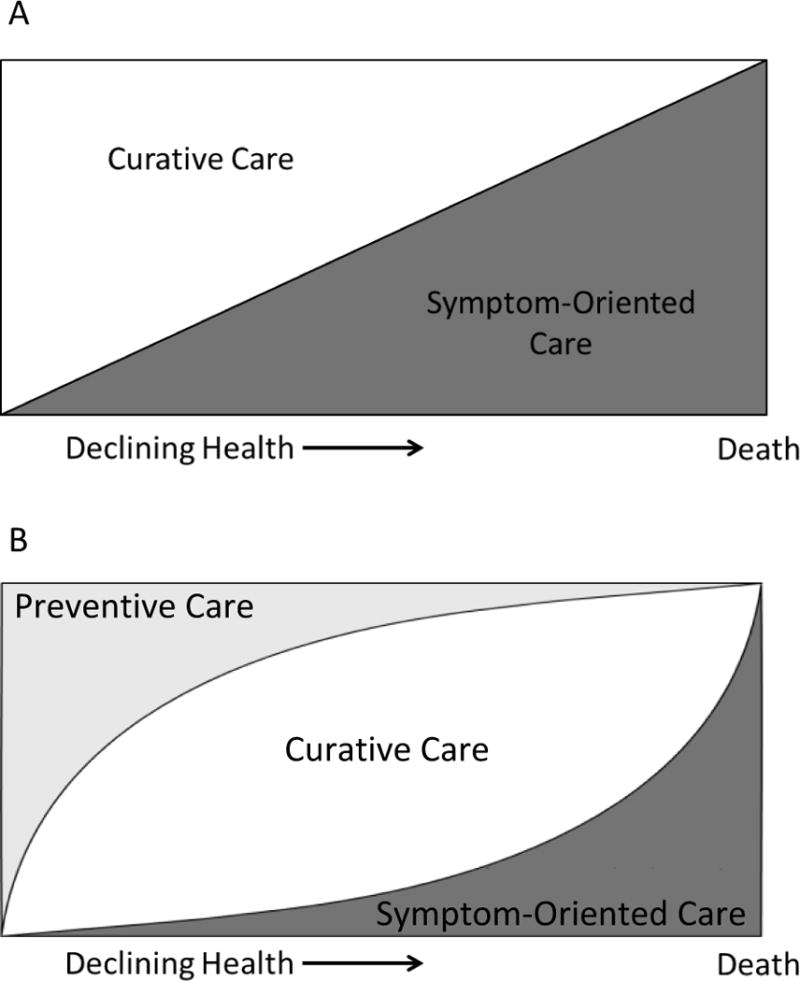
Prevention can help older adults avoid illness by identifying and addressing conditions before they cause symptoms, but prevention can also harm older adults if conditions that are unlikely to cause symptoms in the individual's lifetime are identified and treated. To identify older adults who preventive interventions are most likely to benefit (and most likely to harm), we propose a framework that compares an individual's life expectancy (LE) with the time to benefit (TTB) for an intervention. If LE is less than the TTB, the individual is unlikely to benefit but is exposed to the risks of the intervention, and the intervention should generally NOT be recommended. If LE is longer than the TTB, the individual could benefit, and the intervention should generally be recommended. If LE is similar to the TTB, the individual's values and preferences should be the major determinant of the decision. To facilitate the use of this framework in routine clinical care, we explored ways to estimate LE, identified the TTB for common preventive interventions, and developed strategies for communicating with individuals. We have synthesized these strategies and demonstrate how they can be used to individualize prevention for a hypothetical beneficiary in the setting of a Medicare annual wellness visit. Finally, we place prevention in the context of curative and symptom-oriented care and outline how prevention should be focused on healthier older adults, whereas symptom-oriented care should predominate in sicker older adults.
Keywords: cancer screening; life expectancy; prevention; time to benefit.
© 2017, Copyright the Authors Journal compilation © 2017, The American Geriatrics Society.
Conflict of interest statement
Conflict of Interest: SJL and CMK have no conflicts of interests to disclose. Specifically, SJL and CMK have no financial, personal or potential conflicts.
Figures
References
-
- Schwartz LM, Woloshin S, Fowler FJ, Jr, Welch HG. Enthusiasm for cancer screening in the United States. JAMA. 2004;291(1):71–78. - PubMed
-
- Quick Reference Information: The ABCs of Providing the Annual Wellness Visit. The Medicare Learning Network. 2012 http://www.cms.gov/Outreach-and-Education/Medicare-Learning-Network-MLN/.... Accessed September 5, 2013.
-
- Holmes HM, Hayley DC, Alexander GC, Sachs GA. Reconsidering medication appropriateness for patients late in life. Arch Intern Med. 2006;166(6):605–609. - PubMed
Publication types
MeSH terms
Grants and funding
LinkOut - more resources
Full Text Sources
Other Literature Sources
