


Virtual reality for stroke rehabilitation
- PMID: 29156493
- PMCID: PMC6485957
- DOI: 10.1002/14651858.CD008349.pub4
Virtual reality for stroke rehabilitation
Update in
-
Virtual reality for stroke rehabilitation.Cochrane Database Syst Rev. 2025 Jun 20;6(6):CD008349. doi: 10.1002/14651858.CD008349.pub5. Cochrane Database Syst Rev. 2025. PMID: 40537150 Free PMC article.
Abstract
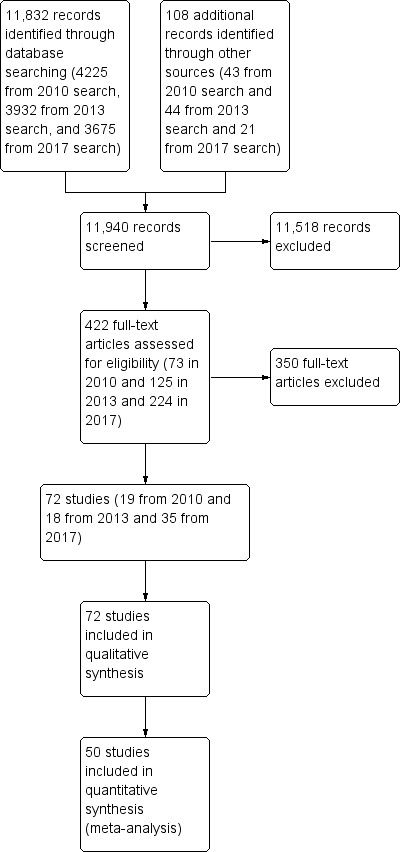
Background: Virtual reality and interactive video gaming have emerged as recent treatment approaches in stroke rehabilitation with commercial gaming consoles in particular, being rapidly adopted in clinical settings. This is an update of a Cochrane Review published first in 2011 and then again in 2015.
Objectives: Primary objective: to determine the efficacy of virtual reality compared with an alternative intervention or no intervention on upper limb function and activity.Secondary objectives: to determine the efficacy of virtual reality compared with an alternative intervention or no intervention on: gait and balance, global motor function, cognitive function, activity limitation, participation restriction, quality of life, and adverse events.
Search methods: We searched the Cochrane Stroke Group Trials Register (April 2017), CENTRAL, MEDLINE, Embase, and seven additional databases. We also searched trials registries and reference lists.
Selection criteria: Randomised and quasi-randomised trials of virtual reality ("an advanced form of human-computer interface that allows the user to 'interact' with and become 'immersed' in a computer-generated environment in a naturalistic fashion") in adults after stroke. The primary outcome of interest was upper limb function and activity. Secondary outcomes included gait and balance and global motor function.
Data collection and analysis: Two review authors independently selected trials based on pre-defined inclusion criteria, extracted data, and assessed risk of bias. A third review author moderated disagreements when required. The review authors contacted investigators to obtain missing information.
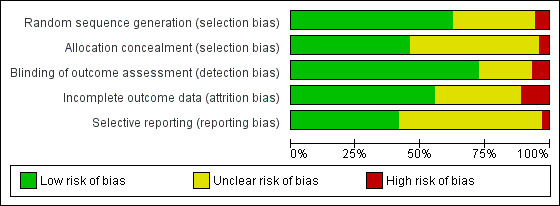
Main results: We included 72 trials that involved 2470 participants. This review includes 35 new studies in addition to the studies included in the previous version of this review. Study sample sizes were generally small and interventions varied in terms of both the goals of treatment and the virtual reality devices used. The risk of bias present in many studies was unclear due to poor reporting. Thus, while there are a large number of randomised controlled trials, the evidence remains mostly low quality when rated using the GRADE system. Control groups usually received no intervention or therapy based on a standard-care approach.
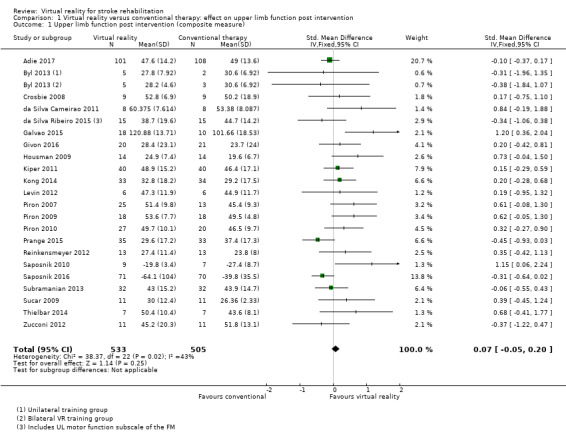
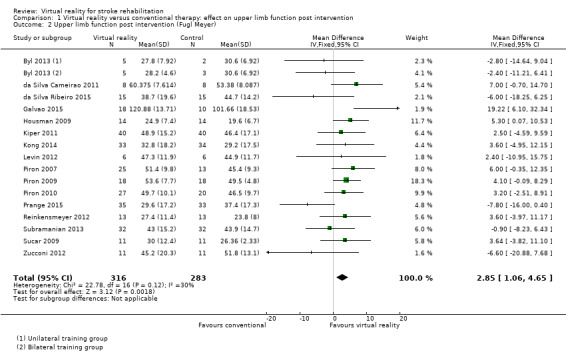
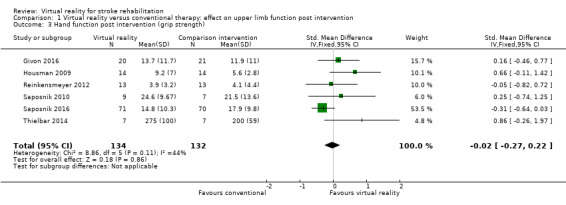
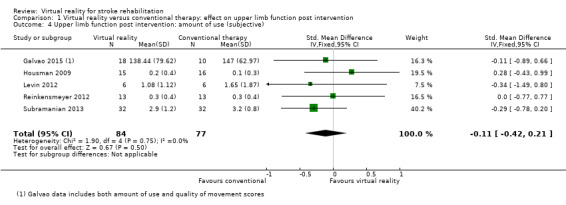
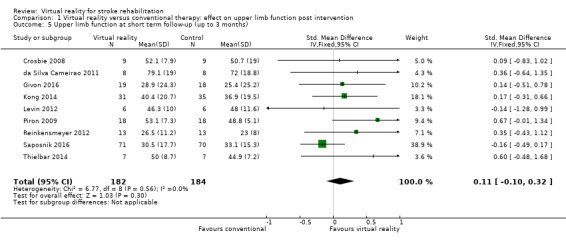
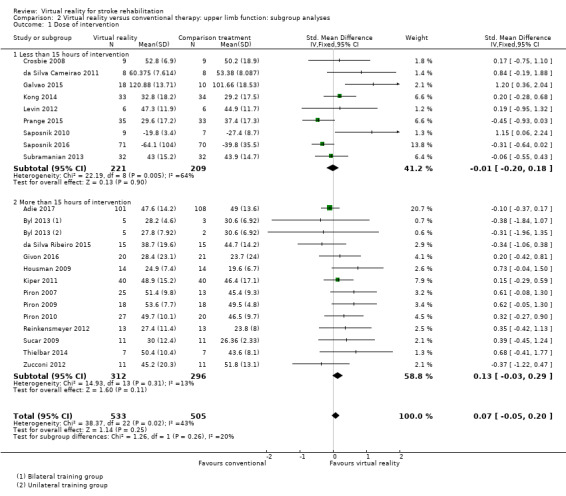
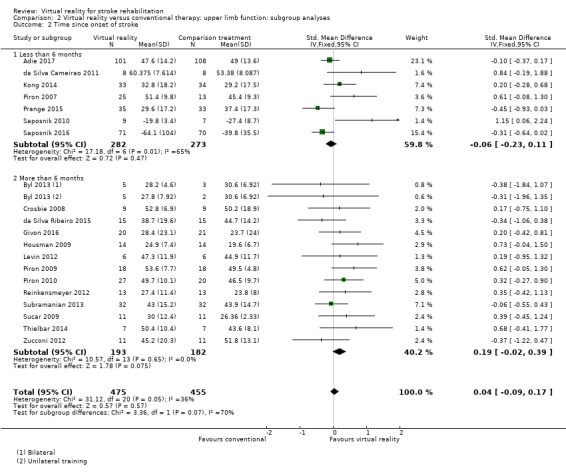
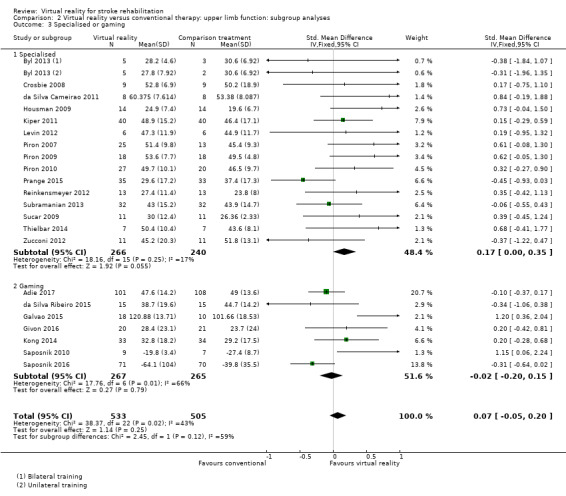
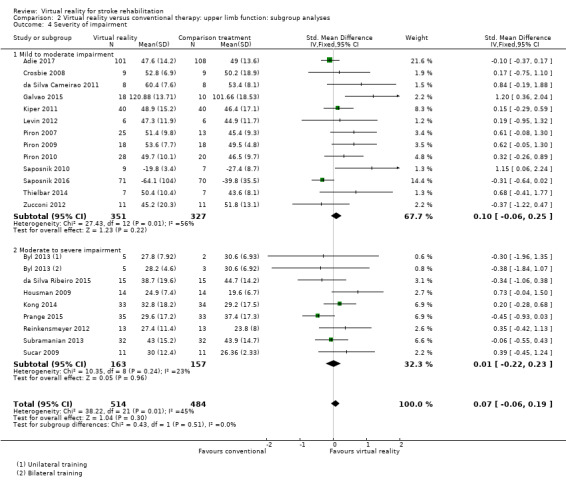
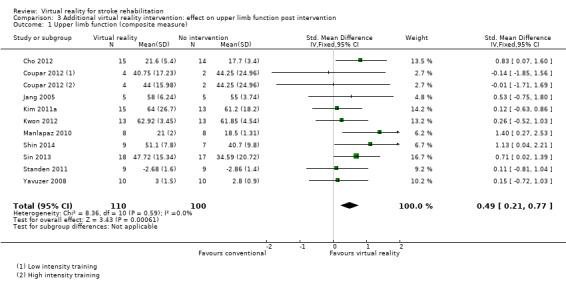
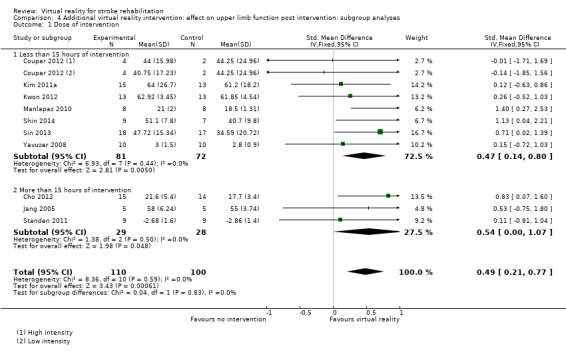
Primary outcome: results were not statistically significant for upper limb function (standardised mean difference (SMD) 0.07, 95% confidence intervals (CI) -0.05 to 0.20, 22 studies, 1038 participants, low-quality evidence) when comparing virtual reality to conventional therapy. However, when virtual reality was used in addition to usual care (providing a higher dose of therapy for those in the intervention group) there was a statistically significant difference between groups (SMD 0.49, 0.21 to 0.77, 10 studies, 210 participants, low-quality evidence).
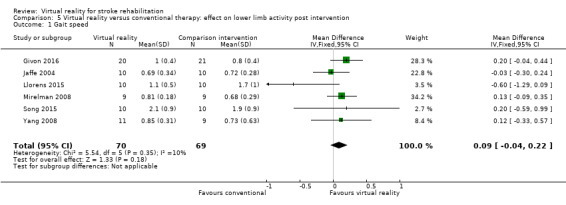
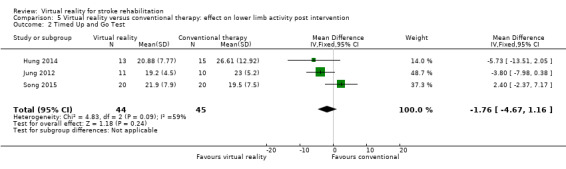
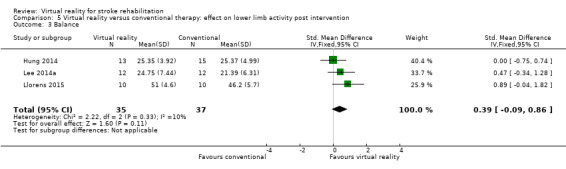
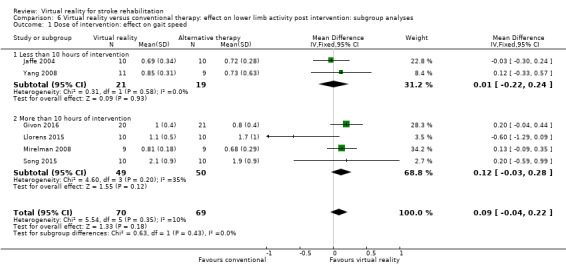
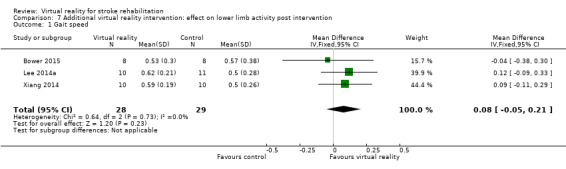
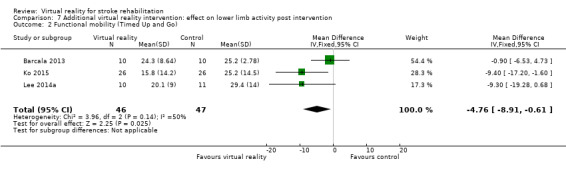
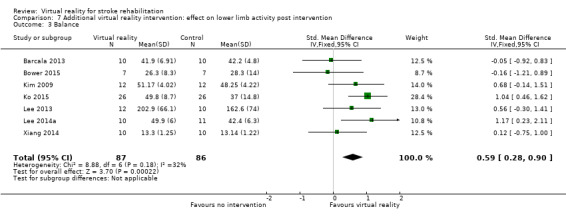
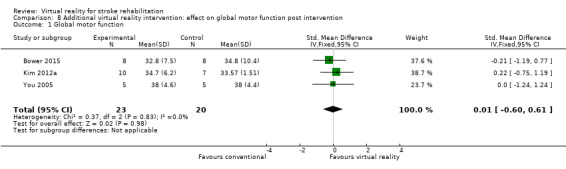
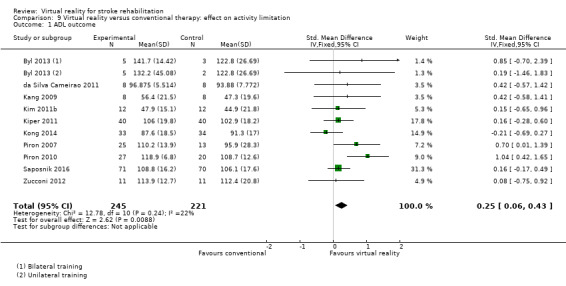
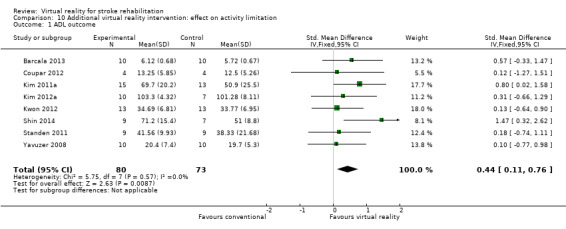
Secondary outcomes: when compared to conventional therapy approaches there were no statistically significant effects for gait speed or balance. Results were statistically significant for the activities of daily living (ADL) outcome (SMD 0.25, 95% CI 0.06 to 0.43, 10 studies, 466 participants, moderate-quality evidence); however, we were unable to pool results for cognitive function, participation restriction, or quality of life. Twenty-three studies reported that they monitored for adverse events; across these studies there were few adverse events and those reported were relatively mild.
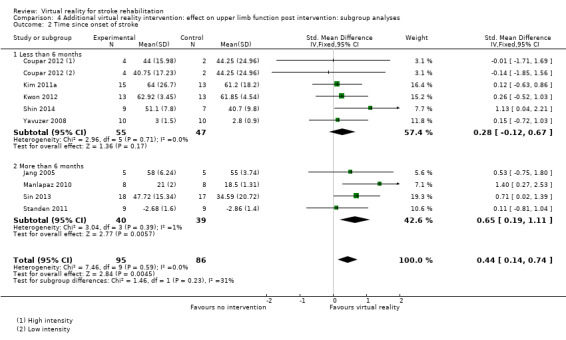
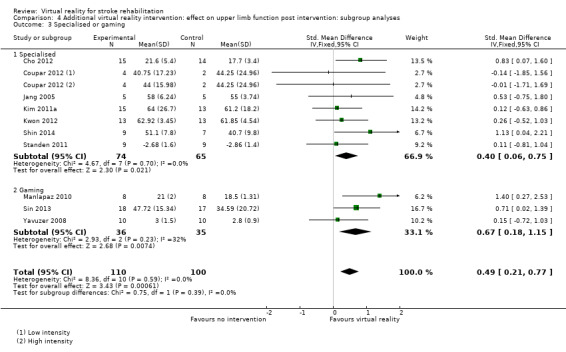
Authors' conclusions: We found evidence that the use of virtual reality and interactive video gaming was not more beneficial than conventional therapy approaches in improving upper limb function. Virtual reality may be beneficial in improving upper limb function and activities of daily living function when used as an adjunct to usual care (to increase overall therapy time). There was insufficient evidence to reach conclusions about the effect of virtual reality and interactive video gaming on gait speed, balance, participation, or quality of life. This review found that time since onset of stroke, severity of impairment, and the type of device (commercial or customised) were not strong influencers of outcome. There was a trend suggesting that higher dose (more than 15 hours of total intervention) was preferable as were customised virtual reality programs; however, these findings were not statistically significant.
Conflict of interest statement
Kate Laver: none known.
Belinda Lange: none known.
Stacey George: none known.
Judith Deutsch conducts research on virtual reality for stroke rehabilitation. This research is funded by various sources and presented at scientific and professional meetings. She is co‐owner of a company that develops virtual reality for rehabilitation.
Gustavo Saposnik is the first author on two of the studies included in the review. He was not involved in assessment of these studies for inclusion or risk of bias and did not extract data for these studies. He is supported by the Distinguished Clinician‐Scientist Award given by the Heart and Stroke Foundation of Canada following an open peer‐reviewed competition.
Maria Crotty: none known.
Figures

Update of
-
Virtual reality for stroke rehabilitation.Cochrane Database Syst Rev. 2015 Feb 12;2015(2):CD008349. doi: 10.1002/14651858.CD008349.pub3. Cochrane Database Syst Rev. 2015. Update in: Cochrane Database Syst Rev. 2017 Nov 20;11:CD008349. doi: 10.1002/14651858.CD008349.pub4. PMID: 25927099 Free PMC article. Updated.
References
References to studies included in this review
Adie 2017 {published data only}
-
- Adie K, Schofield C, Berrow M, Wingham J, Humfryes J, Pritchard C, et al. Does the use of Nintendo Wii Sports improve arm function? Trial of Wii in stroke: a randomized controlled trial and economic analysis. Clinical Rehabilitation 2017;31(2):173‐85. - PubMed
Akinwuntan 2005 {published data only}
-
- Akinwuntan A, Devos H, Verheyden G, Baten G, Kiekens C, Feys H, et al. Retraining moderately impaired stroke survivors in driving‐related visual attention skills. Topics in Stroke Rehabilitation 2010;17(5):328‐36. - PubMed
-
- Akinwuntan AE, Weerdt W, Feys H, Pauwels J, Baten G, Arno P, et al. Effect of simulator training on driving after stroke. Neurology 2005;65(6):843‐50. - PubMed
-
- Devos H, Akinwuntan AE, Nieuwboer A, Ringoot I, Berghen K, Tant M, et al. Effect of simulator training on fitness to drive after stroke: a 5‐year follow up of a randomised controlled trial. Neurorehabilitation and Neural Repair 2010;24(9):843‐50. - PubMed
-
- Devos H, Akinwuntan AE, Nieuwboer A, Tant M, Truijen S, Wit L, et al. Comparison of the effect of two driving retraining programs on on‐road performance after stroke. Neurorehabilitation and Neural Repair 2009;23(7):699‐705. - PubMed
Barcala 2013 {published data only}
Bower 2015 {published data only}
Byl 2013 {published data only}
-
- Byl N, Abrams G, Pitsch E, Fedulow I, Kim H, Simkins M, et al. Chronic stroke survivors achieve comparable outcomes following virtual task specific repetitive training guided by a wearable robotic orthosis (UL‐EXO7) and actual task specific repetitive training guided by a physical therapist. Journal of Hand Therapy 2013;26(4):343‐51. - PubMed
Cho 2012 {published data only}
-
- Cho K, Yu J, Jung J. Effects of virtual reality based rehabilitation on upper extremity function and visual perception in stroke patients: a randomized control trial. Journal of Physical Therapy Science 2012;24:1205‐8.
Chow 2013 {published data only}
-
- Chow TK, Chan CM, Tong JMC. Effectiveness of virtual reality in balance training in stroke rehabilitation: a pilot study. Cerebrovascular Diseases 2013;36:17‐8.
Coupar 2012 {published data only}
-
- Coupar F. Exploring Upper Limb Interventions After Stroke [PhD thesis]. Glasgow, UK: University of Glasgow, 2012.
Crosbie 2008 {published data only}
-
- Crosbie J. Virtual Reality in the Rehabilitation of the Upper Limb Following Stroke [PhD Thesis]. UK: University of Ulster, 2008.
-
- Crosbie J, Lennon S, McGoldrick M, McNeil M, McDonough S. Virtual reality in the rehabilitation of the arm after hemiplegic stroke: a randomized controlled pilot study. Clinical Rehabilitation 2012;26(9):798‐806. - PubMed
da Silva Cameirao 2011 {published and unpublished data}
-
- Silva Cameirao M, Badia S, Duarte E, Verschure P. Virtual reality based rehabilitation speeds up functional recovery of the upper extremities after stroke: a randomized controlled pilot study in the acute phase of stroke using the Rehabilitation Gaming System. Restorative Neurology and Neuroscience 2011;29(5):287‐98. - PubMed
da Silva Ribeiro 2015 {published data only}
-
- Fonseca EP, Silva Ribeiro N, Pinto EB. Therapeutic effect of virtual reality on post‐stroke patients: randomized clinical trial. Journal of Stroke and Cerebrovascular Diseases 2017;26(1):94‐100. - PubMed
-
- Silva Ribeiro NM, Ferraz DD, Pedreira E, Pinheiro I, Silva Pinto AC, Neto MG, et al. Virtual rehabilitation via Nintendo Wii and conventional physical therapy effectively treat post‐stroke hemiparetic patients. Topics in Stroke Rehabilitation 2015;22(4):299‐305. - PubMed
Fan 2014 {published data only}
-
- Fan SC, Su FC, Chen SS, Hou WH, Sun JS, Chen KH, et al. Improved intrinsic motivation and muscle activation patterns in reaching task using virtual reality training for stroke rehabilitation: a pilot randomized control trial. Journal of Medical and Biological Engineering 2014;34(4):399‐407.
Galvao 2015 {published data only}
-
- Galvao MLC, Gouvea PM, Ocamato GN, Silva AT, dos Reis LM, Kosour C, et al. Virtual reality effect on upper limb motor function paretic in post stroke. Revista Neurociencias 2015;23(4):493‐8.
Givon 2016 {published data only}
-
- Givon N, Zeilig G, Weingarden H, Rand D. Video‐games used in a group setting is feasible and effective to improve indicators of physical activity in individuals with chronic stroke: a randomized controlled trial. Clinical Rehabilitation 2016;30(4):383‐92. - PubMed
Han 2013 {published data only}
-
- Han JY. The effect of virtual reality program on stroke patients with impaired standing balance. PM & R: the Journal of Injury, Function, and Rehabilitation 2013;5(9 Suppl 1):S237‐8.
Housman 2009 {published data only}
-
- Housman SJ, Scott KM, Reikensmeyer DJ. A randomized controlled trial of gravity‐supported, computer‐enhanced arm exercise for individuals with severe hemiparesis. Neurorehabilitation and Neural Repair 2009;23(5):505‐14. - PubMed
Hung 2014 {published and unpublished data}
-
- Hung JW, Chou CX, Hsieh YW, Wu WC, Yu MY, Chen PC, et al. Randomized comparison trial of balance training by using exergaming and conventional weight‐shift therapy in patients with chronic stroke. Archives of Physical Medicine and Rehabilitation 2014;95(9):1629‐37. - PubMed
Jaffe 2004 {published data only}
-
- Jaffe DL, Brown DA, Pierson‐Carey CD, Buckley EL, Lew HL. Stepping over obstacles to improve walking in individuals with poststroke hemiplegia. Journal of Rehabilitation Research and Development 2004;41(3A):283‐92. - PubMed
Jang 2005 {published data only}
-
- Jang SH, You SH, Hallett M, Cho YW, Park CM, Cho SH, et al. Cortical reorganization and associated functional motor recovery after virtual reality in patients with chronic stroke: an experimenter‐blind preliminary study. Archives of Physical Medicine and Rehabilitation 2005;86:2218‐23. - PubMed
Jannink 2008 {published data only}
-
- Jannink MJA, Erren‐Wolters CV, Kort AC, Kooij H. An electric scooter simulation program for training the driving skills of stroke patients with mobility problems: a pilot study. Cyberpsychology and Behavior 2008;11(6):751‐4. - PubMed
Jung 2012 {published data only}
-
- Jung J, Yu J, Kang H. Effects of virtual reality treadmill training on balance and balance self‐efficacy in stroke patients with a history of falling. Journal of Physical Therapy Science 2012;24(11):1133‐6.
Kang 2009 {published data only}
-
- Kang SH, Kim DK, Seo KM, Choi KN, Yoo JY, Sung SY, et al. A computerized visual perception rehabilitation programme with interactive computer interface using motion tracking technology ‐ a randomized controlled, single‐blinded, pilot clinical trial study. Clinical Rehabilitation 2009;23:434‐44. - PubMed
Kim 2009 {published data only}
-
- Kim JH, Jang SH, Kim CS, Jung JH, You JH. Use of virtual reality to enhance balance and ambulation in chronic stroke: a double‐blind, randomized controlled study. American Journal of Physical Medicine and Rehabilitation 2009;88:693‐701. - PubMed
Kim 2011a {published data only}
Kim 2011b {published data only}
Kim 2012a {published data only}
-
- Kim E, Kang J, Park J, Jung B. Clinical feasibility of interactive commercial Nintendo gaming for chronic stroke rehabilitation. Journal of Physical Therapy Science 2012;24(9):901‐3.
Kiper 2011 {published and unpublished data}
-
- Kiper P, Piron L, Turolla A, Stozek J, Tonin P. The effectiveness of reinforced feedback in virtual environment in the first 12 months after stroke. Neurologia i Neurochirurgia Polska 2011;45(5):436‐44. - PubMed
Klamroth‐Marganska 2014 {published data only}
-
- Klamroth‐Marganska V, Blanco J, Campen K, Curt A, Dietz V, Ettlin T, et al. Three‐dimensional, task‐specific robot therapy of the arm after stroke: a multicentre, parallel‐group randomised trial. Lancet Neurology 2014;13(2):159‐66. - PubMed
Ko 2015 {published data only}
Kong 2014 {published data only}
-
- Kong KH. Efficacy of a virtual reality commercial gaming device in upper limb recovery after stroke: a randomized, controlled study. Topics in Stroke Rehabilitation 2016;23(5):333‐40. - PubMed
-
- Kong KH. Efficacy of computer gaming in upper limb recovery after stroke: a randomized, controlled study. Cerebrovascular Diseases 2014;38:109.
-
- Loh YJ. Effectiveness of Nintendo Wii gaming in facilitating upper limb recovery after stroke: a randomised, controlled study. 5th Singapore Health and Biomedical Congress 2014. 2014; Vol. 43 (Suppl), issue 9:S147.
Kwon 2012 {published data only}
-
- Kwon J, Park M, Yoon I, Park S. Effects of virtual reality on upper extremity function and activities of daily living performance in acute stroke: a double‐blind randomized clinical trial. Neurorehabilitation 2012;31(4):379‐85. - PubMed
Lam 2006 {published data only}
-
- Lam YS, Man DWK, Tam SF, Weiss PL. Virtual reality training for stroke rehabilitation. Neurorehabilitation 2006;21:245‐53. - PubMed
Lee 2013 {published data only}
Lee 2014a {published data only}
-
- Lee CH, Kim Y, Lee BH. Augmented reality‐based postural control training improves gait function in patients with stroke: randomized controlled trial. Hong Kong Physiotherapy Journal 2014;32(2):51‐7.
Lee 2015a {published data only}
Lee 2015b {published data only}
-
- Lee S, Kim Y, Lee B. Effect of virtual reality‐based bilateral upper extremity training on upper extremity function after stroke: a randomized controlled clinical trial. Occupational Therapy International 2016;23(4):357‐68. - PubMed
Levin 2012 {published data only}
Linder 2015 {published data only}
Llorens 2015 {published data only}
-
- Llorens R, Gil‐Gomez JA, Alcaniz M, Colomer C, Noe E. Improvement in balance using a virtual‐reality based stepping exercise: a randomized controlled trial involving individuals with chronic stroke. Clinical Rehabilitation 2015;29(3):261‐8. - PubMed
Low 2012 {published data only}
-
- Low AY, Ng YS, Chan Y, Tan DML, Bok CW, Fook Chong SMC, et al. Effect of virtual reality rehabilitation as an adjunct to conventional therapy in people with sub‐acute stroke: a randomised controlled pilot trial. Proceedings of Singapore Healthcare 2012;21:S357.
Manlapaz 2010 {published and unpublished data}
-
- Manlapaz D, Silverio A, Navarro JA, Regacho M, Ang M, Canaberal C, et al. Effectiveness of using Nintendo Wii in rehabilitation of chronic stroke patients with upper limb hemiparesis. Physiotherapy 2011;97:eS746‐eS747.
-
- Manlapaz D, Silverio L, Navarro J, Ang M, Regacho M, Canaberal K, et al. Effectiveness of using Nintendo Wii in rehabilitation of chronic stroke patients with upper limb hemiparesis. Hong Kong Physiotherapy Journal 2010;28:25.
Mao 2015 {published and unpublished data}
-
- Mao Y, Chen P, Li L, Li L, Huang D. Changes of pelvis control with subacute stroke: a comparison of body‐weight support treadmill training coupled virtual reality system and over‐ground training. Technology and Health Care 2015;23:S355‐S364. - PubMed
Matsuo 2013 {published data only}
-
- Matsuo A, Takahara T, Hiraoka N, Hiyamizu M, Maeoka H, Okada Y. Effectiveness of interactive video gaming system in stroke rehabilitation. Cerebrovascular Diseases 2013;35(Suppl 3):779.
Mazer 2005 {published and unpublished data}
-
- Mazer B, Gelinas I, Duquette J, Vanier M, Rainville C, Chilingaryan G. A randomized clinical trial to determine effectiveness of driving simulator retraining on the driving performance of clients with neurological impairment. British Journal of Occupational Therapy 2015;78(6):369‐76.
-
- Mazer B, Gelinas I, Vanier M, Duquette J, Rainville C, Hanley J. Effectiveness of retraining using a driving simulator on the driving performance of clients with a neurological impairment. Neurorehabilitation and Neural Repair 2005;19:383.
McNulty 2015 {published data only}
-
- McNulty PA, Thompson‐Butel AG, Faux S, Lin G, Katrak P, Harris LR, et al. The efficacy of Wii‐based movement therapy for upper limb rehabilitation in the chronic poststroke period: a randomized controlled trial. International Journal of Stroke 2015;10:1253‐60. - PubMed
-
- Trinh T, Scheuer SE, Thompson‐Butel AG, Shiner CT, McNulty PA. Cardiovascular fitness is improved post‐stroke with upper limb Wii‐based movement therapy but not dose matched constraint therapy. Topics in Stroke Rehabilitation 2016;23(3):208‐16. - PubMed
Mirelman 2008 {published and unpublished data}
-
- Mirelman A, Bonato P, Deutsch JE. Effects of training with a robot‐virtual reality system compared with a robot alone on the gait of individuals after stroke. Stroke 2008;40:169‐74. - PubMed
-
- Mirelman A, Pattriti B, Bonato P, Deutsch J. Effects of virtual reality training on gait biomechanics of individuals post‐stroke. Gait and Posture 2010;31(4):433‐7. - PubMed
Morone 2014 {published data only}
Nara 2015 {published data only}
Piron 2007 {published data only}
-
- Piron L, Tombolini P, Turolla A, Zucconi C, Agostini M, Dam M, et al. Reinforced feedback in virtual environment facilitates the arm motor recovery in patients after a recent stroke. International Workshop of Virtual Rehabilitation. 2007:121‐3.
Piron 2009 {published data only}
-
- Piron L, Turolla A, Agostini M, Zucconi C, Cortese F, Zampolini M, et al. Exercises for paretic upper limb after stroke: a combined virtual‐reality and telemedicine approach. Journal of Rehabilitation Medicine 2009;41:1016‐20. - PubMed
Piron 2010 {published data only}
-
- Piron L, Turolla A, Agostini M, Zucconi C, Ventura L, Tonin P, et al. Motor learning principles for rehabilitation: a pilot randomized controlled study in poststroke patients. Neurorehabilitation and Neural Repair 2010;24(6):501‐8. - PubMed
Prange 2015 {published data only}
-
- Prange GB, Kottink AI, Buurke JH, Eckhardt MM, Keulen‐Rouweler BJ, Ribbers GM, et al. The effect of arm support combined with rehabilitation games on upper‐extremity function in subacute stroke: a randomized controlled trial. Neurorehabilitation and Neural Repair 2015;29(2):174‐82. - PubMed
Rajaratnam 2013 {published data only}
Reinkensmeyer 2012 {published data only}
-
- Reinkensmeyer DJ, Wolbrecht ET, Chan V, Chou C, Cramer SC, Bobrow JE. Comparison of three dimensional, assist‐as‐needed robotic arm/hand movement training provided with Pneu‐WREX to conventional tabletop therapy after chronic stroke. American Journal of Physical and Medical Rehabilitation 2012;91(11):S232‐S241. - PMC - PubMed
Saposnik 2010 {published and unpublished data}
-
- Saposnik G, Teasell R, Mamdani M, Hall J, McIlroy W, Cheung D, Stroke Outcome Research Canada (SORCan) Working Group. Effectiveness of virtual reality using Wii gaming technology in stroke rehabilitation: a pilot randomized clinical trial and proof of principle. Stroke 2010;41:1477‐84. - PMC - PubMed
Saposnik 2016 {published data only}
Shin 2014 {published data only}
Shin 2015 {published data only}
-
- Shin JH, Kim MY, Lee JY, Jeon YJ, Kim S, Lee S, et al. Effects of virtual reality‐based rehabilitation on distal upper extremity function and health related quality of life: a single blinded, randomized controlled trial. Journal of Neuroengineering and Rehabilitation 2016;13(17):doi:10.1186/s12984‐016‐0125‐x. - PMC - PubMed
-
- Shin JH, Park SB, Jang SH. Effects of game‐based virtual reality on health‐related quality of life in chronic stroke patients: a randomized, controlled study. Computers in Biology and Medicine 2015;63:92‐8. - PubMed
Sin 2013 {published data only}
-
- Sin HH, Lee GC. Additional virtual reality training using Xbox Kinect in stroke survivors with hemiplegia. American Journal of Physical Medicine and Rehabilitation 2013;92:871‐80. - PubMed
Song 2015 {published data only}
Standen 2011 {unpublished data only}
-
- Standen P, Brown D, Battersby S, Walker M, Connell L, Richardson A, et al. A study to evaluate a low cost virtual reality system for home based rehabilitation of the upper limb following stroke. International Journal on Disability and Human Development 2011;10(4):337‐41.
Subramanian 2013 {published and unpublished data}
-
- Subramanian S, Lourenco C, Chilingaryan G, Sveistrup H, Levin M. Arm motor recovery using a virtual reality intervention in chronic stroke: randomized control trial. Neurorehabilitation and Neural Repair 2013;27(1):13‐23. - PubMed
Sucar 2009 {published data only}
-
- Sucar LE, Leder R, Hernandez J, Sanchez I, Azcarate G. Clinical evaluation of a low‐cost alternative for stroke rehabilitation. IEEE 11th International Conference on Rehabilitation Robotics. 2009:863‐6.
Thielbar 2014 {published data only}
Ucar 2014 {published data only}
-
- Ucar D, Paker N, Bugdayci D. Lokomat: a therapeutic chance for patients with chronic hemiplegia. NeuroRehabilitation 2014;34(3):447‐53. - PubMed
Xiang 2014 {published data only}
-
- Xiang X, Yu‐rong M, Jiang‐li Z, Li L, Guang‐qing X, Dong‐feng H. Virtual reality enhanced body weight supported treadmill training improved lower limb motor function in patients with cerebral infarction. Chinese Journal of Tissue Engineering Research 2014;18(7):1143‐8.
Yang 2008 {published data only}
-
- Yang YR, Tsai MP, Chuang TY, Sung WH, Wang RY. Virtual reality‐based training improves community ambulation in individuals with stroke: a randomized controlled trial. Gait and Posture 2008;28:201‐6. - PubMed
Yang 2011 {published data only}
-
- Yang S, Hwang WH, Tsai YC, Liu FK, Hsieh LF, Chern JS. Improving balance skills in patients who had stroke through virtual reality treadmill training. American Journal of Physical Medicine and Rehabilitation 2011;90:969‐78. - PubMed
Yavuzer 2008 {published data only}
-
- Yavuzer G, Senel A, Atay MBG, Stam HJ. 'Playstation EyeToy games' improve upper extremity‐related motor functioning in subacute stroke: a randomized controlled clinical trial. European Journal of Physical and Rehabilitation Medicine 2008;44:237‐44. - PubMed
Yin 2014 {published data only}
-
- Yin CW, Sien NY, Ying LA, Chung SFM, Leng DTM. Virtual reality for upper extremity rehabilitation in early stroke: a pilot randomized controlled trial. Clinical Rehabilitation 2014;28(11):1107‐14. - PubMed
You 2005 {published data only}
-
- You SH, Jang SH, Kim YH, Hallett M, Ahn SH, Kwon YH, et al. Virtual reality‐induced cortical reorganization and associated locomotor recovery in chronic stroke: an experimenter‐blind randomized study. Stroke 2005;36:1166‐71. - PubMed
Zucconi 2012 {published and unpublished data}
-
- Zucconi C, Valt V, Agostini M, Turolla A, Tonin P, Piron L. Assessment of a virtual teacher feedback for the recovery of the upper limb after stroke. Neurorehabilitation and Neural Repair 2012;26(4):407.
References to studies excluded from this review
Abdollahi 2014 {published data only}
Bower 2014 {published data only}
-
- Bower KJ, Clark RA, McGinley JL, Martin CL, Miller KJ. Clinical feasibility of the Nintendo WiiTM for balance training post‐stroke: a phase II randomized controlled trial in an inpatient setting. Clinical Rehabilitation 2014;28(9):912‐23. - PubMed
Braun 2016 {published data only}
-
- Braun T, Marks D, Thiel C, Zietz D, Zutter D, Gruneberg C. Effects of additional, dynamic supported standing practice on functional recovery in patients with sub‐acute stroke: a randomized pilot and feasibility trial. Clinical Rehabilitation 2016;30(4):374‐82. - PubMed
Broeren 2008 {published data only}
-
- Broeren J, Claesson L, Goude D, Rydmark M, Sunnerhagen K. Virtual rehabilitation in an activity centre for community‐dwelling persons with stroke. Cerebrovascular Diseases 2008;26:289‐96. - PubMed
Cameirao 2012 {published data only}
-
- Cameirao M, Badia S, Duarte E, Frisoli A, Verschure P. The combined impact of virtual reality neurorehabilitation and its interfaces on upper extremity functional recovery in patients with chronic stroke. Stroke 2012;43(10):2720‐8. - PubMed
Cho 2013 {published data only}
-
- Cho KH, Lee WH. Virtual walking training program using a real‐world video recording for patients with chronic stroke. American Journal of Physical Medicine and Rehabilitation 2013;92:371‐84. - PubMed
Cho 2015 {published data only}
-
- Cho KH, Kim MK, Lee HJ, Lee WH. Virtual reality training with cognitive load improves walking function in chronic stroke patients. Tohoku Journal of Experimental Medicine 2015;236(4):273‐80. - PubMed
Chortis 2008 {published data only}
-
- Chortis A, Standen PJ, Walker M. Virtual reality system for upper extremity rehabilitation of chronic stroke patients living in the community. International Conference on Disability, Virtual Reality & Associated Technologies (ICDVRAT). 2008:221‐8.
Cikaljo 2012 {published data only}
-
- Cikaljo I, Rudolf M, Goljar N, Burger H, Matjacic Z. Telerehabilitation using virtual reality task can improve balance in patients with stroke. Disability and Rehabilitation 2012;34(1):13‐8. - PubMed
Der‐Yeghiaian 2009 {published data only}
-
- Der‐Yeghiaian L, Sharp K, See J, Abidi N, Mai K, Cramer S. Robotic therapy after stroke and the influence of baseline motor status. International Stroke Conference Poster Presentations. 2009:e169.
Edmans 2009 {published data only}
-
- Edmans J, Gladman J, Hilton D, Walker M, Sunderland A, Cobb S, et al. Clinical evaluation of a non‐immersive virtual environment in stroke rehabilitation. Clinical Rehabilitation 2009;23:106‐16. - PubMed
Fischer 2007 {published data only}
-
- Fischer HC, Stubblefield K, Kline T, Luo X, Kenyon RV, Kamper DG. Hand rehabilitation following stroke: a pilot study of assisted finger extension training in a virtual environment. Topics in Stroke Rehabilitation 2007;14(1):1‐12. - PubMed
Fritz 2013 {published data only}
-
- Fritz S, Peters D, Merlo A, Donley J. Active video‐gaming effects on balance and mobility in individuals with chronic stroke: a randomized controlled trial. Topics in Stroke Rehabilitation 2013;20(3):218‐25. - PubMed
Gnajaraj 2007 {published data only}
-
- Gnajaraj J, Chowdry H, Kumar S. Influence of virtual reality environment on the recovery after stroke. Archives of Physical Medicine and Rehabilitation 2007;88:E3.
Hollenstein 2011 {published data only}
-
- Hollenstein C, Cabri J. Supplementary therapy with computer‐assisted training system compared to ergotherapeutic arm group therapy [Zusatztherapie mit computerunterstütztem Trainingssystem im Vergleich zu ergotherapeutischer Armgruppentherapie]. NeuroRehabilitation 2011;3.01:40‐2.
In 2012 {published data only}
-
- In T, Jung K, Lee S, Song C. Virtual reality reflection therapy improves motor recovery and motor function in the upper extremities of people with chronic stroke. Journal of Physical Therapy Science 2012;24(4):339‐43.
Katz 2005 {published data only}
-
- Katz N, Ring H, Naveh Y, Kizony R, Feintuch U, Weiss PL. Interactive virtual environment training for safe street crossing of right hemisphere stroke patients with unilateral spatial neglect. Disability and Rehabilitation 2005;27(20):1235‐43. - PubMed
Kim 2012b {published data only}
-
- Kim IC, Lee BH. Effects of augmented reality with functional electric stimulation on muscle strength, balance and gait of stroke patients. Journal of Physical Therapy Science 2012;24(8):755‐62.
Kim 2015a {published data only}
Kim 2015b {published data only}
Krebs 2008 {published data only}
Lee 2014b {published data only}
-
- Lee D, Lee M, Lee K, Song C. Asymmetric training using virtual reality reflection equipment and the enhancement of upper limb function in stroke patients: a randomized controlled trial. Journal of Stroke and Cerebrovascular Diseases 2014;23(6):1319‐26. - PubMed
Llorens 2014 {published data only}
-
- Llorens R, Albiol S, Gil‐Gomez J, Alcaniz M, Colomer C, Noe E. Balance rehabilitation using custom‐made Wii Balance Board exercises: clinical effectiveness and maintenance of gains in an acquired brain injury population. International Journal on Disability and Human Development 2014;13(3):327‐332.
Masiero 2014 {published data only}
-
- Masiero S, Armani M, Ferlini G, Rosati G, Rossi A. Randomized trial of a robotic assistive device for the upper extremity during early inpatient stroke rehabilitation. Neurorehabilitation and Neural Repair 2014;28(4):377‐86. - PubMed
McEwen 2014 {published data only}
-
- McEwen D, Taillon‐Hobson A, Bilodeau M, Sveistrup H, Finestone H. Virtual reality exercise improves mobility after stroke: an inpatient randomized controlled trial. Stroke 2014; Vol. 45, issue 6:1853‐1855. - PubMed
Rand 2014 {published data only}
-
- Rand D, Givon N, Weingarden H, Nota A, Zeilig G. Eliciting upper extremity purposeful movements using video games: a comparison with traditional therapy for stroke rehabilitation. Neurorehabilitation and Neural Repair 2014;28(8):733‐9. - PubMed
Rutz‐LaPitz 2011 {published data only}
-
- Rutz‐LaPitz L, Hollenstein C, Baumann Y, Kaufeler R, Gosoniu N. Effectiveness of armeo versus task‐oriented arm group as augmentation to upper extremity conventional therapy in acute rehabilitation post stroke. Physiotherapy 2011;97:eS1072‐3.
Shin 2010 {published data only}
-
- Shin WS, Lee DY, Lee SW. The effects of rehabilitation exercise using a home video game (PS2) on gait ability of chronic stroke patients. Journal of the Korea Academia‐Industrial Cooperation Society 2010;11(1):368‐74.
Song 2010 {published data only}
-
- Song CH, Seo SM, Lee GC. Video game‐based exercise for upper extremity function rehabilitation of chronic stroke patients: results from a randomized, controlled, single‐blind trial. International Journal of Stroke 2010;5:304.
Turolla 2013 {published data only}
Viana 2014 {published data only}
-
- Viana RT, Laurentino GE, Souza RJ, Fonseca JB, Silva Filho EM, Dias SN. Effects of the addition of transcranial direct current stimulation to virtual reality therapy after stroke: a pilot randomized controlled trial. Neurorehabilitation 2014;34:437‐46. - PubMed
Wolf 2015 {published data only}
Yom 2015 {published data only}
References to studies awaiting assessment
Almeida 2014 {published data only}
-
- Almeida J, Castro P, Dos Santoa Moreira C, Battistella LR. Development of a protocol for treatment of post stroke patients with virtual reality: preliminary results. PM & R : the Journal of Injury, Function, and Rehabilitation 2014;6(8 Suppl 2):S110.
-
- Do Amaral Santos PL, Castro PCG, Dos Santos Moreira C, Battistella LR. Retaining the effects of virtual reality therapy on posture control of patients with stroke: preliminary results. PM & R : the Journal of Injury, Function, and Rehabilitation 2014;6(8 Suppl 2):S110.
Connor 2016 {published data only}
-
- Connor D, Stockley R, Moss S, Allsop L, Edge W. Using virtual reality for upper limb recovery post stroke: a pilot study. Cerebrovascular Diseases 2016;41:49.
de Paula Oliveira 2015 {published data only}
-
- Oliveira TDP, Miranda CS, Gouvea J, Perez DB, Marques AP, Piemonte MEP. Improvement of balance and gait in patients with stroke after training based on Nintendo Wii fitTM games: randomized controlled trial. Physiotherapy 2015;101:eS1207.
-
- Paula Oliveira T, Miranda CS, Gouva JXM, Perez DB, Marques AP, Piemonte MEP. Balance training in virtual reality in patients with chronic sequels of stroke: effects on ICF domains, preliminary data. 3rd Workshop on ICTs for improving Patients Rehabilitation Research Techniques, REHAB 2015, 1‐2 October 2015. 2015.
Faria 2016 {published data only}
In 2016 {published data only}
Lee 2015c {published data only}
-
- Lee HJ, Kim MK, Lee KB, Lee WH. The effects of treadmill training using real‐walk simulation in stroke patients. Physiotherapy 2015;May:eS846.
Lee 2016a {published data only}
-
- Lee M, Son J, Kim J, Pyun SB, Eun SD, Yoon B. Comparison of individualized virtual reality‐ and group‐based rehabilitation in older adults with chronic stroke in community settings: a pilot randomized controlled trial. European Journal of Integrative Medicine 2016;8(5):738‐46.
Lee 2016b {published data only}
Lin 2015 {published data only}
Marshall 2016 {published data only}
Nijenhuis 2017 {published data only}
-
- Nijenhuis SM, Prange‐Lasonder GB, Stienen AHA, Rietman JS, Buurke JH. Effects of training with a passive hand orthosis and games at home in chronic stroke: a pilot randomised controlled trial. Clinical Rehabilitation 2017;31(2):207‐16. - PubMed
Simsek 2016 {published data only}
-
- Simsek T, Cekok K. The effects of Nintendo WiiTM‐based balance and upper extremity training on activities of daily living and quality of life in patients with sub‐acute stroke: a randomized controlled study. International Journal of Neuroscience 2016;126(12):1061‐70. - PubMed
Turkbey 2017 {published data only}
-
- Turkbey T, Kutlay S, Gok H. Clinical feasibility of Xbox Kinect training for stroke rehabilitation: a single blind randomized controlled pilot study. Journal of Rehabilitation Medicine 2017;49(1):22‐9. - PubMed
Zondervan 2016 {published data only}
-
- Zondervan D, Friedman N, Chang E, Zhao X, Augburger R, Reinkensmeyer D, et al. Home‐based hand rehabilitation after chronic stroke: randomized, controlled single‐blind trial comparing the music glove with a conventional exercise program. Journal of Rehabilitation Research and Development 2016;53(4):457‐72. - PubMed
References to ongoing studies
ACTRN12614000427673 {published data only}
-
- Bird ML, Cannell J, Callisaya ML, Moles E, Rathjen A, Lane K, et al. "FIND Technology": investigating the feasibility, efficacy and safety of controller‐free interactive digital rehabilitation technology in an inpatient stroke population: study protocol for a randomized controlled trial. Trials 2016;17(1):203. - PMC - PubMed
Deutsch 2010 {published data only}
-
- Deutsch J. Interactive video gaming compared to optimal standard of care to improve balance and mobility. Personal communication 2010.
Duff 2013 {published data only}
-
- Duff A, Nirme J, Rubio B, Duarte E, Cuxart A, Rodriguez S, et al. The optimal dosage of the rehabilitation gaming system: the longer impact of a longer period of virtual reality based and standard occupational training on upper limb recovery in the acute phase of stroke. Cerebrovascular Diseases 2013;35:146.
Dunsky 2014 {published data only}
-
- Dunsky AD, Hutzler YH, Fishbein PF. Dual task training using virtual reality: influence on walking and balance in individuals post‐stroke. European Geriatric Medicine 2014;5:S165.
Kairy 2015 {published data only}
Kairy 2016 {published data only}
-
- Kairy D, Veras M, Archambault P, Hernandez A, Higgins J, Levin M, et al. Maximizing post‐stroke upper limb rehabilitation using a novel telerehabilitation interactive virtual reality system in the patient's home: study protocol of a randomized clinical trial. Contemporary Clinical Trials 2016;47:49‐53. - PubMed
Karatas 2014 {published data only}
-
- Karatas GK, Karasu AU, Balevi E. Wii‐based balance rehabilitation is effective in stroke: a randomized controlled study. Neurorehabilitation and Neural Repair 2012;26:767.
Kiper 2014 {published data only}
Kizony 2013 {published data only}
-
- Kizony R, Weiss PL, Feldman Y, Shani M, Elion O, Kizony R, et al. Evaluation of a tele‐health system for upper extremity stroke rehabilitation. 2013 10th International Conference on Virtual Rehabilitation, ICVR 2013, 26‐29 August 2013. 2013.
NCT01365858 {published and unpublished data}
-
- NCT01365858. Virtual action planning in stroke: a control rehabilitation study. clinicaltrials.gov/ct2/show/NCT01365858 (accessed December 2013). [NCT01365858]
NCT01806883 {published data only}
-
- Bensmail B. Evaluation of the Effects of Rehabilitation Using the "Wii" on Upper Limb Kinematics in Chronic Stroke Patients. clinicaltrials.gov 2013.
NCT02013999 {published data only}
-
- NCT02013999. The development of upper extremity rehabilitation program using virtual reality for the stroke patients. clinicaltrials.gov/ct2/show/NCT02013999 (accessed December 2013). [NCT02013999]
NCT02079103 {published data only}
NCT02553993 {published data only}
-
- Hung, JW. Comparing the Cognitive Effects of Two Exergame Training and Traditional Training in Patients With Chronic Stroke. ClinicalTrials.gov.
NCT02592759 {published data only}
-
- Gil Seo H. Effects of Upper Extremity Rehabilitation Using Smart Glove in Stroke Patients. ClinicalTrials.gov.
NCT02688413 {published data only}
-
- Caso V. Study Evaluating the MindMotionPRO for Early Post‐stroke Upper‐limb Rehabilitation (MOVE‐Rehab). ClinicalTrials.gov.
NCT02857803 {unpublished data only}
-
- Faria AL, Bermudez i Badia S. Development and evaluation of a web‐based cognitive task generator for personalized cognitive training: a proof of concept study with stroke patients. REHAB 2015: 3rd workshop on ICTs for improving patients research techniques. 2015:1‐4.
-
- Faria AL, Pinho M, Bermudez i Badia S. Personalizing cognitive rehabilitation through a web‐based Task Generator: an evaluation study with stroke patients. International Neuropsychological Society 2016 Mid year meeting. 2016; Vol. 2016.
-
- Faria Al, Vourvopoulos A, Cameirao MS, Fernandes JC, Bermudez i Badia S. An integrative virtual reality cognitive‐motor intervention approach in stroke rehabilitation: a pilot study. 10th International Conference, Disability, Virtual Reality and Associated Technologies (ICDVRAT). 2014.
-
- NCT02857803. A randomised controlled trial comparing the impact of virtual reality, paper and pencil and conventional methods on stroke rehabilitation. ClinicalTrials.gov 2016.
-
- Vourvopoulos A, Faria AL, Ponnam K, Bermudez i Badia S. RehabCity: design and validation of a cognitive assessment and rehabilitation tool through gamified simulations of activities of daily living. 11th Advances in Computer Entertainment Technology Conference. November 2014.
NTR2247 {published data only}
-
- NTR2247. Effect of virtual reality training on reach after stroke. www.trialregister.nl/trialreg/admin/rctview.asp?TC=2247 (accessed December 2013). [NTR2247]
Piemonte 2014 {published data only}
-
- Piemonte MEP, Oliveira TP, Miranda C, Muzzi J, Perez DB. Motor‐cognitive intervention based on Nintendo Wii Fit games to improve balance and cognitive functions in patients with stroke: a randomized controlled trial. Personal communication (to be presented at the Neurorehabilitation Congress) 2014.
Rand 2015 {published data only}
-
- Rand D, Yacoby A, Weiss R, Reif S, Malka R, Weingarden H, et al. Home‐based self‐training using video‐games: preliminary data from a randomised controlled trial. Virtual Rehabilitation Proceedings (ICVR), 2015. 2015:86‐91.
Schuster‐Amft 2014 {published data only}
-
- Schuster‐Amft C, Eng K, Thalers I, Lehmann I, Signer S, McCaskey MA, et al. Evaluating efficacy and users' expectations of a virtual reality training system: a multicenter randomized controlled trial. Annals of physical and rehabilitation medicine 2014;57:e85.
Sheehy 2016 {published data only}
-
- Sheehy L, Taillon‐Hobson A, Sveistrup H, Bilodeau M, Fergusson D, Levac D, et al. Does the addition of virtual reality to a standard program of inpatient rehabilitation improve sitting balance ability and function after stroke? Protocol for a single‐blind randomized controlled trial. BMC Neurology 2016; Vol. 16, issue 42. - PMC - PubMed
Additional references
Bagce 2012
Bohil 2011
-
- Bohil CJ, Alicea B, Biocca FA. Virtual reality in neuroscience research and therapy. Nature Reviews Neuroscience 2011;12:752‐62. - PubMed
Burridge 2010
-
- Burridge JJ, Hughes AM. Potential for new technologies in clinical practice. Current Opinion in Neurology 2010;23:671‐7. - PubMed
Cheok 2015
-
- Cheok G, Tan D, Low A, Hewitt J. Is Nintendo Wii an effective intervention for individuals with stroke? A systematic review and meta‐analysis. Journal of the American Medical Directors Association 2015;16(11):923‐32. - PubMed
Corbetta 2015
-
- Corbetta D, Imeri F, Gatti R. Rehabilitation that incorporates virtual reality is more effective than standard rehabilitation for improving walking speed, balance and mobility after stroke: a systematic review. Journal of Physiotherapy 2015;61(3):117‐24. - PubMed
Crosbie 2007
-
- Crosbie J, Lennon S, Basford J, McDonough S. Virtual reality in stroke rehabilitation: still more virtual than real. Disability and Rehabilitation 2007;29(14):1139‐46. - PubMed
Darekar 2015
Deeks 2011
-
- Deeks JJ, Higgins JPT, Altman DG (editors). Chapter 9: Analysing data and undertaking meta‐analyses. In: Higgins JPT, Green S (editors). Cochrane Handbook for Systematic Reviews of Interventions Version 5.1.0 (updated March 2011). The Cochrane Collaboration, 2011. Available from handbook.cochrane.org.
Demain 2013
Feigin 2014
French 2016
Fung 2012
-
- Fung V, Ho A, Shaffer J, Chung E, Gomez M. Use of Nintendo Wii fit in the rehabilitation of outpatients following total knee replacement: a preliminary randomised controlled trial. Physiotherapy 2012;98:183‐8. - PubMed
Gaggioli 2009
-
- Gaggioli A, Keshner E, Weiss PL, Riva G. Advanced Technologies in Rehabilitation. United States: IOS Press, 2009.
Go 2014
GRADEpro GDT 2015 [Computer program]
-
- McMaster University (developed by Evidence Prime). GRADEpro GDT. Hamilton (ON): McMaster University (developed by Evidence Prime), 2015.
Guyatt 2008
Higgins 2003
Higgins 2011a
-
- Higgins JPT, Altman DG, Sterne JAC (editors). Chapter 8: Assessing risk of bias in included studies. In: Higgins JPT, Green S (editors). Cochrane Handbook for Systematic Reviews of Interventions Version 5.1.0 (updated March 2011). The Cochrane Collaboration, 2011. Available from www.handbook.cochrane.org.
Higgins 2011b
-
- Higgins JPT, Deeks JJ, Altman DG (editors). Chapter 16: Special topics in statistics. In: Higgins JPT, Green S (editors), Cochrane Handbook for Systematic Reviews of Interventions Version 5.1.0 (updated March 2011). The Cochrane Collaboration, 2011. Available from handbook.cochrane.org.
Jiandani 2014
-
- Jiandani N, Nair SR, Shukla H. Efficacy of virtual reality exposure therapy in the management of symptoms associated with post traumatic stress disorder. Value in Health 2014;17(7):A572. - PubMed
Kwakkel 2004
-
- Kwakkel G, Peppen R, Wagenaar R, Wood Dauphinee S, Richards C, Ashburn A, et al. Effects of augmented exercise therapy time after stroke. A meta‐analysis. Stroke 2004;35:1‐11. - PubMed
Lange 2010
-
- Lange B, Flynn S, Proffitt R, Chang C, Rizzo A. Development of an interactive game‐based rehabilitation tool for dynamic balance training. Topics in Stroke Rehabilitation 2010;17(5):345‐52. - PubMed
Lange 2012
-
- Lange B, Koenig S, Chang CY, McConnell E, Suma E, Bolas M, et al. Designing informed game‐based rehabilitation tasks leveraging advances in virtual reality. Disability and Rehabilitation 2012;34(22):1863‐70. - PubMed
Langhorne 2011
-
- Langhorne P, Bernhardt J, Kwakkel G. Stroke rehabilitation. Lancet 2011;377(9778):1693‐702. - PubMed
Larsen 2009
Levac 2015
Lewis 2012
-
- Lewis GN, Rosie JA. Virtual reality games for movement rehabilitation in neurological conditions: how do we meet the needs and expectations of the users?. Disability and Rehabilitation 2012;34(22):1880‐6. - PubMed
Li 2016
-
- Li Z, Han XG, Sheng J, Ma SJ. Virtual reality for improving balance in patients after stroke: a systematic review and meta‐analysis. Clinical Rehabilitation 2016;30(5):432‐40. - PubMed
Lintern 1990
-
- Lintern G, Roscoe S, Koonce J, Segal L. Display principles, control dynamics and environmental factors in pilot training and transfer. Human Factors 1990;32:299‐317.
Lohse 2014
Merians 2002
-
- Merians A, Jack D, Boian R, Tremaine M, Burdea G, Adamovich S, et al. Virtual reality augmented rehabilitation for patients following stroke. Physical Therapy 2002;82(9):898‐915. - PubMed
Miller 2010
-
- Miller E, Murray L, Richards L, Zorowitz R, Bakas T, Clark P, et al. Comprehensive overview of nursing and interdisciplinary rehabilitation care of the stroke patient: a scientific statement from the American Heart Association. Stroke 2010;41:2402‐48. - PubMed
Moreira 2013
-
- Moreira MC, Amorim Lima AM, Ferraz KM, Benedetti Rodrigues MA. Use of virtual reality in gait recovery among post stroke patients ‐ a systematic literature review. Disability and Rehabilitation Assistive Technology 2013;8(5):357‐62. - PubMed
Nawaz 2015
-
- Nawaz A, Skjaeret N, Helbostad J, Vereijken B, Boulton E, Svanaes D. Usability and acceptability of balance exergames in older adults: a scoping review. Health Informatics Journal 2015;22(4):911‐31. - PubMed
Patel 2006
-
- Patel M, Tilling K, Lawrence E, Rudd A, Wolfe C, McKevitt C. Relationships between long‐term stroke disability, handicap and health‐related quality of life. Age and Ageing 2006;35:273‐9. - PubMed
Raghav 2016
RevMan 2014 [Computer program]
-
- Nordic Cochrane Centre, The Cochrane Collaboration. Review Manager 5 (RevMan 5). Version 5.3. Copenhagen: Nordic Cochrane Centre, The Cochrane Collaboration, 2014.
Risedal 2002
-
- Risedal A, Mattsson B, Dahlqvist P, Nordborg C, Olsson T, Johansson B. Environmental influences on functional outcome after a cortical infarct in the rat. Brain Research Bulletin 2002;58:315‐21. - PubMed
Saleh 2014
Saposnik 2011
-
- Saposnik G, Levin M, Stroke Outcome Research Canada (SORCan) Working Group. Virtual reality in stroke rehabilitation: a meta‐analysis and implications for clinicians. Stroke 2011;42(5):1380‐6. - PubMed
Schuemie 2001
-
- Schuemie M, Straaten P, Krijn M, Mast C. Research on presence in virtual reality: a survey. CyberPsychology & Behavior 2001;4(2):183‐201. - PubMed
Schultheis 2001
-
- Schultheis M, Rizzo A. The application of virtual reality technology in rehabilitation. Rehabilitation Psychology 2001;46:296‐311.
Schulz 2010
Sturm 2004
-
- Sturm J, Donnan G, Dewey H, Macdonnell R, Gilligan A, Srikanth A, et al. Quality of life after stroke: the North East Melbourne stroke incidence study (NEMESIS). Stroke 2004;35:2340‐5. - PubMed
Teasell 2014
-
- Teasell RW, Murie‐Fernandez M, McIntyre A, Mehta S. Rethinking the continuum of stroke rehabilitation. Archives of Physical Medicine and Rehabilitation 2014;95(4):595‐6. - PubMed
Thomson 2014
-
- Thomson K, Pollock A, Bugge C, Brady M. Commercial gaming devices for stroke upper limb rehabilitation: a systematic review. International Journal of Stroke 2014;9(4):479‐88. - PubMed
Tunik 2013
Veerbeek 2014
Webster 2014
Weiss 2006
-
- Weiss P, Kizony R, Feintuch U, Katz N. Virtual reality in neurorehabilitation. In: Selzer M, Cohen L, Gage F, Clarke S, Duncan P editor(s). Textbook of Neural Repair and Rehabilitation. Cambridge University Press, 2006:182‐97.
WHO 1989
-
- World Health Organization Task Force on Stroke and Other Cerebrovascular Disorders. Recommendations on stroke prevention, diagnosis, and therapy: report of the WHO Task Force on stroke and other cerebrovascular disorders. Stroke 1989;20:1407‐31. - PubMed
Wingham 2015
-
- Wingham J, Adie K, Turner D, Schofield C, Pritchard C. Participant and caregiver experience of the Nintendo Wii SportsTM after stroke: qualitative study of the trial of WiiTM in stroke (TWIST). Clinical Rehabilitation 2015;29(3):295‐305. - PubMed
References to other published versions of this review
Laver 2010
Laver 2011
Publication types
MeSH terms
Grants and funding
LinkOut - more resources
Full Text Sources
Other Literature Sources
Medical
Miscellaneous
