Association of ACYP2 and MPHOSPH6 genetic polymorphisms with the risk of hepatocellular carcinoma in chronic hepatitis B virus carriers
- PMID: 29156773
- PMCID: PMC5689663
- DOI: 10.18632/oncotarget.20846
Association of ACYP2 and MPHOSPH6 genetic polymorphisms with the risk of hepatocellular carcinoma in chronic hepatitis B virus carriers
Abstract
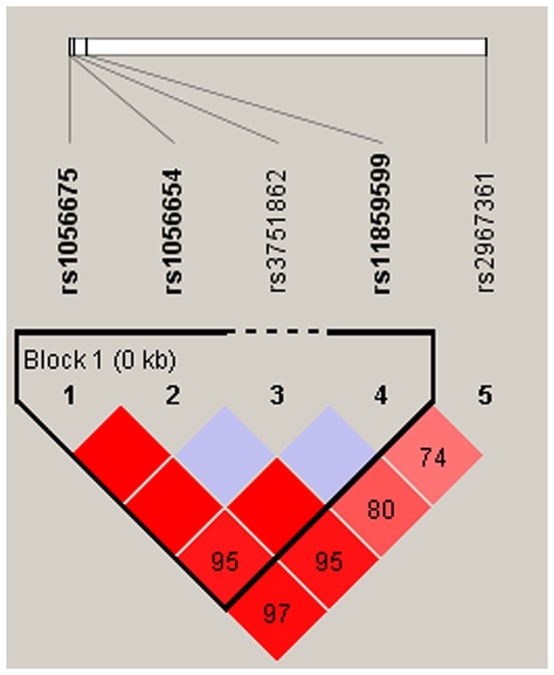
Hepatocellular carcinoma (HCC) is the dominant histologic type of primary liver cancer, and hepatitis B virus (HBV) infection is one of the major causes of HCC in the chronic HBV. Our study was investigated the association between the polymorphisms of ACYP2 and MPHOSPH6 genes and the risk of HCC induced by HBV infection. A total of 490 subjects were divided into two groups: 248 HBV patients with HCC (Case group), and 242 HBV patients without HCC (Control group). Unconditional logistic regression analysis was used to evaluate the association. The genetic association analysis revealed variant of rs12621038 in ACYP2 gene had a significant association with increasing the risk of HBV-induced HCC based on the genotype, dominant and additive model (P<0.05). Moreover, our results also showed that minor allele "C" of rs3751862 was prevalent in cases than controls (P<0.05), and rs3751862 significantly increased the risk of HCC in chronic HBV carriers under genotype and dominant model (P<0.05). In addition, the haplotype "T-G-G" in MPHOSPH6 showed a harmful factor for the HBV-induced HCC (P<0.05). The results suggested that ACYP2 and MPHOSPH6 as the plausible candidate genes may predict the risk of HCC after chronic HBV infection in Chinese Han population, and further investigations in studies with a larger sample size and other races are needed to validate our findings. These data provide a theoretical foundation for future studies of this correlation between the polymorphisms of ACYP2 and MPHOSPH6 genes and the HCC in chronic HBV carriers.
Keywords: ACYP2; MPHOSPH6; association analysis; hepatitis B virus (HBV); hepatocellular carcinoma (HCC).
Conflict of interest statement
CONFLICTS OF INTEREST The authors have declared that they have no conflicts of interest.
Figures
References
-
- Siegel RL, Miller KD, Jemal A. Cancer Statistics, 2017. CA Cancer J Clin. 2017;67:7–30. https://doi.org/10.3322/caac.21387. - DOI - PubMed
-
- Chen W, Zheng R, Baade PD, Zhang S, Zeng H, Bray F, Jemal A, Yu XQ, He J. Cancer statistics in China, 2015. CA Cancer J Clin. 2016;66:115–132. https://doi.org/10.3322/caac.21338. - DOI - PubMed
-
- Elserag HB, Rudolph KL. Hepatocellular carcinoma: epidemiology and molecular carcinogenesis. Gastroenterology. 2007;132:2557–2576. https://doi.org/10.1053/j.gastro.2007.04.061. - DOI - PubMed
-
- Altekruse SF, Henley SJ, Cucinelli JE, Mcglynn KA. Changing Hepatocellular Carcinoma Incidence and Liver Cancer Mortality Rates in the United States. Am J Gastroenterol. 2014;109:542–553. https://doi.org/10.1038/ajg.2014.11. - DOI - PMC - PubMed
-
- Sherman M. Hepatocellular carcinoma: epidemiology, surveillance, and diagnosis. Semin Liver Dis. 2010;30:3–16. https://doi.org/10.1055/s-0030-1247128. - DOI - PubMed
LinkOut - more resources
Full Text Sources
Other Literature Sources
Miscellaneous