


Additive effects of lupin protein and phytic acid on aortic calcification in ApoE deficient mice
- PMID: 29159103
- PMCID: PMC5684972
- DOI: 10.1016/j.jcte.2014.07.007
Additive effects of lupin protein and phytic acid on aortic calcification in ApoE deficient mice
Abstract
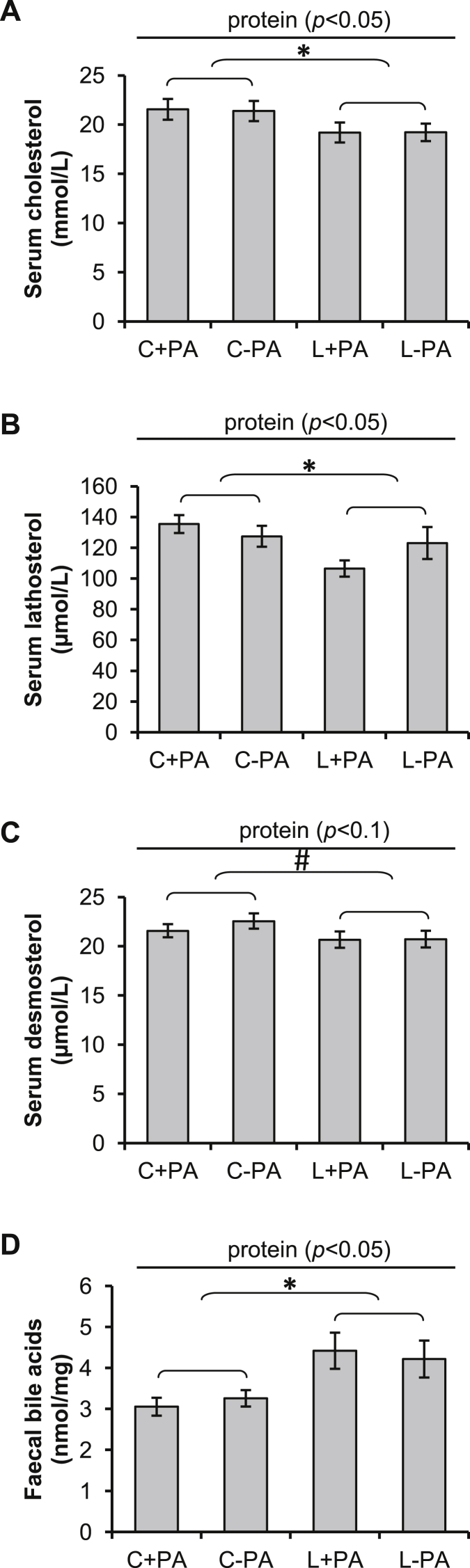
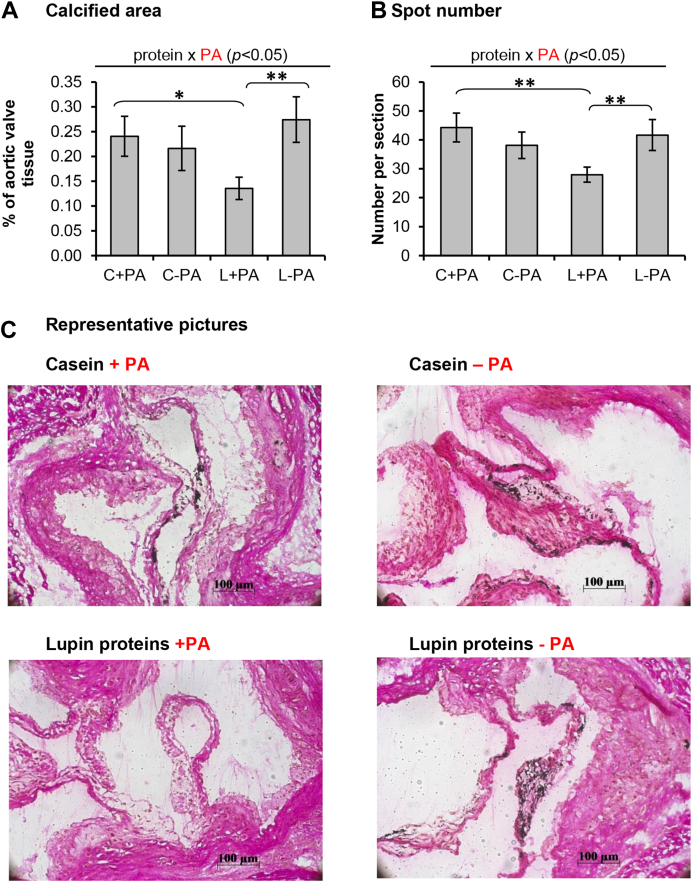
Lupin proteins have repeatedly been shown to exhibit lipid lowering properties and reduce aortic calcification in atherosclerosis models. Despite many efforts on its identification, the component which is responsible for the observed effects is still under debate. Phytic acid which is generally associated with lupin protein isolates has currently been described as bioactive plant compound. The objective of the study was to determine the role of associated phytic acid for the described lupin protein effects. A two-factorial study with ApoE knockout mice was conducted in which mice received lupin protein isolate or casein with or without phytase. Phytic acid was added to the casein diets to a final concentration identical to the lupin protein diets. Here we show that the serum concentrations of cholesterol, lathosterol and desmosterol were lower and the faecal bile acid excretion was higher in the groups fed lupin proteins than in the groups fed casein (p < 0.05). Mice that received the lupin protein diet containing phytic acid were characterized by a lower aortic calcification than mice of the other three groups (p < 0.05). In conclusion, our results show that the cholesterol lowering properties of lupin protein isolate were not caused by phytic acid. However, the hypocalcific action of lupin proteins appears to depend on the combination of lupin proteins and phytic acid.
Keywords: 2WA, two-way ANOVA; ApoE KO mice; ApoE, apolipoprotein E; Atherosclerosis; C, casein; CD68, cluster of differentiation 68; Faecal sterols; KO, knockout; L, lupin protein isolate; Lupin proteins; PA, phytic acid; Phytic acid; Plasma cholesterol.
Figures
References
-
- Bettzieche A., Brandsch C., Weisse K., Hirche F., Eder K., Stangl G.I. Lupin protein influences the expression of hepatic genes involved in fatty acid synthesis and triacylglycerol hydrolysis of adult rats. Br J Nutr. 2008;99:952–962. - PubMed
-
- Weisse K., Brandsch C., Hirche F., Eder K., Stangl G.I. Lupin protein isolate and cysteine-supplemented casein reduce calcification of atherosclerotic lesions in apoE-deficient mice. Br J Nutr. 2010;103:180–188. - PubMed
-
- Weisse K., Brandsch C., Zernsdorf B., Nkengfack-Nembongwe G.S., Hofmann K., Eder K. Lupin protein compared to casein lowers the LDL cholesterol:HDL cholesterol-ratio of hypercholesterolemic adults. Eur J Nutr. 2010;49:65–71. - PubMed
-
- Lovati M.R., Manzoni C., Castiglioni S., Parolari A., Magni C., Duranti M. Lupin seed gamma-conglutin lowers blood glucose in hyperglycaemic rats and increases glucose consumption of HepG2 cells. Br J Nutr. 2012;107:67–73. - PubMed
-
- Sirtori C.R., Lovati M.R., Manzoni C., Castiglioni S., Duranti M., Magni C. Proteins of white lupin seed, a naturally isoflavone-poor legume, reduce cholesterolemia in rats and increase LDL receptor activity in HepG2 cells. J Nutr. 2004;134:18–23. - PubMed
LinkOut - more resources
Full Text Sources
Other Literature Sources
Research Materials
Miscellaneous
