. 2017:2017:9687061.
doi: 10.1155/2017/9687061. Epub 2017 Oct 12.

Acute Asthma in the Pediatric Emergency Department: Infections Are the Main Triggers of Exacerbations

Affiliations

Acute Asthma in the Pediatric Emergency Department: Infections Are the Main Triggers of Exacerbations

Arianna Dondi et al. Biomed Res Int. 2017.

Abstract

Background: Asthma exacerbations are a common reason for Emergency Department (ED) visits in children.

Aim: To analyze differences among age groups in terms of triggering factors and seasonality and to identify those with higher risk of severe exacerbations.

Methods: We retrospectively revised the files of children admitted for acute asthma in 2016 in our Pediatric ED.

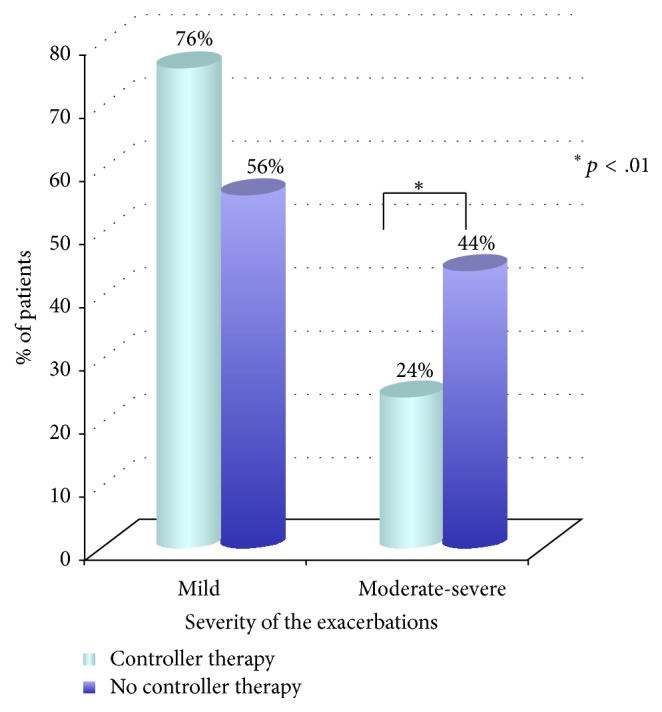
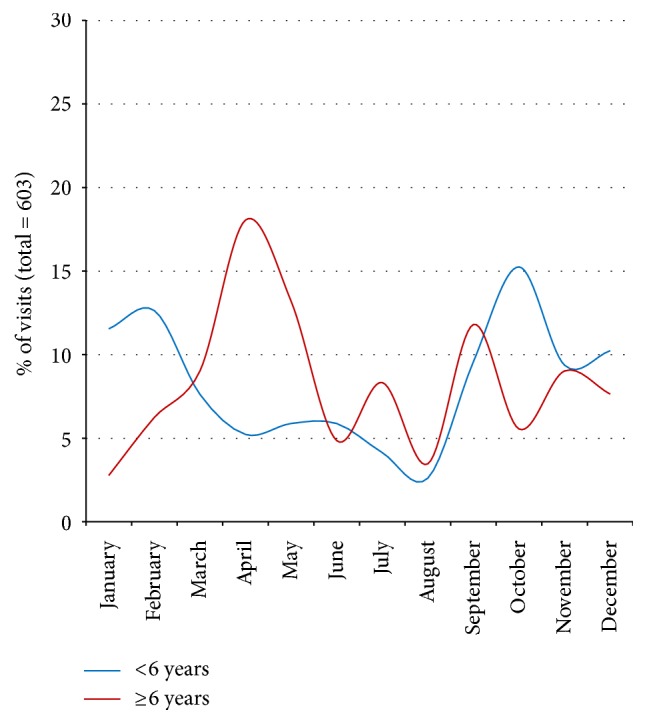
Results: Visits for acute asthma were 603/23197 (2.6%). 76% of the patients were <6 years old and 24% ≥6. Infections were the main trigger of exacerbations in both groups; 33% of the school-aged children had a triggering allergic condition (versus 3% in <6 years; p < .01). 191 patients had a previous history of asthma; among them, 95 were ≥6 years, 67% of whom were not using any controller medication, showing a higher risk of a moderate-to-severe exacerbation than those under long-term therapy (p < .01). Exacerbations peaked in autumn and winter in preschoolers and in spring and early autumn in the school-aged children.

Conclusions: Infections are the main trigger of acute asthma in children of any age, followed by allergy in the school-aged children. Efforts for an improved management of patients affected by chronic asthma might go through individualized action plans and possibly vaccinations and allergen-avoidance measures.


Figures
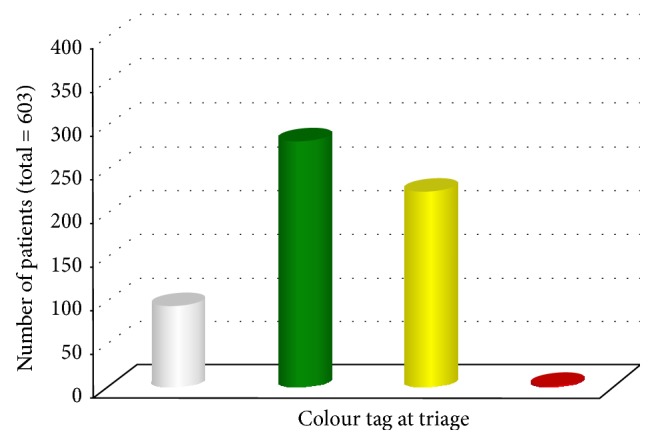
Figure 1
Figure 1
Colour tag at triage of 603 patients aged 0–14 years who were visited for acute asthma from 1 January to 31 December 2016 in the Pediatric ED of S. Orsola-Malpighi University Hospital of Bologna.
Figure 2
Figure 2
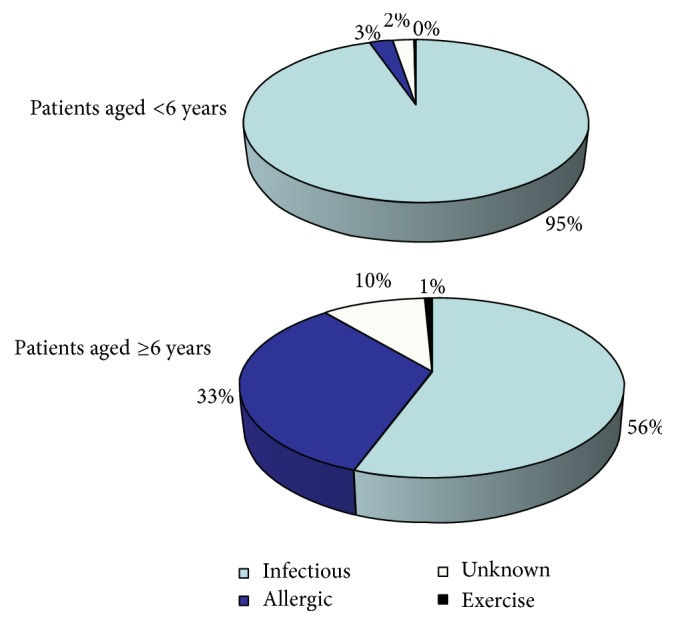
Etiologies of asthma exacerbations in 603 patients aged 0–14 years who were visited for acute asthma in 2016 in the Pediatric ED of the Pediatric Department of S. Orsola-Malpighi University Hospital of Bologna and divided into 2 subgroups: patients younger than 6 years (n = 459; 76%) and those aged 6 years and older (n = 144; 24%).
Figure 3
Figure 3
The severity of the exacerbations in patients ≥6 years with a previous diagnosis of asthma (n = 95) who were visited for acute asthma in 2016 in the Pediatric ED of the Pediatric Department of S. Orsola-Malpighi University Hospital of Bologna and divided into two subgroups (“controller therapy” and “no controller therapy”).
Figure 4
Figure 4
The seasonal trend of the asthmatic exacerbations in 603 patients who were visited for acute asthma in 2016 in the Pediatric ED of the Pediatric Department of S. Orsola-Malpighi University Hospital of Bologna and divided into 2 subgroups: patients younger than 6 years (n = 459; 76%) and those aged 6 years and older (n = 144; 24%).

References

    1. Galassi C., De Sario M., Biggeri A., et al. Changes in prevalence of asthma and allergies among children and adolescents in Italy: 1994-2002. Pediatrics. 2006;117(1):34–42. doi: 10.1542/peds.2004-2709. - DOI - PubMed
    1. Jones B. P., Fleming G. M., Otillio J. K., Asokan I., Arnold D. H. Pediatric acute asthma exacerbations: evaluation and management from emergency department to intensive care unit. Journal of Asthma. 2016;53(6):607–617. doi: 10.3109/02770903.2015.1067323. - DOI - PubMed
    1. Moorman J. E., Akinbami L. J., Bailey C. M., et al. National surveillance of asthma: United States, 2001-2010. Vital Health Stat. 2012;3(35):1–58. - PubMed
    1. Miller A. G., Breslin M. E., Pineda L. C., Fox J. W. An asthma protocol improved adherence to evidence-based guidelines for pediatric subjects with status asthmaticus in the emergency department. Respiratory Care. 2015;60(12):1759–1764. doi: 10.4187/respcare.04011. - DOI - PubMed
    1. Restrepo R. D., Peters J. Near-fatal asthma: recognition and management. Current Opinion in Pulmonary Medicine. 2008;14(1):13–23. doi: 10.1097/MCP.0b013e3282f1982d. - DOI - PubMed

MeSH terms