


Phosphorus transformations in plant-based and bio-waste materials induced by pyrolysis
- PMID: 29159454
- PMCID: PMC5722748
- DOI: 10.1007/s13280-017-0990-y
Phosphorus transformations in plant-based and bio-waste materials induced by pyrolysis
Abstract
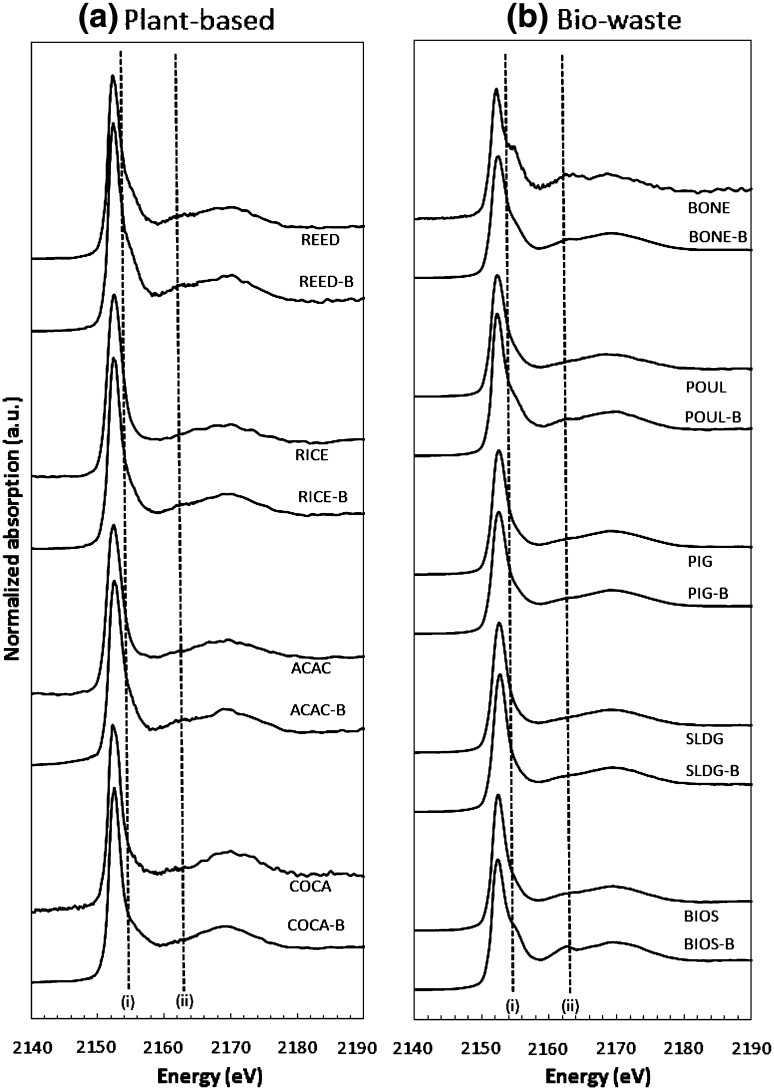
Strategies are needed to increase the sustainability of phosphorus (P) fertiliser management in agriculture. This paper reports on the potential of pyrolysis treatment to recycle P from renewable materials previously regarded as wastes. The study used K-edge X-ray absorption near-edge structure (XANES) spectroscopy to examine chemical forms of P in the waste feedstock materials and corresponding biochars (pyrolysis at 480-500 °C) of four ligno-cellulosic, plant-based residues and five relatively P-rich livestock and water-treatment by-products, to acquire information on changes in potential P fertiliser value. Pyrolysis enriched P in the biochars by factors of 1.3-4.3, thus offering wide-ranging P fertiliser potential. XANES spectroscopy revealed hydroxyapatite (HAP) as one of the dominant chemical P compounds in the feedstocks, ranging from 14% (rice husks) to 98% (animal bone) of total P. For most materials, pyrolysis increased the proportion of HAP, and pyrophosphates were generated in several cases. These alterations possibly lead to diversity in the P solubility characteristics of the biochars if used as soil amendments; this is an important property of environmentally sound P fertilisers.
Keywords: Bio-waste; Biochar; Fertiliser; Phosphorus.
Figures
References
-
- Amonette JE, Joseph S. Characteristics of Biochar: Microchemical Properties. In: Lehmann J, Joseph S, editors. Biochar for Environmental Management: Science and Technology. London: Earthscan; 2009. pp. 33–52.
-
- Baldock JA, Smernik RJ. Chemical composition and bioavailability of thermally altered Pinus resinosa (red pine) wood. Organic Geochemistry. 2002;33:1093–1109. doi: 10.1016/S0146-6380(02)00062-1. - DOI
-
- Bourke J, Manley-Harris M, Fushimi C, Dowaki K, Nunoura T, Antal MJ., Jr Do all carbonized charcoals have the same chemical structure? 2. A model of the chemical structure of carbonized charcoal. Industrial and Engineering Chemistry Research. 2007;46:5954–5967. doi: 10.1021/ie070415u. - DOI
-
- Bruun S, Harmer SL, Bekiaris G, Christel W, Zuin L, Hu Y, Jensen LS, Lobi E. The effect of different pyrolysis temperatures on the speciation and availability in soil of P in biochar produced from the solid fraction of manure. Chemosphere. 2017;169:377–386. doi: 10.1016/j.chemosphere.2016.11.058. - DOI - PubMed
-
- Chan KY, Xu Z. Biochar: Nutrient properties and their enhancement. In: Lehmann J, Joseph S, editors. Biochar for Environmental Management: Science and Technology. London: Earthscan; 2009. pp. 67–84.
MeSH terms
Substances
LinkOut - more resources
Full Text Sources
Other Literature Sources
