


Social integration and survival after diagnosis of colorectal cancer
- PMID: 29160897
- PMCID: PMC5800969
- DOI: 10.1002/cncr.31117
Social integration and survival after diagnosis of colorectal cancer
Abstract
Background: Although larger social networks have been associated with lower all-cause mortality, few studies have examined whether social integration predicts survival outcomes among patients with colorectal cancer (CRC). The authors examined the association between social ties and survival after CRC diagnosis in a prospective cohort study.
Methods: Participants included 896 women in the Nurses' Health Study who were diagnosed with stage I, II, or III CRC between 1992 and 2012. Stage was assigned using the American Joint Committee on Cancer criteria. Social integration was assessed every 4 years since 1992 using the Berkman-Syme Social Network Index, which included marital status, social network size, contact frequency, religious participation, and other social group participation.
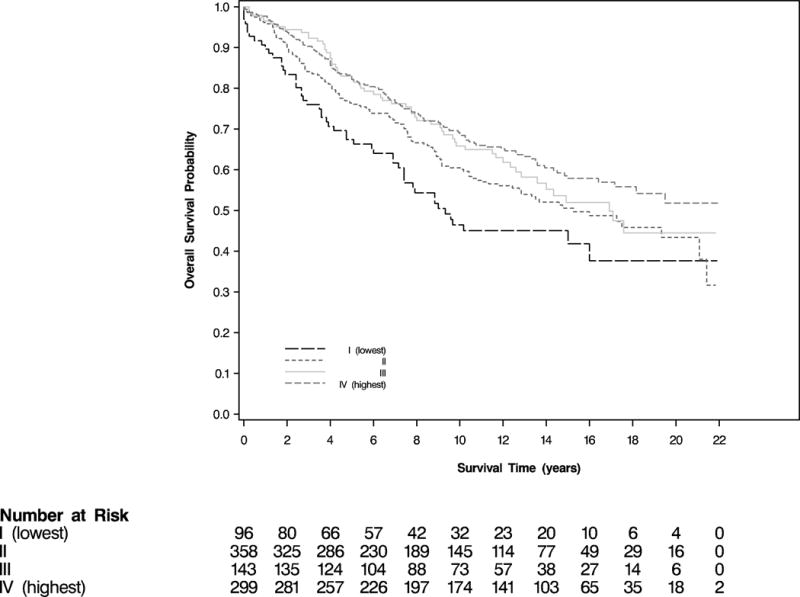
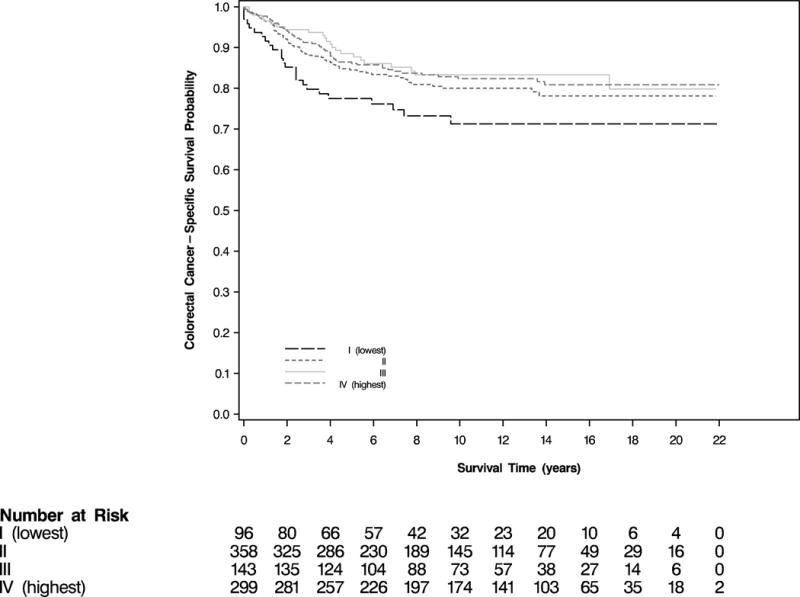
Results: During follow-up, there were 380 total deaths, 167 of which were due to CRC. In multivariable analyses, women who were socially integrated before diagnosis had a subsequent reduced risk of all-cause mortality (hazard ratio [HR], 0.65; 95% confidence interval [95% CI], 0.46-0.92) and CRC mortality (HR, 0.63; 95% CI, 0.38-1.06) compared with women who were socially isolated. In particular, women with more intimate ties (family and friends) had lower all-cause mortality (HR, 0.61; 95% CI, 0.42-0.88) and CRC mortality (HR, 0.59; 95% CI, 0.34-1.03) compared with those with few intimate ties. Participation in religious or community activities was not found to be related to outcomes. The analysis of postdiagnosis social integration yielded similar results.
Conclusions: Socially integrated women were found to have better survival after a diagnosis of CRC, possibly due to beneficial caregiving from their family and friends. Interventions aimed at strengthening social network structures to ensure access to care may be valuable programmatic tools in the management of patients with CRC. Cancer 2018;124:833-40. © 2017 American Cancer Society.
Keywords: colorectal cancer; mortality; social networks; social support; survival; women's health.
© 2017 American Cancer Society.
Conflict of interest statement
Conflict of Interest Disclosures: None
Figures
References
Publication types
MeSH terms
Grants and funding
LinkOut - more resources
Full Text Sources
Other Literature Sources
Medical
