


The metabolic side effects of 12 antipsychotic drugs used for the treatment of schizophrenia on glucose: a network meta-analysis
- PMID: 29162032
- PMCID: PMC5698995
- DOI: 10.1186/s12888-017-1539-0
The metabolic side effects of 12 antipsychotic drugs used for the treatment of schizophrenia on glucose: a network meta-analysis
Abstract
Background: Antipsychotics have serious metabolic side effects on blood glucose. However, the comparative influence of these drugs on blood glucose levels has not been comprehensively evaluated. We conducted a network meta-analysis to create a hierarchy of the side effects of 12 antipsychotic drugs on changes in blood glucose levels.
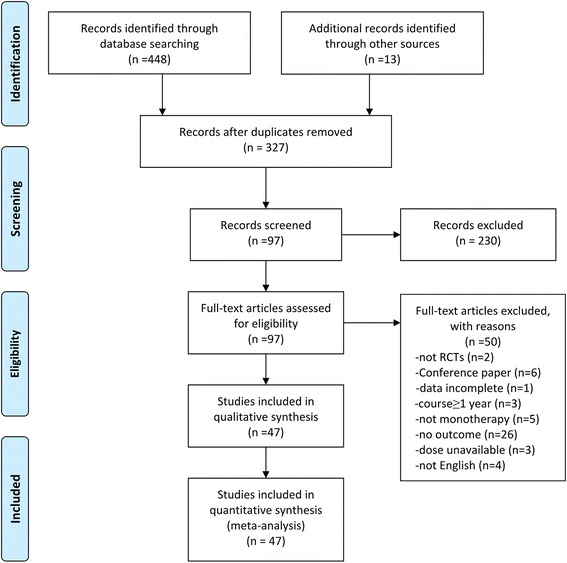
Methods: A systematic search of the PubMed, EMBASE and Cochrane databases (last search June 2016) was conducted to identify studies that reported randomized controlled trials (RCTs) comparing changes in blood glucose levels between patients receiving one of 12 antipsychotic drugs or a placebo for the treatment of schizophrenia or related disorders. The studies we searched were limited to those published in English. Two reviewers independently extracted data. The primary outcome of interest was changes in fasting glucose levels.
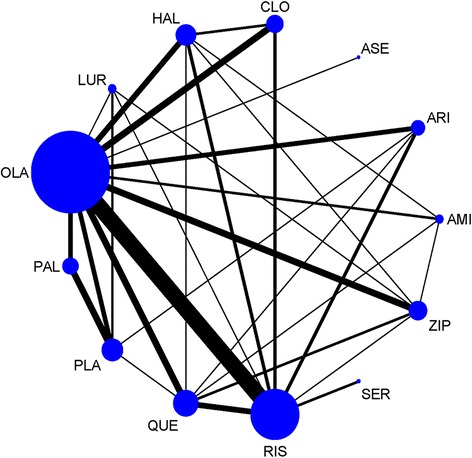
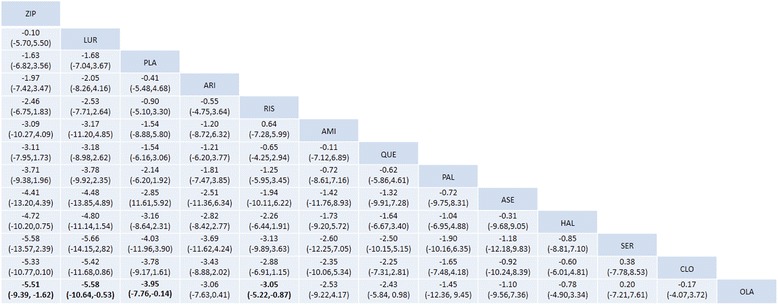
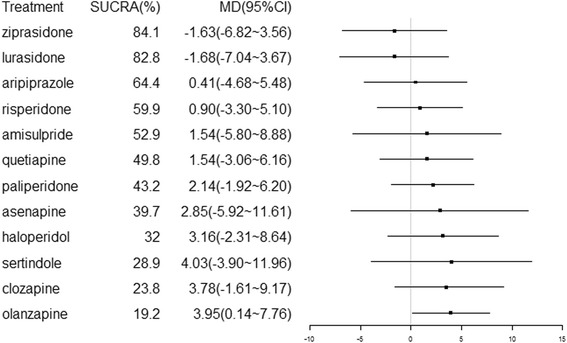
Results: We included 47 studies with 114 relevant arms. Of the antipsychotic drugs, only olanzapine was associated with significantly increased glucose levels compared to a placebo (mean difference (MD) = 3.95, 95% confidence interval (CI) = 0.14 to 7.76). Moreover, olanzapine was associated with a significantly greater change in the glucose levels than ziprasidone (MD = 5.51, 95% CI = 1.62 to 9.39), lurasidone (MD = 5.58, 95% CI = 0.53 to 10.64) or risperidone (MD = 3.05, 95% CI = 0.87 to 5.22). Ziprasidone and lurasidone were associated with minimal glucose changes compared to the other antipsychotics.
Conclusions: Olanzapine was associated with a significantly greater change in blood glucose levels than ziprasidone, lurasidone, risperidone or placebo treatment. The application of a hierarchy of glucose metabolism-related side effects may help clinicians tailor the choice of antipsychotic drug to meet the needs of individual patients.
Keywords: Antipsychotic drug; Glucose change; Network meta-analysis; RCTs.
Conflict of interest statement
Ethics approval and consent to participate
Not applicable.
Consent for publication
Not applicable.
Competing interests
The authors declare that they have no competing interests.
Publisher’s Note
Springer Nature remains neutral with regard to jurisdictional claims in published maps and institutional affiliations.
Figures
References
-
- Reininghaus U, Dutta R, Dazzan P, Doody GA, Fearon P, Lappin J, Heslin M, Onyejiaka A, Donoghue K, Lomas B, et al. Mortality in schizophrenia and other psychoses: a 10-year follow-up of the SOP first-episode cohort. Schizophr Bull. 2015;41(3):664–673. doi: 10.1093/schbul/sbu138. - DOI - PMC - PubMed
Publication types
MeSH terms
Substances
LinkOut - more resources
Full Text Sources
Other Literature Sources
Medical
