


Threat vigilance and socioeconomic disparities in metabolic health
- PMID: 29162180
- PMCID: PMC6541228
- DOI: 10.1017/S0954579417001353
Threat vigilance and socioeconomic disparities in metabolic health
Abstract
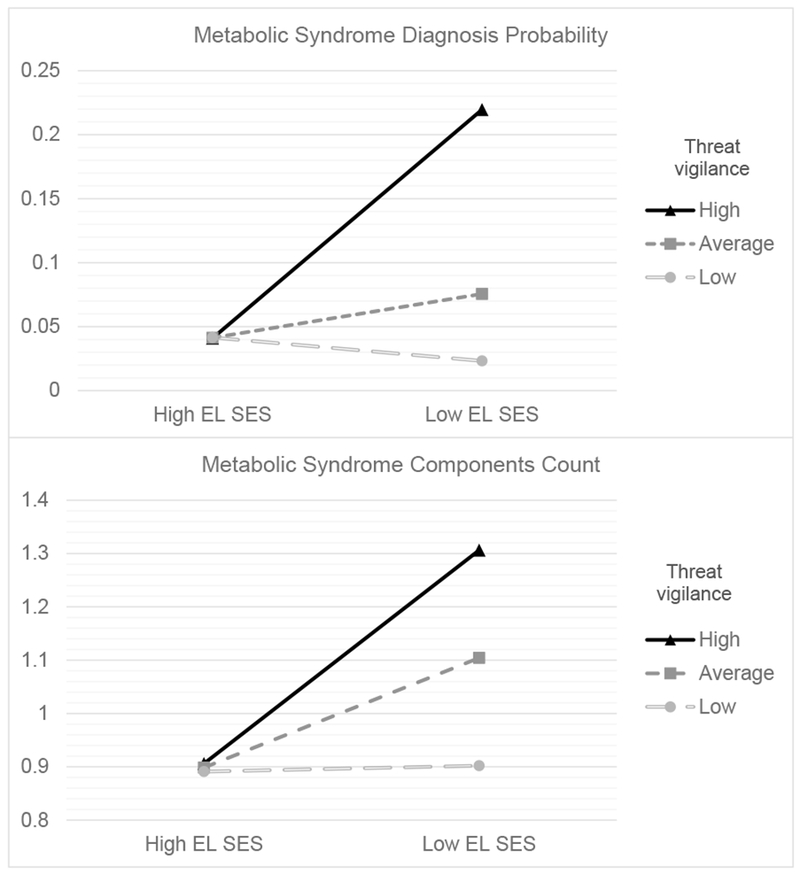
A quarter of the global population meets diagnostic criteria for metabolic syndrome (MetS). MetS prevalence stratifies by socioeconomic status (SES), such that low SES is associated with higher MetS risk starting in childhood. Despite this trend, some low-SES children maintain good metabolic health across the life span, but the factors responsible for their resilience are not well understood. This study examined the role of threat vigilance as either a moderator or a mediator of the effects of low early life SES on adult metabolic risk. Three hundred twenty-five Canadians aged 15-55 participated (M = 36.4 years, SD = 10.7; 55.4% female). We coded parental occupational status between the ages of 0 and 5 to index early life SES. We used the International Diabetes Federation case definition for MetS based on waist circumference, blood pressure, triglyceride levels, HDL cholesterol, and glycosylated hemoglobin measures. Threat vigilance was assessed using the Weapons Identification Procedure, a visual discrimination paradigm that captures implicit perceptions of threat. Analyses supported the moderator hypothesis: low early life SES was associated with MetS diagnosis exclusively among those with high levels of threat vigilance. This suggests that low early life SES environments that heighten vigilance to threat might be particularly detrimental for metabolic health. Conversely, low threat vigilance may buffer against the metabolic risks associated with socioeconomic disadvantage.
Figures
References
-
- Ainsworth MDS, Bell SM, & Stayton DJ (1974). Infant–mother attachment and social development: Socialisation as a product of reciprocal responsiveness to signals In Richards MPM (Ed.), The integration of a child into a social world (pp. 99–137). New York, NY: Cambridge University Press.
Publication types
MeSH terms
Grants and funding
LinkOut - more resources
Full Text Sources
Other Literature Sources
Medical
