


Transgenic Peanut (Arachis hypogaea L.) Overexpressing mtlD Gene Showed Improved Photosynthetic, Physio-Biochemical, and Yield-Parameters under Soil-Moisture Deficit Stress in Lysimeter System
- PMID: 29163606
- PMCID: PMC5675886
- DOI: 10.3389/fpls.2017.01881
Transgenic Peanut (Arachis hypogaea L.) Overexpressing mtlD Gene Showed Improved Photosynthetic, Physio-Biochemical, and Yield-Parameters under Soil-Moisture Deficit Stress in Lysimeter System
Abstract
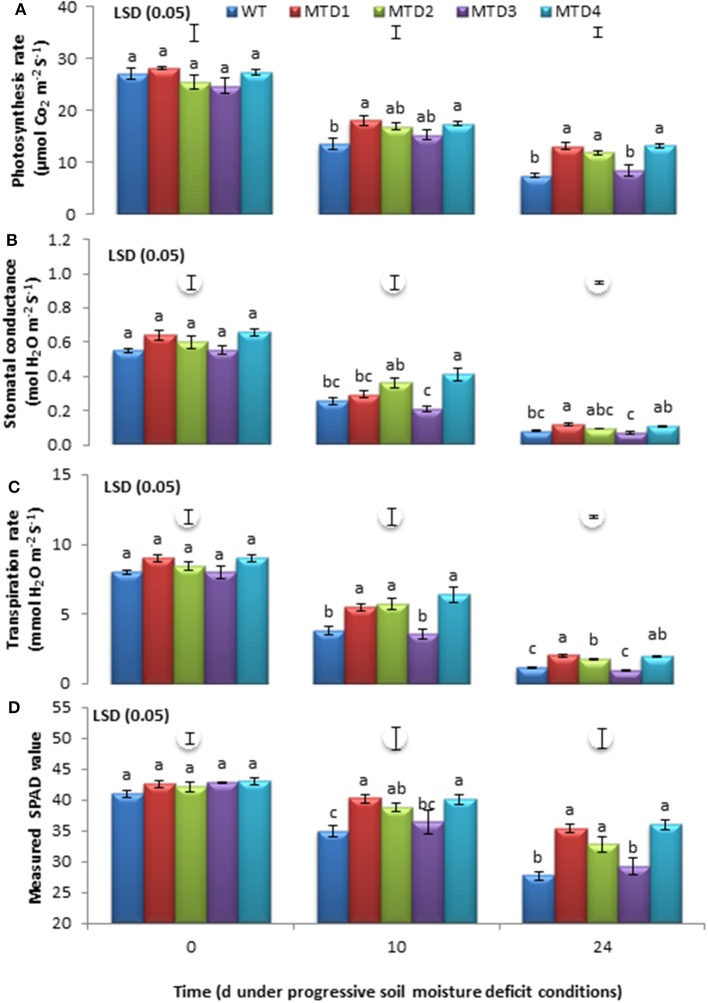
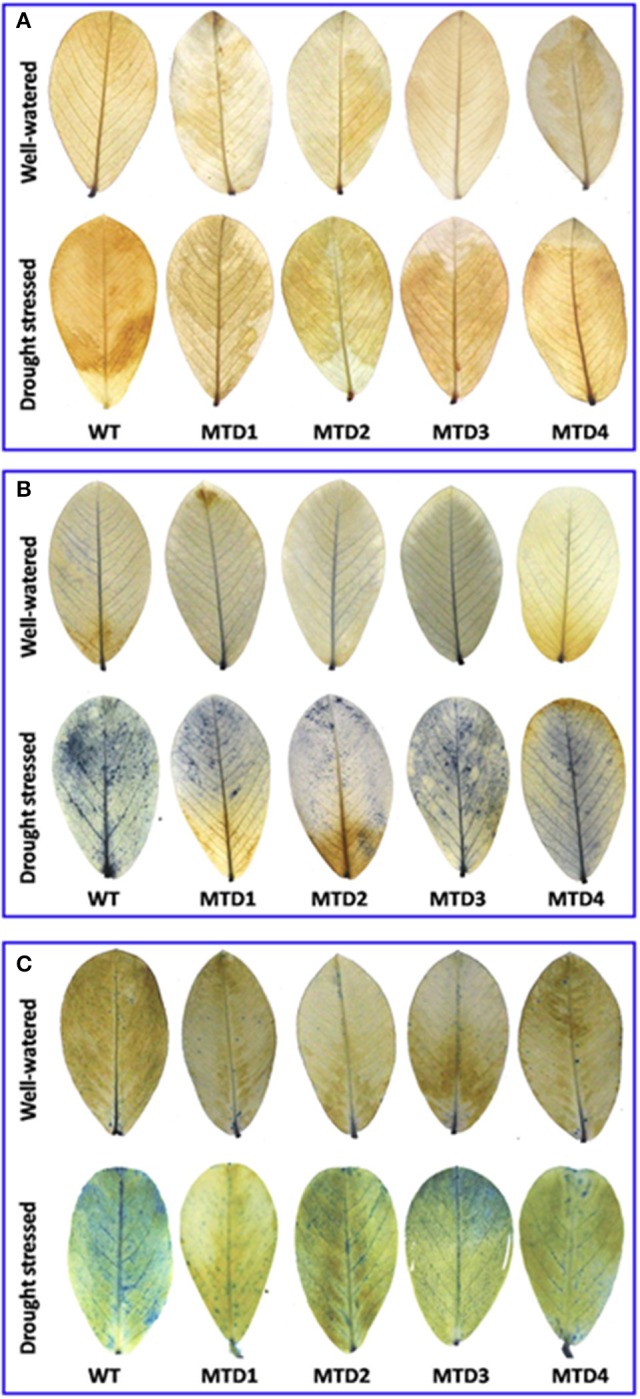
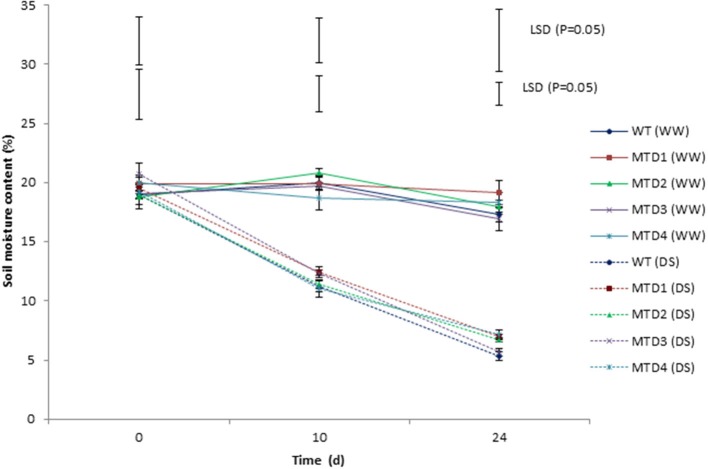
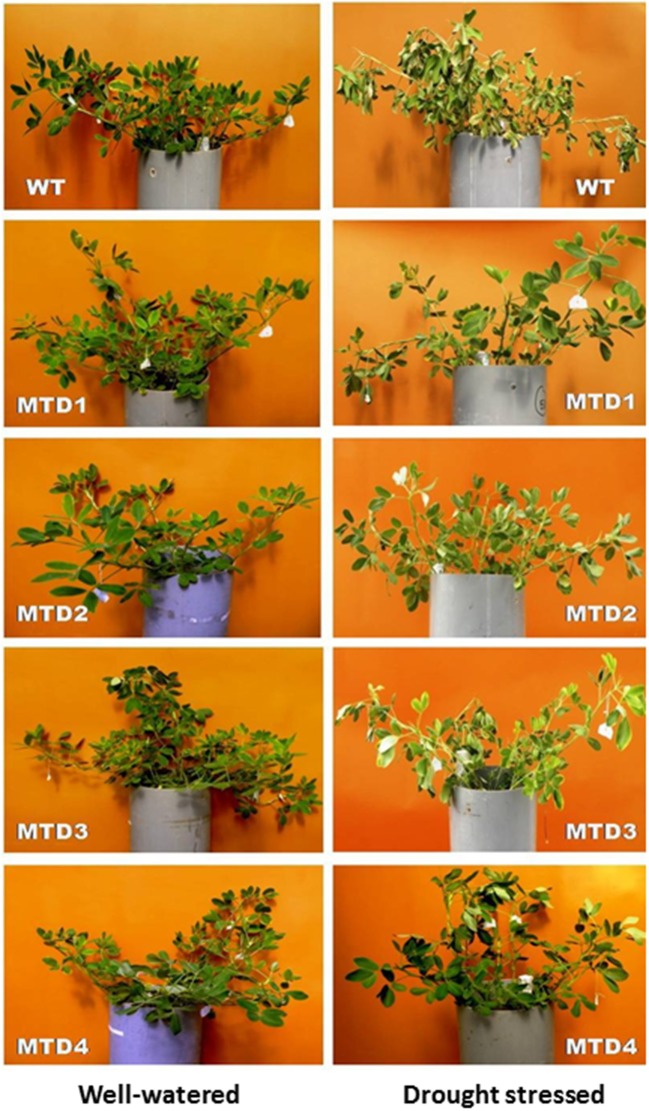
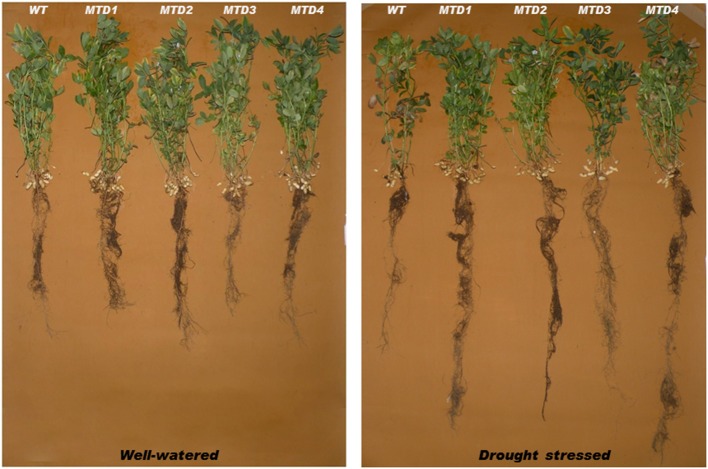
Peanut, an important oilseed crop, frequently encounters drought stress (DS) during its life cycle. In this study, four previously developed mtlD transgenic (T) peanut lines were used for detailed characterization under DS, at the reproductive stage using lysimeter system under controlled greenhouse conditions. In dry-down experiments, T lines maintained better photosynthetic machinery, such as, photosynthesis rate, stomatal conductance, transpiration rate, and SPAD (Soil-Plant Analyses Development) values, and had lower oxidative damage, including lipid membrane peroxidation and hydrogen peroxide and superoxide radical accumulation than WT, when exposed to 24 days of DS. WT plants had a more negative water potential (WP; up to -3.22 MPa) than T lines did (-2.56 to -2.71 MPa) at day 24 of DS treatment. During recovery, T lines recovered easily whereas 67% of WT plants failed to recover. In T lines, the rate of photosynthesis strongly and positively correlated with the transpiration rate (r = 0.92), RWC (r = 0.90), WP (r = 0.86), and total chlorophyll content (r = 0.75), suggesting its strong correlation with water retention-related parameters. Furthermore, yield parameters such as, pod weight and harvest index of T lines were up to 2.19 and 1.38 times more than those of WT plants, respectively. Thus, the significantly better performance of mtlD T peanut lines than of WT plants under DS could be attributed to the accumulation of mannitol, which in turn helped in maintaining the osmoregulation and ROS scavenging activity of mannitol and ultimately conferred water-economizing capacity and higher yield in T lines than in WT plants.
Keywords: drought stress; growth-related traits; lysimeter system; peanut; physio-biochemical parameters; wilting symptoms.
Figures
References
-
- Adrees M., Ali S., Iqbal M., Bharwana S. A., Siddiqi Z., Farid M., et al. (2015). Mannitol alleviates chromium toxicity in wheat plants in relation to growth, yield, stimulation of anti-oxidative enzymes, oxidative stress and Cr uptake in sand and soil media. Ecotoxicol. Environ. Saf. 122, 1–8. 10.1016/j.ecoenv.2015.07.003 - DOI - PubMed
-
- Akcay U. C., Ercan O., Kavas M., Yildiz L., Yilmaz C., Oktem H. A., et al. (2010). Drought-induced oxidative damage and antioxidant responses in peanut (Arachis hypogaea L.) seedlings. Plant Growth Regul. 61, 21–28. 10.1007/s10725-010-9445-1 - DOI
-
- Ashraf M., Harris P. J. C. (2013). Photosynthesis under stressful environments: an overview. Photosynthetica 51, 163–190. 10.1007/s11099-013-0021-6 - DOI
-
- Banjara M., Zhu L., Shen G., Payton P., Zhang H. (2011). Expression of an Arabidopsis sodium/proton antiporter gene (AtNHX1) in peanut to improve salt tolerance. Plant Biotechnol. Rep. 6:59 10.1007/s11816-011-0200-5 - DOI
LinkOut - more resources
Full Text Sources
Other Literature Sources
