


Chlorinative stress in age-related diseases: a literature review
- PMID: 29163665
- PMCID: PMC5686828
- DOI: 10.1186/s12979-017-0104-5
Chlorinative stress in age-related diseases: a literature review
Abstract
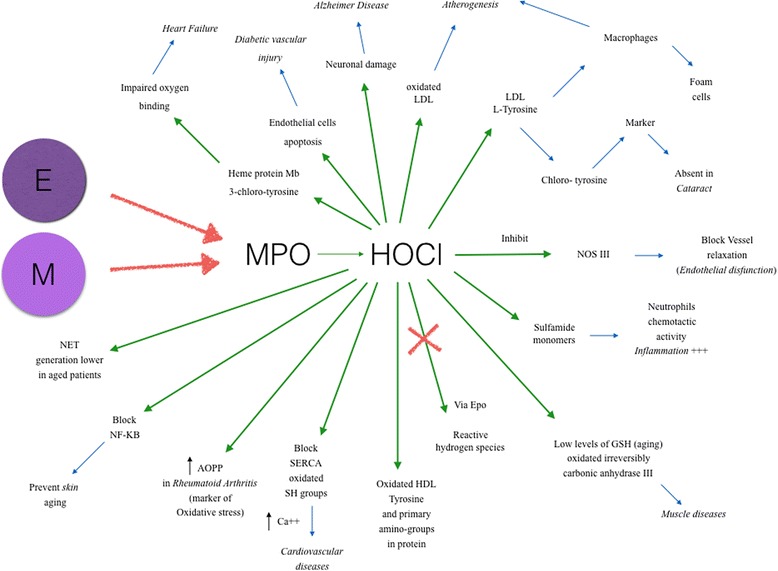
Aging is an agglomerate of biological long-lasting processes that result being inevitable. Main actors in this scenario are both long-term inflammation and oxidative stress. It has been proved that oxidative stress induce alteration in proteins and this fact itself is critically important in the pathophysiological mechanisms leading to diseases typical of aging. Among reactive species, chlorine ones such as hypochlorous acid (HOCl) are cytotoxic oxidants produced by activated neutrophils during chronic inflammation processes. HOCl can also cause damages by reacting with biological molecules. HOCl is generated by myeloperoxidase (MPO) and augmented serum levels of MPO have been described in acute and chronic inflammatory conditions in cardiovascular patients and has been implicated in many inflammatory diseases such as atherosclerosis, neurodegenerative conditions, and some cancers. Due to these data, we decided to conduct an up-to-date review evaluating chlorinative stress effects on every age-related disease linked; potential anti-oxidant countermeasures were also assessed. Results obtained associated HOCl generation to the aging processes and confirmed its connection with diseases like neurodegenerative and cardiovascular pathologies, atherosclerosis and cancer; chlorination was mainly linked to diseases where molecular (protein) alteration constitute the major suspected cause: i.e. inflammation, tissue lesions, DNA damages, apoptosis and oxidative stress itself. According data collected, a healthy lifestyle together with some dietary suggestion and/or the administration of nutracetical antioxidant integrators could balance the effects of chlorinative stress and, in some cases, slow down or prevent the onset of age-releated diseases.
Keywords: Age; Aging; Chlorination; Chlorinative stress; Chlorine; Hypochlorous acid; Inflammation; Myeloperoxidase; Oxidative stress; Protein damage.
Conflict of interest statement
Ethics approval and consent to participate
Not applicable.
Consent for publication
Not applicable.
Competing interests
The authors declare that they have no competing interest.
Publisher’s Note
Springer Nature remains neutral with regard to jurisdictional claims in published maps and institutional affiliations.
Figures
References
-
- Brieger K, et al. Reactive oxygen species: from health to disease. Swiss Med Wkly. 2012;142:w13659. - PubMed
Publication types
LinkOut - more resources
Full Text Sources
Other Literature Sources
Research Materials
Miscellaneous
