


Urban Livestock Keeping in the City of Nairobi: Diversity of Production Systems, Supply Chains, and Their Disease Management and Risks
- PMID: 29164137
- PMCID: PMC5669286
- DOI: 10.3389/fvets.2017.00171
Urban Livestock Keeping in the City of Nairobi: Diversity of Production Systems, Supply Chains, and Their Disease Management and Risks
Abstract
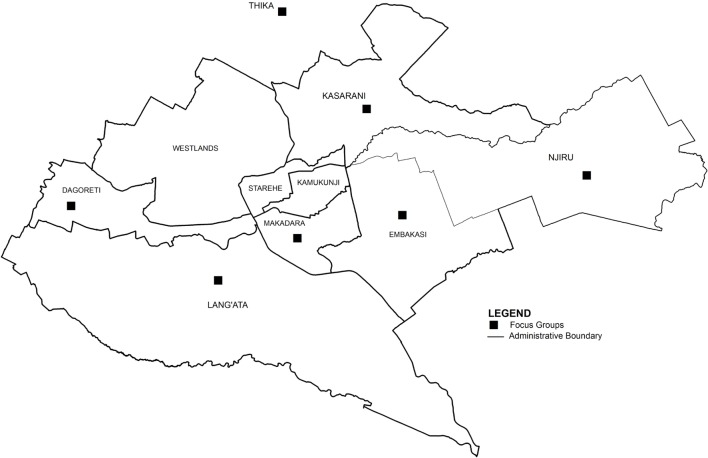
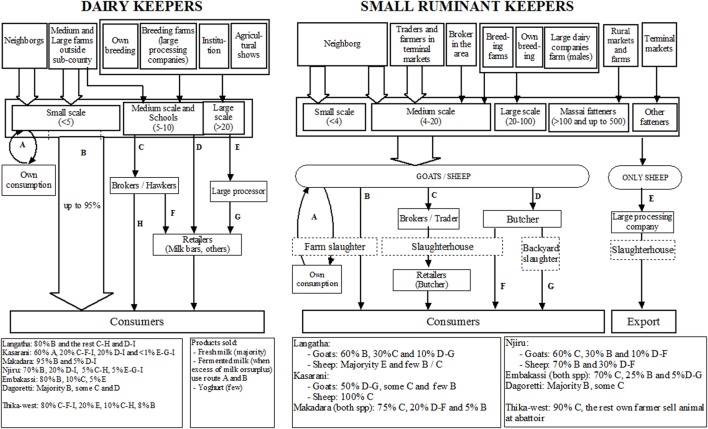
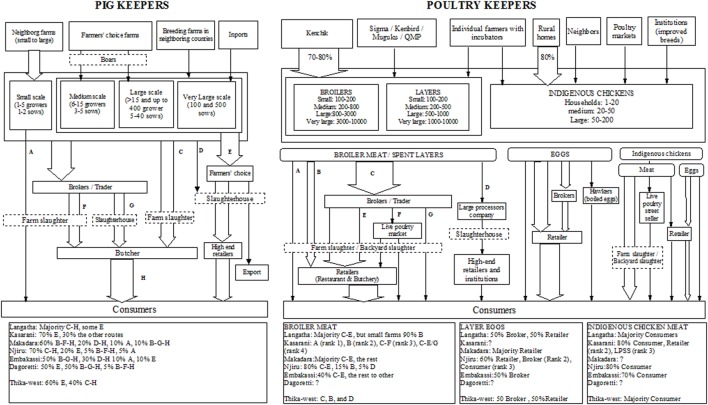
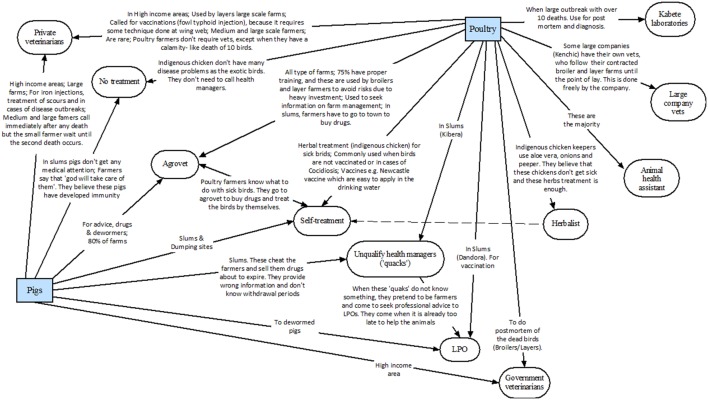
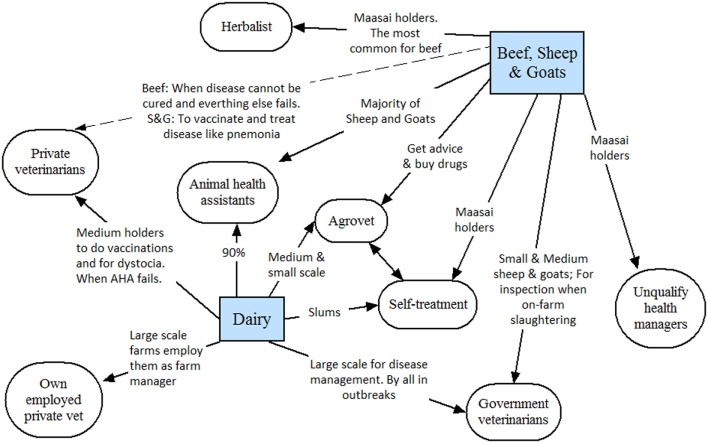
Urban livestock keeping in developing cities have an important role in food security and livelihoods but can also pose a significant threat to the environment and health of urban dwellers. The aim of this study was to identify the different livestock systems in Nairobi, their supply chains, and their management and food safety risks. Seven focus group discussions with livestock production officers in charge of each major Nairobi sub-county were conducted. Data were collected on the type of systems existing for each livestock species and their supply chains, disease management, food safety risks, and general husbandry and gender factors. Supply chain flow diagrams and thematic analysis of the data was done. Results of the study show a large variability of livestock keeping in Nairobi. The majority were small scale with: <5 dairy cows, 1-6 dairy goats, <10 small ruminants, <20 pigs, 200-500 broilers, 300-500 layers, <10 indigenous chickens, or <20 rabbits. Beef keeping was mainly described as a "by the way" system or done by traders to fatten animals for 3 month. Supply chain analysis indicated that most dairy farmers sold milk directly to consumers due to "lack of trust" of these in traders. Broiler and pig farmers sold mainly to traders but are dependent on few large dominating companies for their replacement or distribution of products. Selling directly to retailers or consumers (including own consumption), with backyard slaughtering, were important chains for small-scale pig, sheep and goat, and indigenous chicken keepers. Important disease risk practices identified were associated with consumption of dead and sick animals, with underground network of brokers operating for ruminant products. Qualified trained health managers were used mainly by dairy farmers, and large commercial poultry and pig farmers, while use of unqualified health managers or no treatment were common in small-scale farming. Control of urban livestock keepers was reported difficult due to their "feeling of being outlaws," "lack of trust" in government, "inaccessibility" in informal settlements, "lack of government funding," or "understaffing." Findings are useful for designing policies to help to control urban livestock production and minimize its associated health and environment risks.
Keywords: Nairobi; disease management; food safety; gender; risk practices; supply chain; urban livestock.
Figures
References
-
- Nyaga P. Poultry Sector Country Review: Kenya. Rome: FAO review; (2007). Available from: ftp://ftp.fao.org/docrep/fao/011/ai379e/ai379e00.pdf
-
- Mireri PC. Assessment of the contribution of urban agriculture to employment, income and food security in Kenya: a case of Kisumu municipality. Afr J Agric Res (2013) 8(23):2884–96. 10.5897/AJAR10.656 - DOI
-
- De Zeeuw H, Van Veehnhuizen R, Dubbeling M. The role of urban agriculture in building resilient cities in developing countries. J Agric Sci (2011) 149(S1):1–11. 10.1017/S0021859610001279 - DOI
-
- Kariuki S, Onsare R, Mwituria J, Ng’etich R, Nafula C, Karimi K, et al. Improving food safety in meat value chains in Kenya. Food Prot Trends (2013) 33(2):172–9.
-
- Robinson T, Pozzi F. Mapping Supply and Demand for Animal-Source Foods to 2030. Animal Production and Health Working Paper. No. 2. Rome: (2011).
Grants and funding
LinkOut - more resources
Full Text Sources
Other Literature Sources
