


Mechanisms and Mitochondrial Redox Signaling in Photobiomodulation
- PMID: 29164625
- PMCID: PMC5844808
- DOI: 10.1111/php.12864
Mechanisms and Mitochondrial Redox Signaling in Photobiomodulation
Abstract
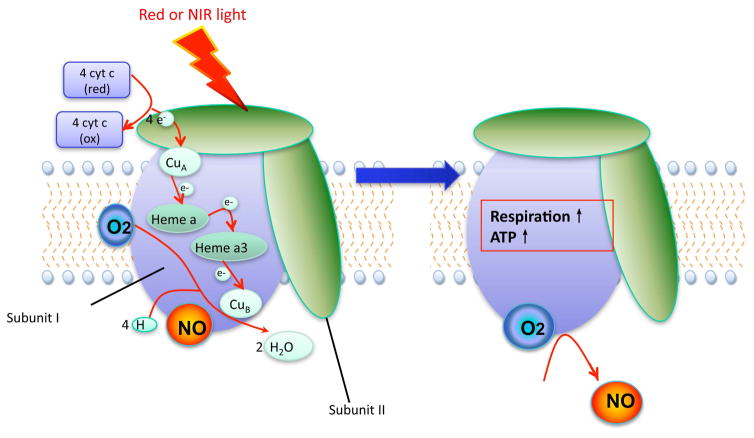
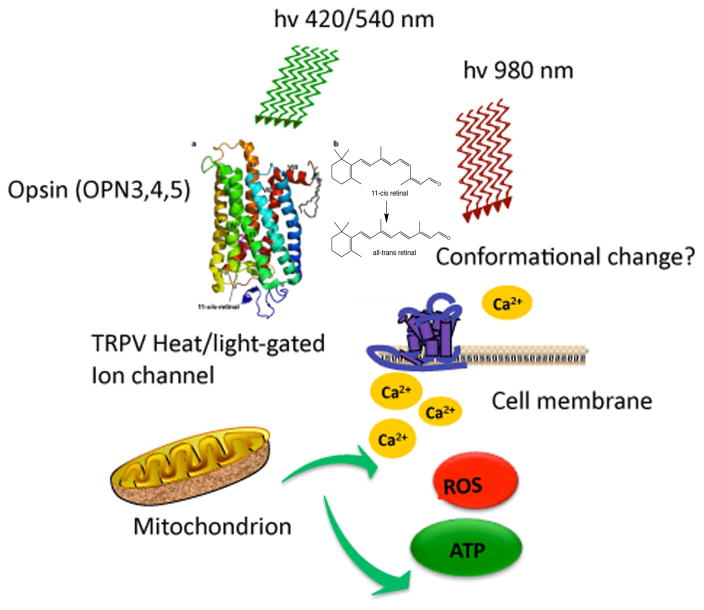
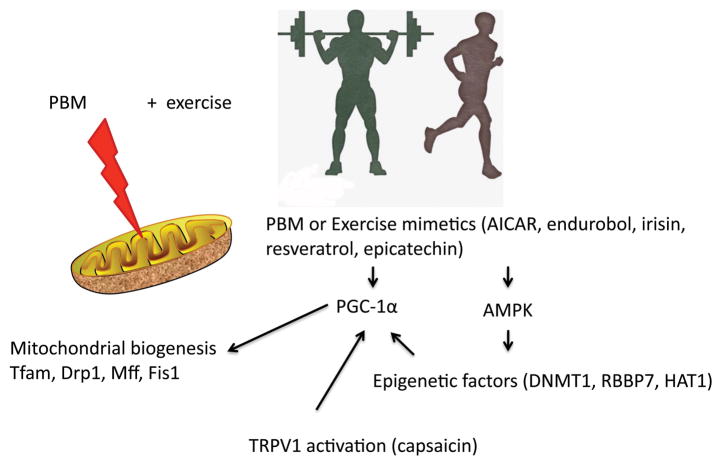
Photobiomodulation (PBM) involves the use of red or near-infrared light at low power densities to produce a beneficial effect on cells or tissues. PBM therapy is used to reduce pain, inflammation, edema, and to regenerate damaged tissues such as wounds, bones, and tendons. The primary site of light absorption in mammalian cells has been identified as the mitochondria and, more specifically, cytochrome c oxidase (CCO). It is hypothesized that inhibitory nitric oxide can be dissociated from CCO, thus restoring electron transport and increasing mitochondrial membrane potential. Another mechanism involves activation of light or heat-gated ion channels. This review will cover the redox signaling that occurs in PBM and examine the difference between healthy and stressed cells, where PBM can have apparently opposite effects. PBM has a marked effect on stem cells, and this is proposed to operate via mitochondrial redox signaling. PBM can act as a preconditioning regimen and can interact with exercise on muscles.
© 2017 The American Society of Photobiology.
Figures
References
-
- Hamblin MR, de Sousa MV, Agrawal T. Handbook of Low Level Laser Therapy. Pan-Stanford Publlshing; 2016.
-
- McGuff PE, Deterling RA, Jr, Gottlieb LS. Tumoricidal effect of laser energy on experimental and human malignant tumors. N Engl J Med. 1965;273:490–492. - PubMed
-
- Mester E, Spiry T, Szende B. Effect of laser rays on wound healing. Bull Soc Int Chir. 1973;32:169–173. - PubMed
-
- Mester E, Szende B, Gartner P. The effect of laser beams on the growth of hair in mice. Radiobiol Radiother (Berl) 1968;9:621–626. - PubMed
Publication types
MeSH terms
Substances
Grants and funding
LinkOut - more resources
Full Text Sources
Other Literature Sources
Medical
