


Potential predictors of susceptibility to occupational stress in Japanese novice nurses - a pilot study
- PMID: 29165135
- PMCID: PMC5664583
- DOI: 10.1186/s12199-017-0641-8
Potential predictors of susceptibility to occupational stress in Japanese novice nurses - a pilot study
Abstract
Background: Occupational stress is a known factor behind employee resignations; thus, early identification of individuals prone to such stress is important. Accordingly, in this pilot study we evaluated potential predictors of susceptibility to occupational stress in Japanese novice nurses.
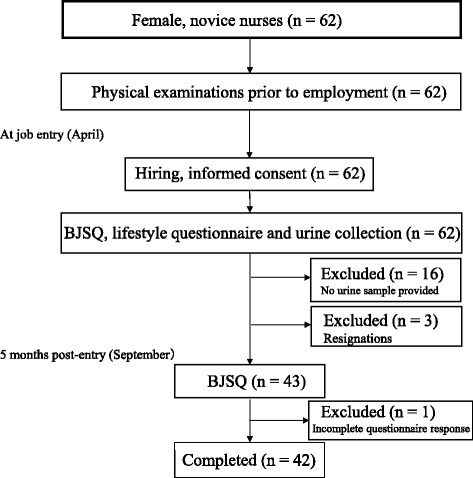
Methods: Forty-two female novice nurses at Kagoshima University Hospital were recruited for the study population. Each underwent physical health and urinary examinations, and completed a lifestyle questionnaire at the time of job entry. Each also completed a Brief Job Stress Questionnaire (BJSQ), related to mental health status, at job entry and 5 months post-entry. Psychological stress, somatic symptoms, and combined BJSQ scores were determined for each time point.
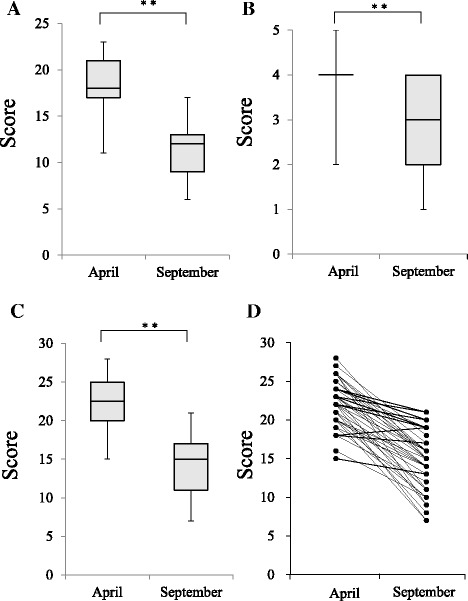
Results: All three stress condition scores had significantly decreased at 5 months post-entry, suggesting occupational stress. Systolic blood pressure (r = -0.324, p < 0.05) and urinary sodium (r = -0.313, p < 0.05) were significantly negatively correlated with combined BJSQ score at 5 months post-entry. Post-entry stress condition scores were significantly low in subjects reporting substantial 1-year body weight change (≤ ± 3 kg) and short times between dinner and bedtimes (≤2 h), though baseline stress condition scores were not. Urinary sodium concentration, 1-year body weight change, and pre-sleep evening meals were then targeted for multivariate analysis, and confirmed as independent explanatory variables for post-entry stress condition scores.
Conclusions: One-year body weight change, times between dinner and bedtimes, and urinary sodium concentration are promising potential predictors of susceptibility to occupational stress, and should be further investigated in future research.
Trial registration: ISRCTN ISRCTN17516023. Retrospectively registered 7 December 2016.
Keywords: Body weight change; Brief job stress questionnaire; Employee turnover; Pre-employment health examinations; Urinary minerals.
Figures
References
MeSH terms
LinkOut - more resources
Full Text Sources
Other Literature Sources
Medical