


Physician interpretation of genomic test results and treatment selection
- PMID: 29165790
- PMCID: PMC5821595
- DOI: 10.1002/cncr.31112
Physician interpretation of genomic test results and treatment selection
Abstract
Background: Genomic testing is increasingly performed in oncology, but concerns remain regarding the clinician's ability to interpret results. In the current study, the authors sought to determine the agreement between physicians and genomic annotators from the Precision Oncology Decision Support (PODS) team at The University of Texas MD Anderson Cancer Center in Houston regarding actionability and the clinical use of test results.
Methods: On a prospective protocol, patients underwent clinical genomic testing for hotspot mutations in 46 or 50 genes. Six months after sequencing, physicians received questionnaires for patients who demonstrated a variant in an actionable gene, investigating their perceptions regarding the actionability of alterations and clinical use of these findings. Genomic annotators independently classified these variants as actionable, potentially actionable, unknown, or not actionable.
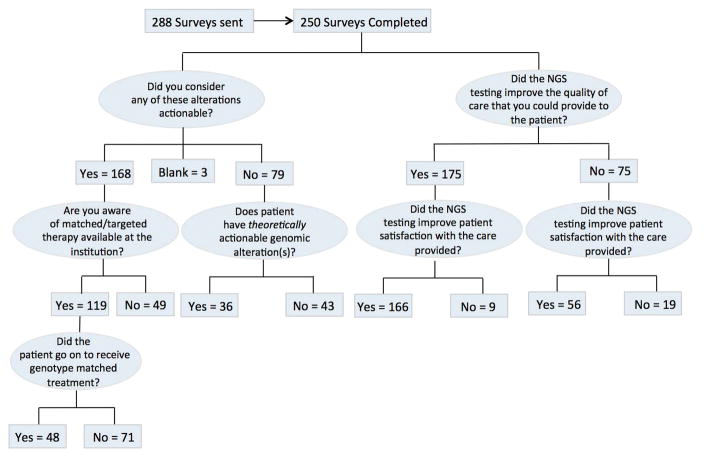
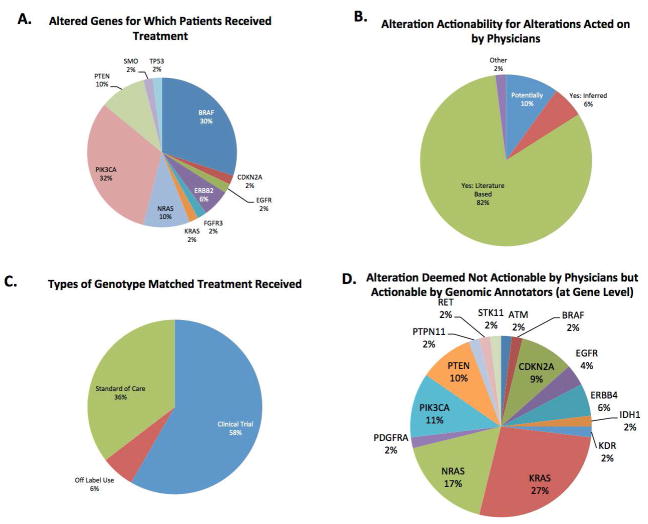
Results: Physicians completed 250 of 288 questionnaires (87% response rate). Physicians considered 168 of 250 patients (67%) as having an actionable alteration; of these, 165 patients (98%) were considered to have an actionable alteration by the PODS team and 3 were of unknown significance. Physicians were aware of genotype-matched therapy available for 119 patients (71%) and 48 of these 119 patients (40%) received matched therapy. Approximately 46% of patients in whom physicians regarded alterations as not actionable (36 of 79 patients) were classified as having an actionable/potentially actionable mutation by the PODS team. However, many of these were only theoretically actionable due to limited trials and/or therapies (eg, KRAS).
Conclusions: Physicians are aware of recurrent mutations in actionable genes on "hotspot" panels. As larger genomic panels are used, there may be a growing need for annotation of actionability. Decision support to increase awareness of genomically relevant trials and novel treatment options for recurrent mutations (eg, KRAS) also are needed. Cancer 2018;124:966-72. © 2017 American Cancer Society.
Keywords: clinical trial; genomics; personalized therapy; precision medicine; somatic mutation.
© 2017 American Cancer Society.
Figures
References
-
- Kim G, et al. FDA approval summary: vemurafenib for treatment of unresectable or metastatic melanoma with the BRAFV600E mutation. Clin Cancer Res. 2014;20(19):4994–5000. - PubMed
-
- Wolff AC, et al. Recommendations for human epidermal growth factor receptor 2 testing in breast cancer: American Society of Clinical Oncology/College of American Pathologists clinical practice guideline update. J Clin Oncol. 2013;31(31):3997–4013. - PubMed
Publication types
MeSH terms
Grants and funding
LinkOut - more resources
Full Text Sources
Other Literature Sources
Research Materials
Miscellaneous
