


Shipping living donor kidneys and transplant recipient outcomes
- PMID: 29165871
- PMCID: PMC6354257
- DOI: 10.1111/ajt.14597
Shipping living donor kidneys and transplant recipient outcomes
Abstract
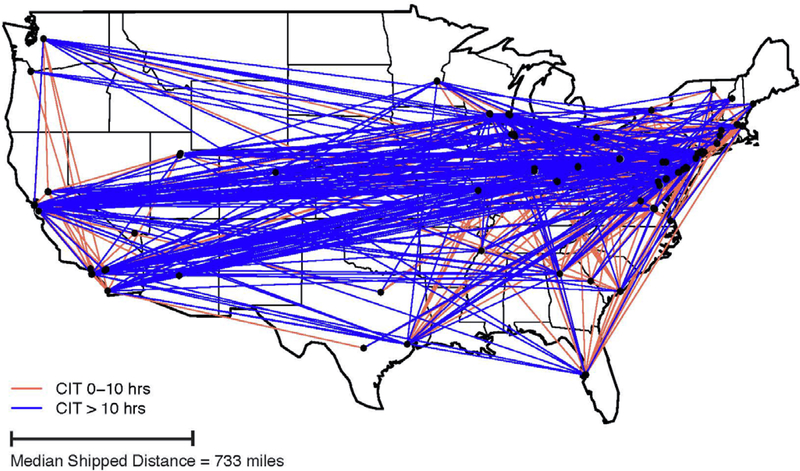
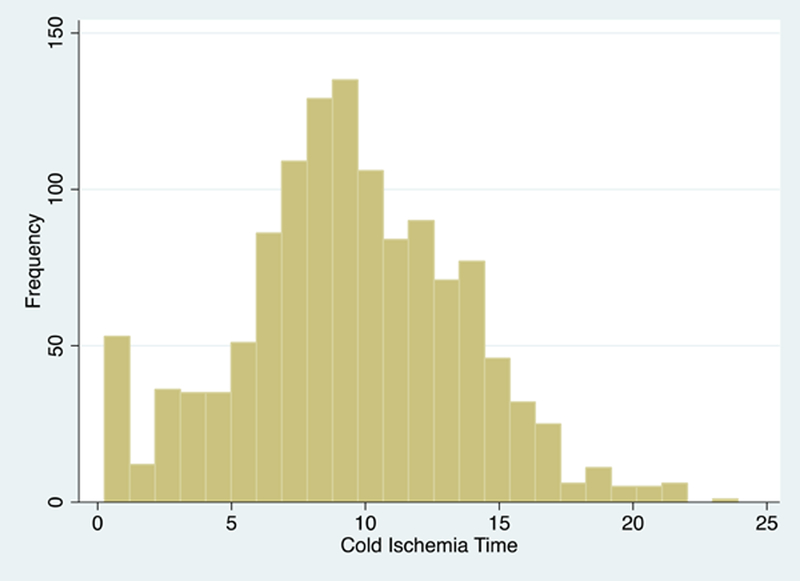
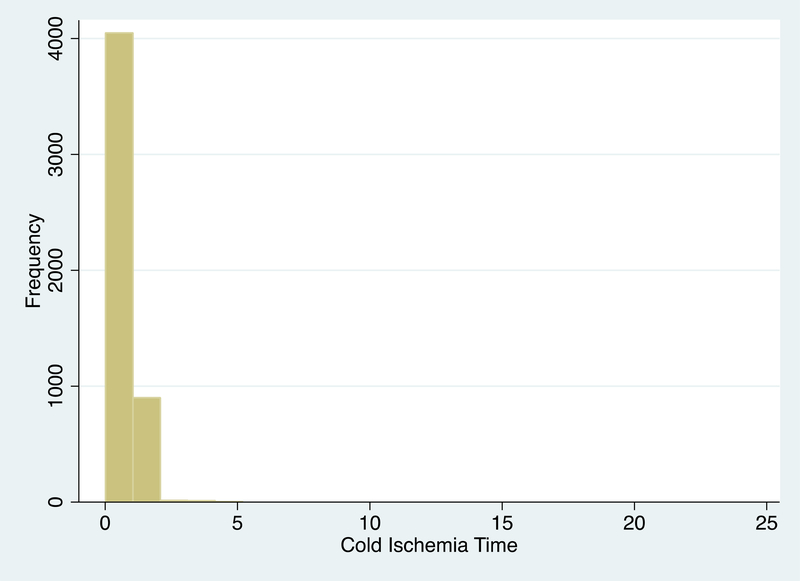
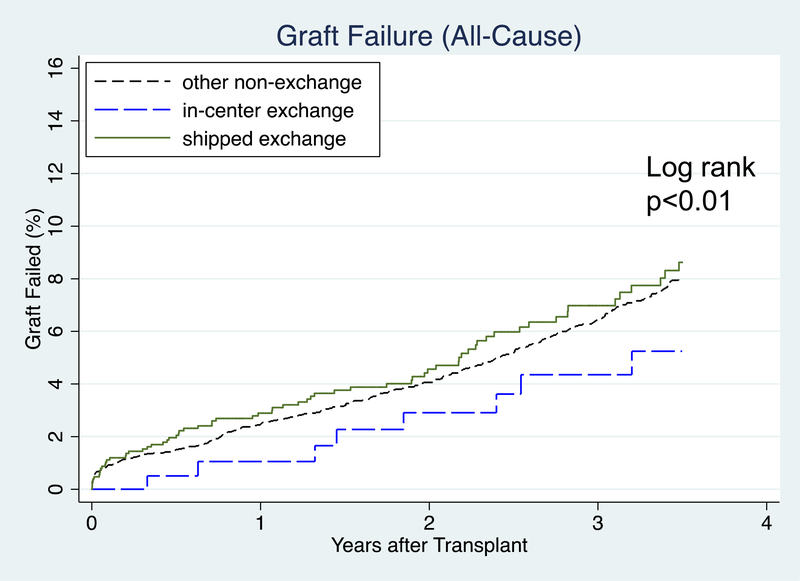
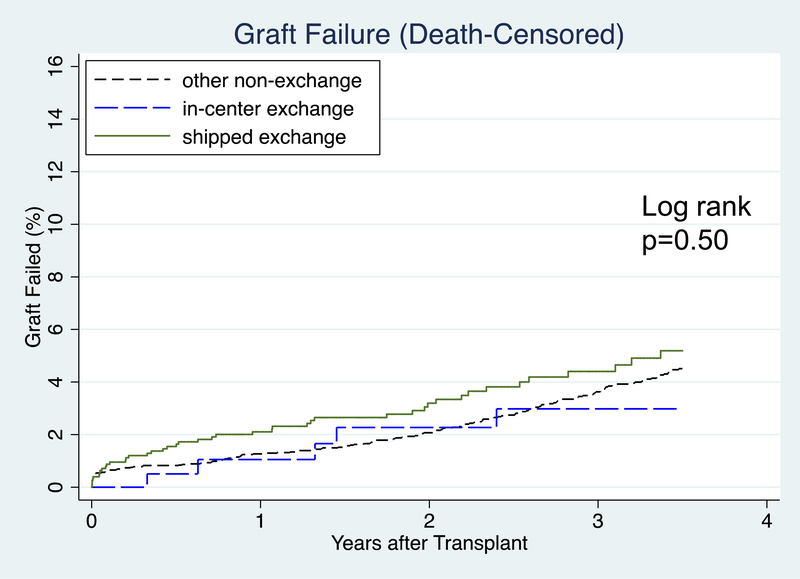
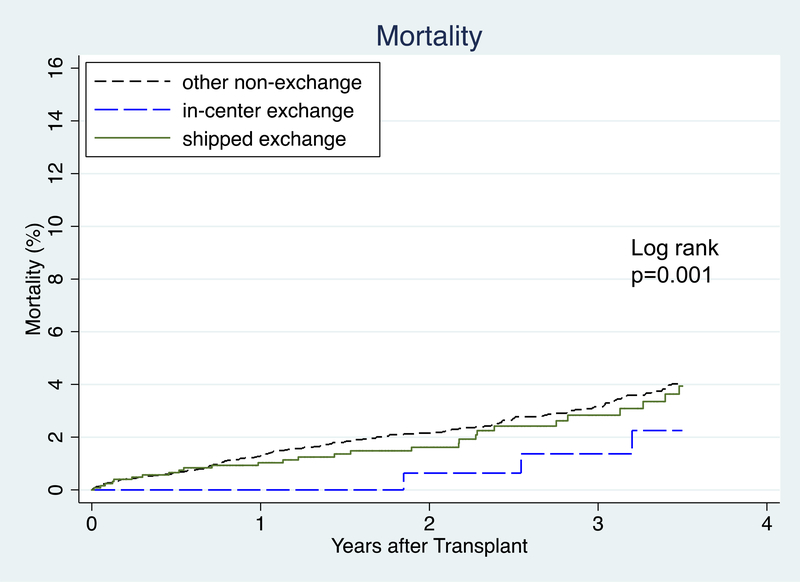
Kidney paired donation (KPD) is an important tool to facilitate living donor kidney transplantation (LDKT). Concerns remain over prolonged cold ischemia times (CIT) associated with shipping kidneys long distances through KPD. We examined the association between CIT and delayed graft function (DGF), allograft survival, and patient survival for 1267 shipped and 205 nonshipped/internal KPD LDKTs facilitated by the National Kidney Registry in the United States from 2008 to 2015, compared to 4800 unrelated, nonshipped, non-KPD LDKTs. Shipped KPD recipients had a median CIT of 9.3 hours (range = 0.25-23.9 hours), compared to 1.0 hour for internal KPD transplants and 0.93 hours for non-KPD LDKTs. Each hour of CIT was associated with a 5% increased odds of DGF (adjusted odds ratio: 1.05, 95% confidence interval [CI], 1.02-1.09, P < .01). However, there was not a significant association between CIT and all-cause graft failure (adjusted hazard ratio [aHR]: 1.01, 95% CI: 0.98-1.04, P = .4), death-censored graft failure ( [aHR]: 1.02, 95% CI, 0.98-1.06, P = .4), or mortality (aHR 1.00, 95% CI, 0.96-1.04, P > .9). This study of KPD-facilitated LDKTs found no evidence that long CIT is a concern for reduced graft or patient survival. Studies with longer follow-up are needed to refine our understanding of the safety of shipping donor kidneys through KPD.
Keywords: clinical research/practice; delayed graft function (DGF); donors and donation: paired exchange; graft survival; health services and outcomes research; kidney transplantation/nephrology.
© 2017 The American Society of Transplantation and the American Society of Transplant Surgeons.
Conflict of interest statement
DISCLOSURE
The authors of this manuscript have no conflicts of interest to disclose as described by the American Journal of Transplantation.
Figures
Comment in
-
Re: Shipping Living Donor Kidneys and Transplant Recipient Outcomes.J Urol. 2018 Nov;200(5):933-934. doi: 10.1016/j.juro.2018.07.058. Epub 2018 Aug 6. J Urol. 2018. PMID: 30360323 No abstract available.
References
-
- Rees MA, Kopke JE, Pelletier RP, Segev DL, Rutter ME, Fabrega AJ, et al. A nonsimultaneous, extended, altruistic-donor chain. N Engl J Med. 2009;360(11):1096–101. - PubMed
-
- de Klerk M, Keizer KM, Claas FH, Witvliet M, Haase-Kromwijk BJ, Weimar W. The Dutch national living donor kidney exchange program. Am J Transplant. 2005;5(9):2302–5. - PubMed
-
- Cole EH, Nickerson P, Campbell P, Yetzer K, Lahaie N, Zaltzman J, et al. The Canadian Kidney Paired Donation Program: A National Program to Increase Living Donor Transplantation. Transplantation. 2014. - PubMed
-
- Melcher ML, Leeser DB, Gritsch HA, Milner J, Kapur S, Busque S, et al. Chain transplantation: initial experience of a large multicenter program. Am J Transplant. 2012;12(9):2429–36. - PubMed
-
- Treat EG, Miller ET, Kwan L, Connor SE, Maliski SL, Hicks EM, et al. Outcomes of shipped live donor kidney transplants compared with traditional living donor kidney transplants. Transpl Int. 2014;27(11):1175–82. - PubMed
Publication types
MeSH terms
Grants and funding
LinkOut - more resources
Full Text Sources
Other Literature Sources
Medical
