. 2017 Nov 22;12(11):e0187554.
doi: 10.1371/journal.pone.0187554. eCollection 2017.

Sex-specific influences of mtDNA mitotype and diet on mitochondrial functions and physiological traits in Drosophila melanogaster

Affiliations

Sex-specific influences of mtDNA mitotype and diet on mitochondrial functions and physiological traits in Drosophila melanogaster

Wen C Aw et al. PLoS One. .

Abstract

Here we determine the sex-specific influence of mtDNA type (mitotype) and diet on mitochondrial functions and physiology in two Drosophila melanogaster lines. In many species, males and females differ in aspects of their energy production. These sex-specific influences may be caused by differences in evolutionary history and physiological functions. We predicted the influence of mtDNA mutations should be stronger in males than females as a result of the organelle's maternal mode of inheritance in the majority of metazoans. In contrast, we predicted the influence of diet would be greater in females due to higher metabolic flexibility. We included four diets that differed in their protein: carbohydrate (P:C) ratios as they are the two-major energy-yielding macronutrients in the fly diet. We assayed four mitochondrial function traits (Complex I oxidative phosphorylation, reactive oxygen species production, superoxide dismutase activity, and mtDNA copy number) and four physiological traits (fecundity, longevity, lipid content, and starvation resistance). Traits were assayed at 11 d and 25 d of age. Consistent with predictions we observe that the mitotype influenced males more than females supporting the hypothesis of a sex-specific selective sieve in the mitochondrial genome caused by the maternal inheritance of mitochondria. Also, consistent with predictions, we found that the diet influenced females more than males.


Conflict of interest statement

Competing Interests: The authors have declared that no competing interests exist.

Figures

Fig 1
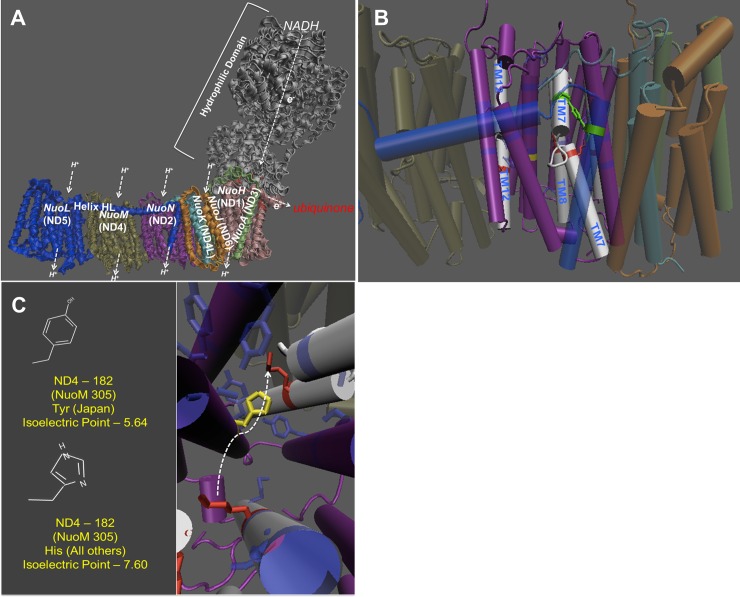
Fig 1. Complex I structure prediction of Japan mtDNA.
(A) The ND2 region corresponds to the bacterial subunit NuoN. (B) The structure of the proton pump. The dark blue residues that are transparently shaded make up the proton channel. (C) The location of the variant and their isoelectric point. The yellow is the amino acid that is changed in the Japan line. The arrow represents the movement of the TM7 domain.
Fig 2
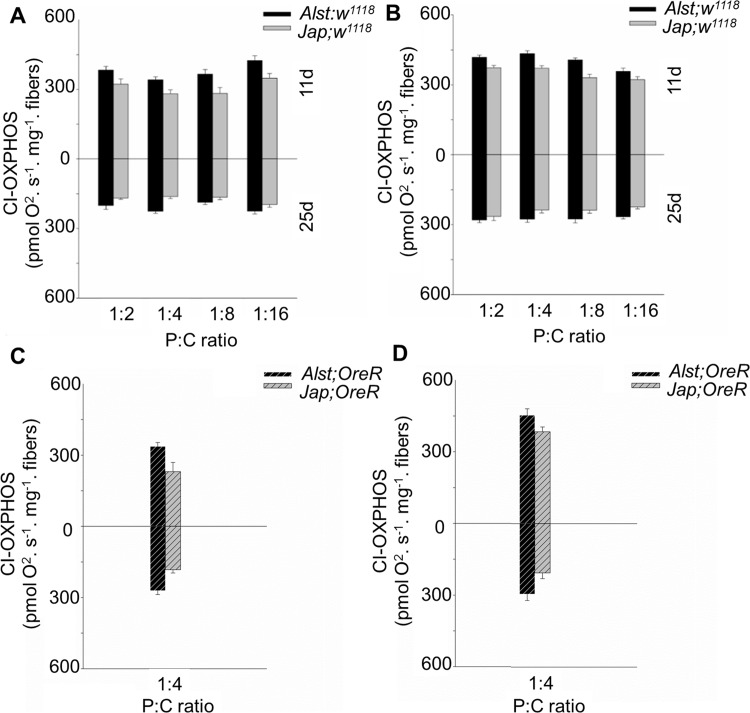
Fig 2. The mitochondrial CI-OXPHOS of Drosophila melanogaster harboring Alstonville (Alst) and Japan (Jap) mtDNA in the w1118 genetic background and the Oregon R (OreR) background.
Flies were aged 11 (upper chart) and 25 d (lower chart). The Protein: Carbohydrate (P:C) diets were 1:2, 1:4, 1:8 and 1:16. (A) Males with the w1118 genetic background. (B) Females with the w1118 genetic background. (C) Males with the OreR genetic background. (D) Females with the OreR genetic background. Bar represents oxygen flux per mass, and error bars show the standard error of the mean.
Fig 3
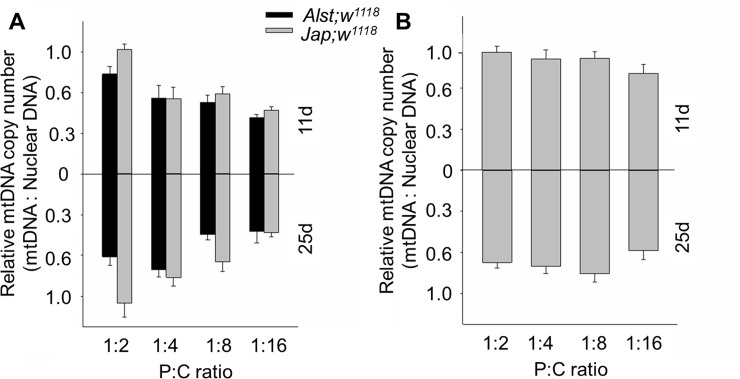
Fig 3. The mtDNA copy number of Drosophila melanogaster harboring Alstonville (Alst) and Japan (Jap) mtDNA in the w1118 genetic background.
Flies were aged 11 (upper chart) and 25 d (lower chart). The protein: carbohydrate (P:C) diets were 1:2, 1:4, 1:8 and 1:16. (A) Males. (B) Females. MtDNA copy number of females harboring the two mtDNA types did not differ, so they were pooled. Data for each mitotype is presented in S1 Fig. Bar represents mtDNA copy number, and error bars show the standard error of the mean.
Fig 4
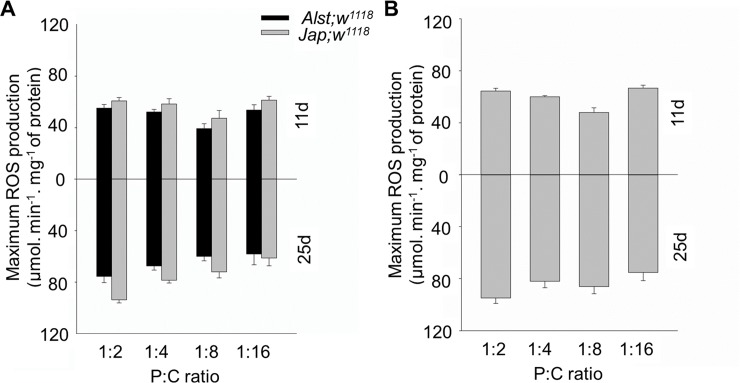
Fig 4. The maximum ROS production of Drosophila melanogaster harboring Alstonville (Alst) and Japan (Jap) mtDNA in the w1118 genetic background.
Flies were aged 11 (upper chart) and 25 d (lower chart). The protein: carbohydrate (P:C) diets were 1:2, 1:4, 1:8 and 1:16. (A) Males. (B) Females. Maximum ROS production of female flies harboring the two mtDNA types did not differ, so they were pooled. Data for each mitotype is presented in S2 Fig. Bar represents basal ROS production, and error bars show the standard error of the mean.
Fig 5
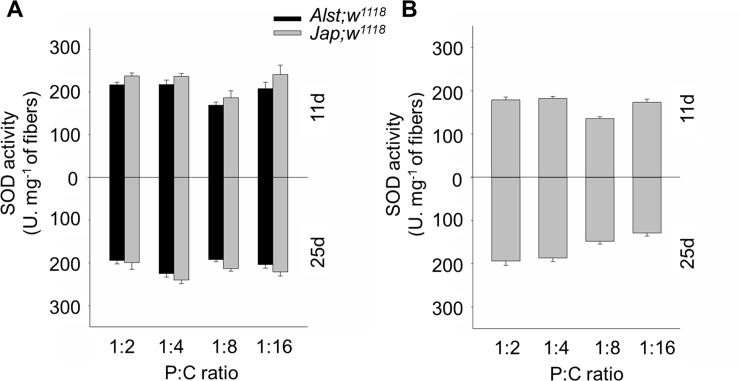
Fig 5. The SOD activity of Drosophila melanogaster harboring Alstonville (Alst) and Japan (Jap) mtDNA in w1118 genetic background.
Flies were aged 11 (upper chart) and 25 d (lower chart). The protein: carbohydrate (P:C) diets were 1:2, 1:4, 1:8 and 1:16. (A) Males. (B) Females. The SOD activity of females harboring the two mtDNA types did not differ, so they were pooled. Data for each mitotype is presented in S3 Fig. Bar represents SOD activity, and error bars the standard error of the mean.
Fig 6
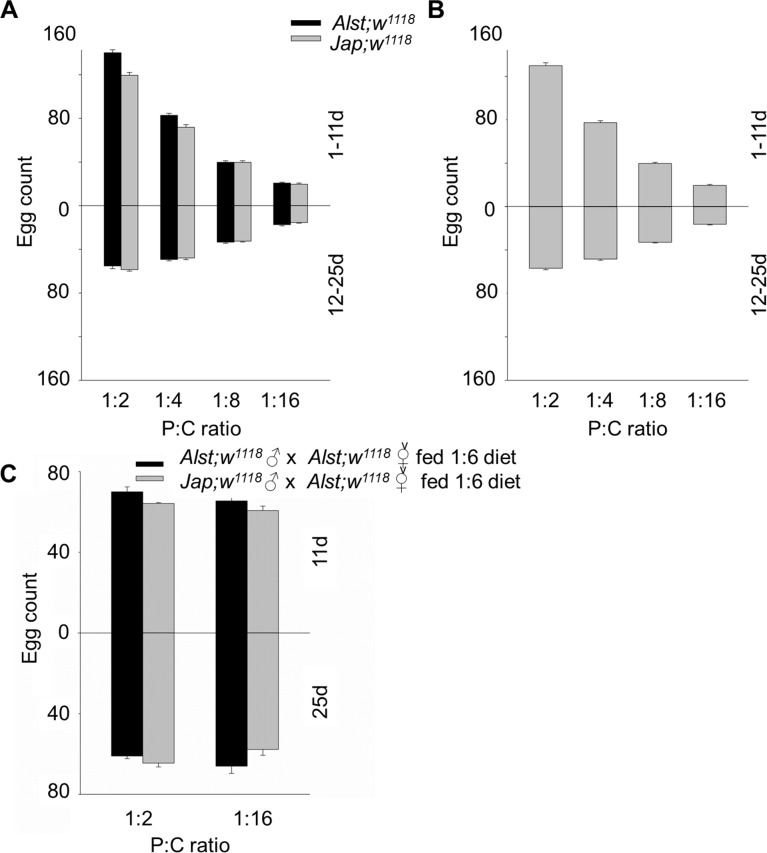
Fig 6. The fecundity of Drosophila melanogaster harboring Alstonville (Alst) and Japan (Jap) mtDNA in w1118 genetic background.
The flies were aged from 1–11 d (upper chart) and 12–25 d (lower chart). The protein: carbohydrate (P:C) diets were 1:2, 1:4, 1:8 and 1:16. (A) Males. (B) Females. (C) The fecundity of males (11 d or 25 d) mated with 5 d old virgin females fed on the intermediate 1:6 P:C diet. Data for each mitotype is presented in S4 Fig. Bar represents total egg count, and error bars show standard error of the mean.
Fig 7
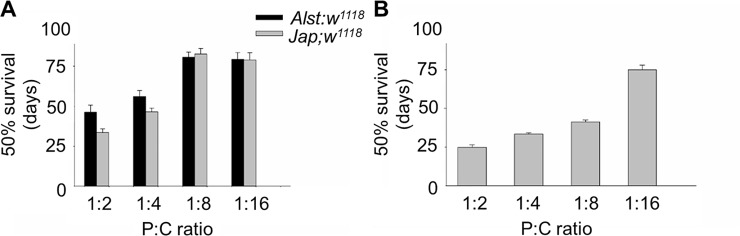
Fig 7. The survival of Drosophila melanogaster harboring Alstonville (Alst) and Japan (Jap) mtDNA in w1118 genetic background.
The protein: carbohydrate (P:C) diets were 1:2, 1:4, 1:8 and 1:16. (A) Males. (B) Females. Survival of females harboring the two mtDNA types did not differ, so they were pooled for graphical presentation. Data for each mitotype is presented in S5 Fig. Bar represents 50% survival, and error bars show standard error of the mean.
Fig 8
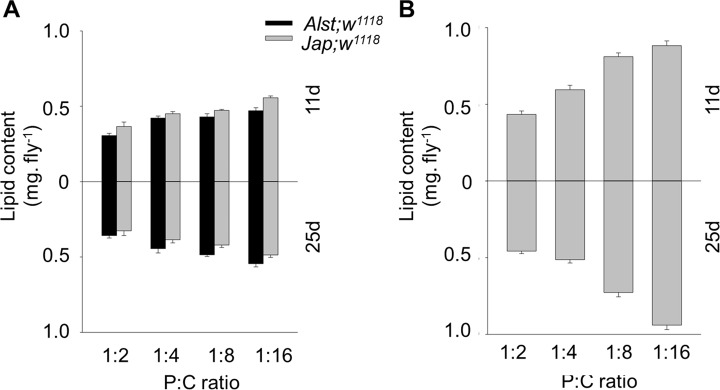
Fig 8. The lipid content of Drosophila melanogaster harboring Alstonville (Alst) and Japan (Jap) mtDNA in w1118 genetic background.
Flies were aged 11 d (upper chart) and 25 d (lower chart). The protein: carbohydrate (P:C) diets were 1:2, 1:4, 1:8 and 1:16. (A) Male. (B) Female. Lipid content of females harboring the two mtDNA types did not differ, so they were pooled. Data for each mitotype is presented in S6 Fig. Bar represents lipid content, and error bars show standard error of the mean.
Fig 9
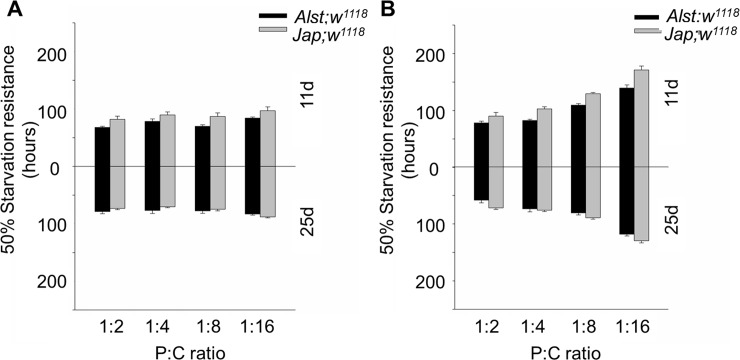
Fig 9. The starvation resistance of Drosophila melanogaster harboring Alstonville (Alst) and Japan (Jap) mtDNA in w1118 genetic background.
Flies were aged 11 (upper chart) and 25 d (lower chart). The protein: carbohydrate (P:C) diets were 1:2, 1:4, 1:8 and 1:16. (A) Males. (B) Females. Bar represents 50% survival, and error bars show standard error of the mean.

References

    1. Frank SA, Hurst LD. Mitochondria and male disease. Nature. 1996;383(6597):224 doi: 10.1038/383224a0 - DOI - PubMed
    1. Trivers R. Parental investment and sexual selection in Campbell B (ed) Sexual Selection and Descent of Man. Aldine, Chicago; 1972.
    1. Patel MR, Miriyala GK, Littleton AJ, Yang H, Trinh K, Young JM, et al. A mitochondrial DNA hypomorph of cytochrome oxidase specifically impairs male fertility in Drosophila melanogaster. eLife. 2016;5:e16923 doi: 10.7554/eLife.16923 - DOI - PMC - PubMed
    1. Rogell B, Dean R, Lemos B, Dowling DK. Mito-nuclear interactions as drivers of gene movement on and off the X-chromosome. BMC Genomics. 2014;15(1):330. - PMC - PubMed
    1. Gemmell NJ, Metcalf VJ, Allendorf FW. Mother's curse: The effect of mtDNA on individual fitness and population viability. Trends Ecol Evol. 2004;19(5):238–44. doi: 10.1016/j.tree.2004.02.002 - DOI - PubMed

LinkOut - more resources