


Heterogeneity of Ankle-Brachial Indices in Patients Undergoing Revascularization for Critical Limb Ischemia
- PMID: 29169498
- PMCID: PMC6800014
- DOI: 10.1016/j.jcin.2017.08.026
Heterogeneity of Ankle-Brachial Indices in Patients Undergoing Revascularization for Critical Limb Ischemia
Abstract
Objectives: This study sought to describe the distribution of pre-intervention treated-limb ankle-brachial indices (ABIs) among patients with critical limb ischemia (CLI) undergoing percutaneous vascular intervention (PVI) or surgical revascularization (SR).
Background: CLI is diagnosed by the presence of rest pain, tissue ulceration, or gangrene due to chronic arterial insufficiency. It is unclear what fraction of patients with suspected CLI have severe peripheral artery disease (PAD) on noninvasive functional testing.
Methods: The study included patients who underwent lower extremity revascularization for CLI in a multicenter registry in Michigan from January 2012 through June 2015. ABIs were classified as normal (ABI: 0.91 to 1.40), mild-moderate (ABI: 0.41 to 0.90), and severe (ABI: ≤0.40). Pre- and post-intervention Peripheral Artery Questionnaire summary scores were assessed in a subset of patients.
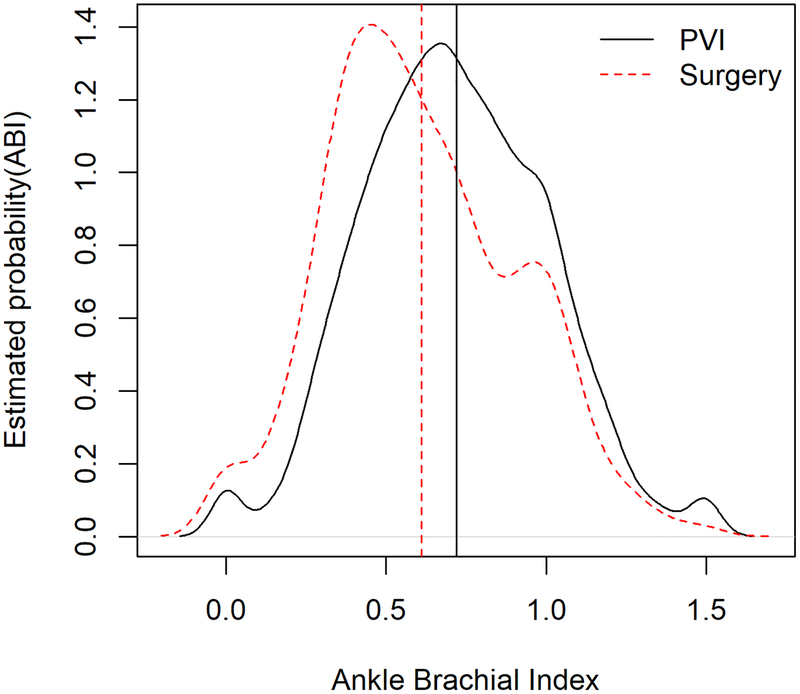
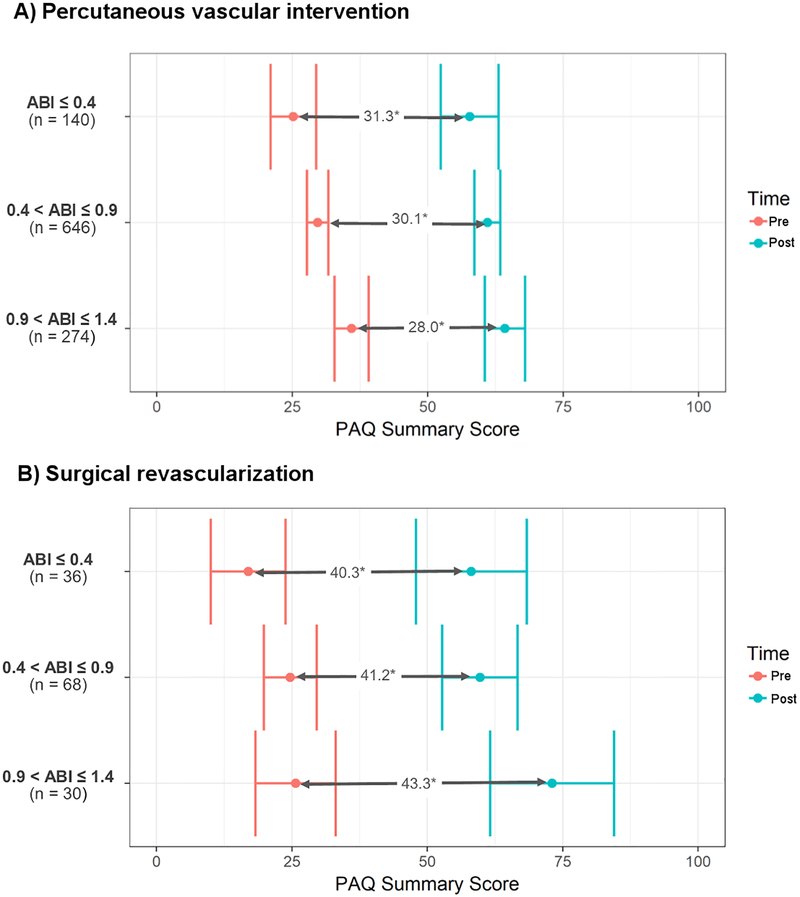
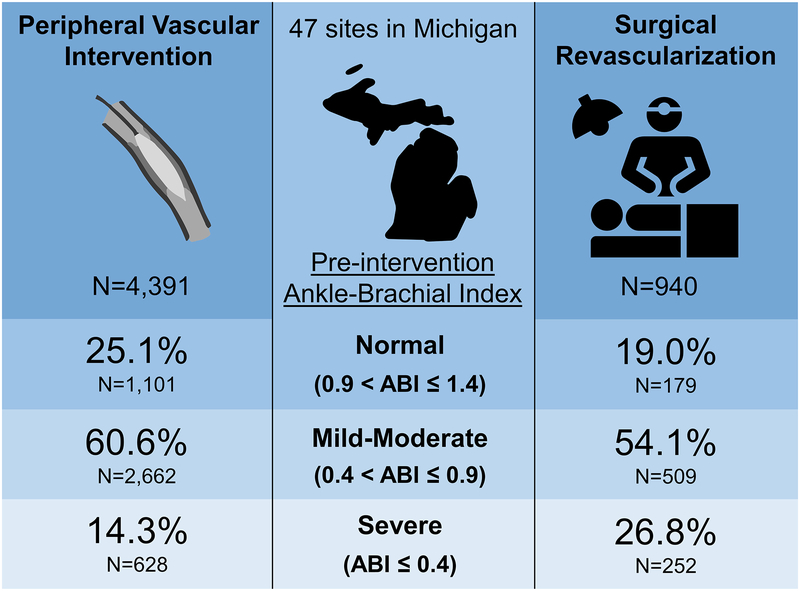
Results: Among 10,756 patients with signs or symptoms of CLI, 9,113 (84.7%) underwent PVI and 1,643 (15.3%) underwent SR. ABIs were recorded in 4,972 (54.6%) PVI and 1,012 (61.6%) SR patients. Patients undergoing PVI had higher ABIs than those undergoing SR, with substantial variation in both groups (PVI: 0.72 ± 0.29 vs. SR: 0.61 ± 0.29; p < 0.001). Nearly a quarter of patients with compressible arteries had normal ABIs (24.0%), whereas severe PAD was uncommon (16.5%). A significant improvement in Peripheral Artery Questionnaire scores was noted after intervention across all ABI categories.
Conclusions: Among patients undergoing revascularization for CLI in contemporary practice, the authors found substantial heterogeneity in pre-intervention ABIs. The disconnect between ABI results and clinical diagnosis calls into question the utility of ABIs in this population and suggests the need for standardization of functional PAD testing.
Keywords: ankle-brachial index; critical limb ischemia; percutaneous vascular intervention; peripheral artery disease; surgical bypass graft.
Copyright © 2017 American College of Cardiology Foundation. Published by Elsevier Inc. All rights reserved.
Figures
Comment in
-
Time to Redefine Critical Limb Ischemia.JACC Cardiovasc Interv. 2017 Nov 27;10(22):2317-2319. doi: 10.1016/j.jcin.2017.09.012. JACC Cardiovasc Interv. 2017. PMID: 29169499 No abstract available.
References
-
- Allison MA, Ho E, Denenberg JO et al. Ethnic-specific prevalence of peripheral arterial disease in the United States. Am J Prev Med 2007;32:328–33. - PubMed
-
- Mozaffarian D, Benjamin EJ, Go AS et al. Heart Disease and Stroke Statistics-2016 Update: A Report From the American Heart Association. Circulation 2015. - PubMed
-
- Criqui MH, Aboyans V. Epidemiology of peripheral artery disease. Circ Res 2015;116:1509–26. - PubMed
-
- Fowkes FG, Rudan D, Rudan I et al. Comparison of global estimates of prevalence and risk factors for peripheral artery disease in 2000 and 2010: a systematic review and analysis. Lancet 2013;382:1329–40. - PubMed
-
- Gerhard-Herman MD, Gornik HL, Barrett C et al. 2016 AHA/ACC Guideline on the Management of Patients With Lower Extremity Peripheral Artery Disease: Executive Summary: A Report of the American College of Cardiology/American Heart Association Task Force on Clinical Practice Guidelines. Circulation 2016. - PMC - PubMed
Publication types
MeSH terms
Grants and funding
LinkOut - more resources
Full Text Sources
Other Literature Sources
Medical
Research Materials
Miscellaneous
