


Five-year forward view: lessons from emergency care at the extremes of age
- PMID: 29171779
- PMCID: PMC5846941
- DOI: 10.1177/0141076817744562
Five-year forward view: lessons from emergency care at the extremes of age
Abstract
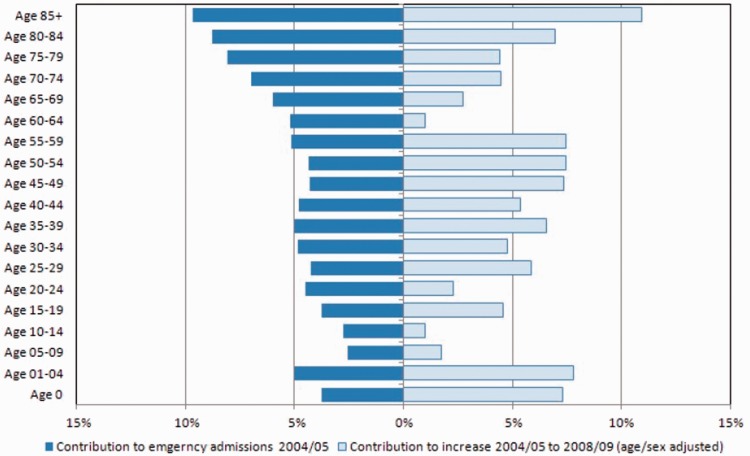
Objective The progressive rise in demand on NHS emergency care resources is partly attributable to increases in attendances of children and older people. A quality gap exists in the care provision for the old and the young. The Five Year Forward View suggested new models of care but that the "answer is not one-size-fits-all". This article discusses the urgent need for person-centred outcome measures to bridge the gap that exists between demand and provision. Design This review is based on evidence gathered from literature searching across several platforms using a variety of search terms to account for the obvious heterogeneity, drawing on key 'think-tank' evidence. Settings Qualitative and quantitative studies examining approaches to caring for individuals at the extremes of age. Participants Individuals at the extremes of age (infants and older people). Main Outcome Measures Understanding similarities and disparities in the care of individuals at the extremes of age in an emergency and non-emergency context. Results There exists several similarities and disparities in the care of individuals at the extremes of age. The increasing burden of health disease on the economy must acknowledge the challenges that exist in managing patients in emergency settings at the extremes of age and build systems to acknowledge the traits these individuals exhibit. Conclusion Commissioners of services must optimise the models of care delivery by appreciating the similarities and differences between care requirements in these two large groups seeking emergency care.
Keywords: Elderly; emergency care; geriatric; health policy; infant; paediatric.
Figures
References
-
- Sprivulis PC, Da Silva JA, Jacobs IG, Frazer AR, Jelinek GA. The association between hospital overcrowding and mortality among patients admitted via Western Australian emergency departments. Med J Aust 2006; 184: 208–212. - PubMed
-
- Australian Government. Australia to 2050: Future Challenges. The 2010 Intergenerational Report Overview, Australia: Commonwealth of Australia, 2010.
-
- Lowthian JA, Jolley DJ, Curtis AJ, Currell A, Cameron PA, Stoelwinder JU, et al. The challenges of population ageing: accelerating demand for emergency ambulance services by older patients, 1995–2015. Med J Aust 2011; 194: 574–578. - PubMed
-
- Lowthian JA, Curtis AJ, Jolley DJ, Stoelwinder JU, McNeil JJ, Cameron PA. Demand at the emergency department front door: 10-year trends in presentations. Med J Aust 2012; 196: 128–132. - PubMed
-
- Lowthian J, Curtis A, Stoelwinder J, McNeil J, Cameron P. Emergency demand and repeat attendances by older patients. Intern Med J 2013; 43: 554–560. - PubMed
Publication types
MeSH terms
Grants and funding
LinkOut - more resources
Full Text Sources
Other Literature Sources
Medical
Miscellaneous
