


Patterns of Care at the End of Life for Children and Young Adults with Life-Threatening Complex Chronic Conditions
- PMID: 29174080
- PMCID: PMC5794525
- DOI: 10.1016/j.jpeds.2017.09.078
Patterns of Care at the End of Life for Children and Young Adults with Life-Threatening Complex Chronic Conditions
Abstract
Objective: To characterize patterns of care at the end of life for children and young adults with life-threatening complex chronic conditions (LT-CCCs) and to compare them by LT-CCC type.
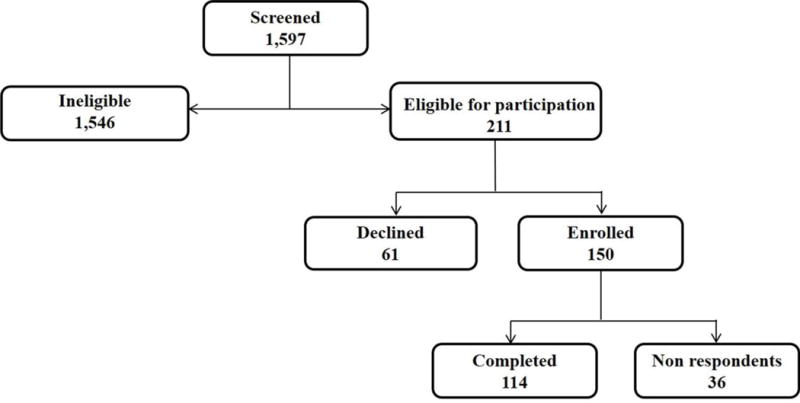
Study design: Cross-sectional survey of bereaved parents (n = 114; response rate of 54%) of children with noncancer, noncardiac LT-CCCs who received care at a quaternary care children's hospital and medical record abstraction.
Results: The majority of children with LT-CCCs died in the hospital (62.7%) with more than one-half (53.3%) dying in the intensive care unit. Those with static encephalopathy (AOR, 0.19; 95% CI, 0.04-0.98), congenital and chromosomal disorders (AOR, 0.28; 95% CI, 0.09-0.91), and pulmonary disorders (AOR, 0.08; 95% CI, 0.01-0.77) were significantly less likely to die at home compared with those with progressive central nervous system (CNS) disorders. Almost 50% of patients died after withdrawal or withholding of life-sustaining therapies, 17.5% died during active resuscitation, and 36% died while receiving comfort care only. The mode of death varied widely across LT-CCCs, with no patients with pulmonary disorders dying receiving comfort care only compared with 66.7% of those with CNS progressive disorders. A majority of patients had palliative care involvement (79.3%); however, in multivariable analyses, there was distinct variation in receipt of palliative care across LT-CCCs, with patients having CNS static encephalopathy (AOR, 0.07; 95% CI, 0.01-0.68) and pulmonary disorders (AOR, 0.07; 95% CI, 0.01-.09) significantly less likely to have palliative care involvement than those with CNS progressive disorders.
Conclusions: Significant differences in patterns of care at the end of life exist depending on LT-CCC type. Attention to these patterns is important to ensure equal access to palliative care and targeted improvements in end-of-life care for these populations.
Keywords: complex chronic conditions; end-of-life care; palliative care; parental perspectives.
Copyright © 2017 Elsevier Inc. All rights reserved.
Conflict of interest statement
The authors declare no conflicts of interest.
Figures
Comment in
-
Describing how children with life threatening complex chronic conditions die.J Pediatr. 2018 Feb;193:1-2. doi: 10.1016/j.jpeds.2017.12.003. J Pediatr. 2018. PMID: 29389442 No abstract available.
References
-
- Feudtner C, Christakis DA, Connell FA. Pediatric Deaths Attributable to Complex Chronic Conditions: A Population-Based Study of Washington State, 1980–1997. Pediatrics. 2000 Jul 1;106(Supplement 1):205–9. - PubMed
-
- Feudtner C, Hays RM, Haynes G, Geyer JR, Neff JM, Koepsell TD. Deaths attributed to pediatric complex chronic conditions: national trends and implications for supportive care services. Pediatrics. 2001;107(6):e99–e99. - PubMed
Publication types
MeSH terms
Grants and funding
LinkOut - more resources
Full Text Sources
Other Literature Sources
Medical
