TNFα-senescence initiates a STAT-dependent positive feedback loop, leading to a sustained interferon signature, DNA damage, and cytokine secretion
- PMID: 29176033
- PMCID: PMC5723694
- DOI: 10.18632/aging.101328
TNFα-senescence initiates a STAT-dependent positive feedback loop, leading to a sustained interferon signature, DNA damage, and cytokine secretion
Abstract
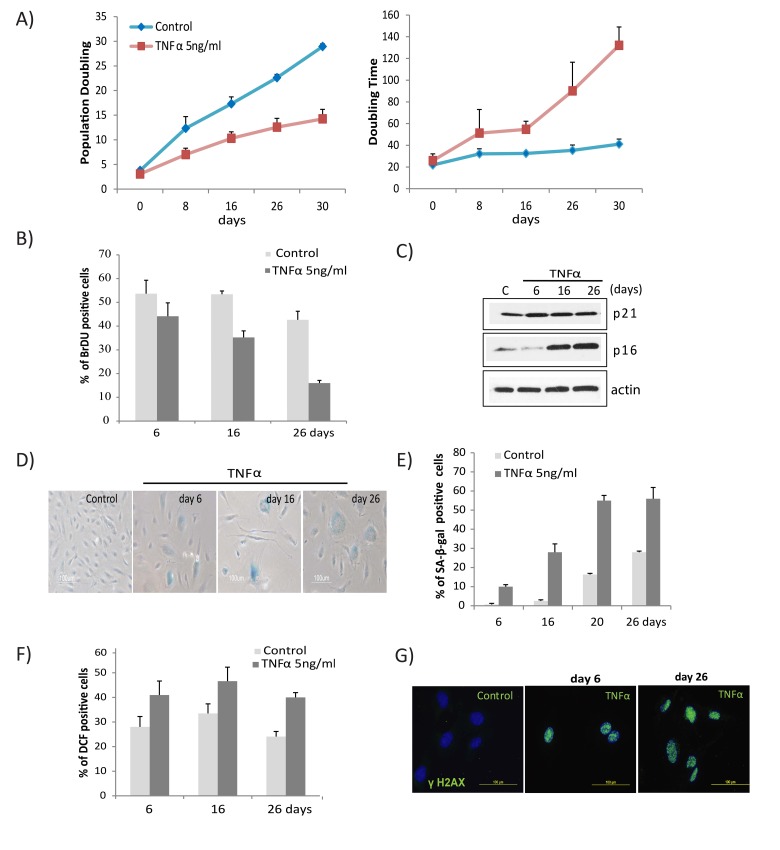
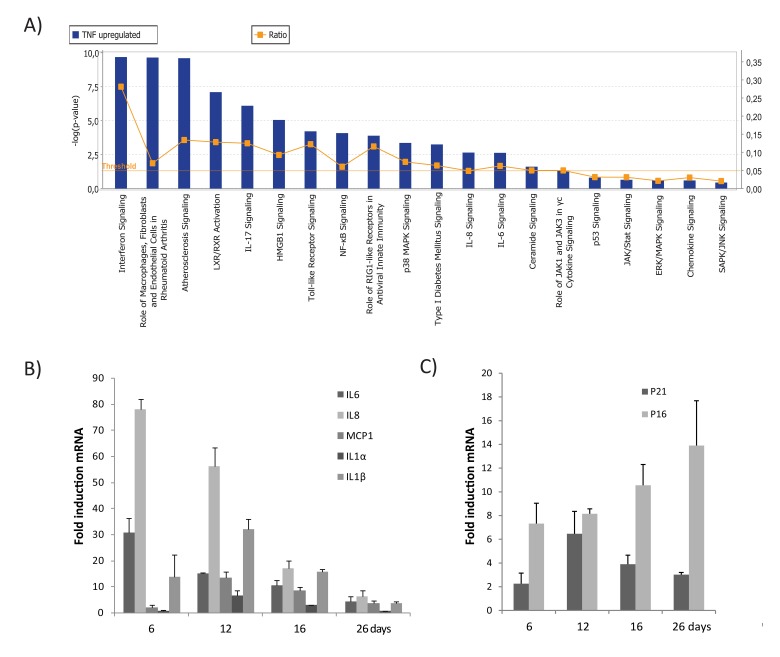
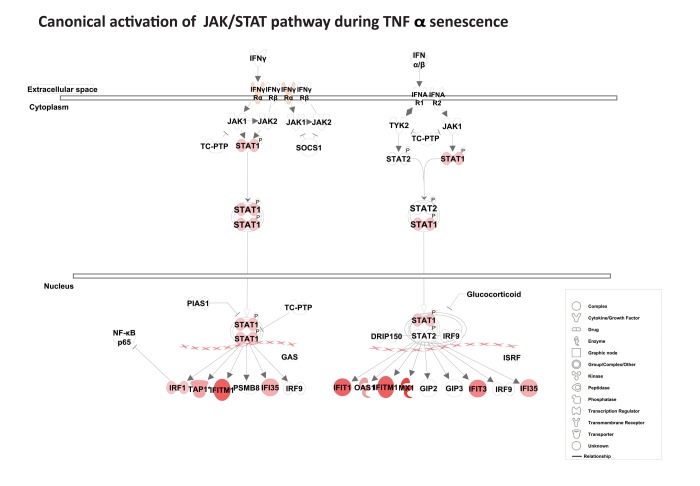
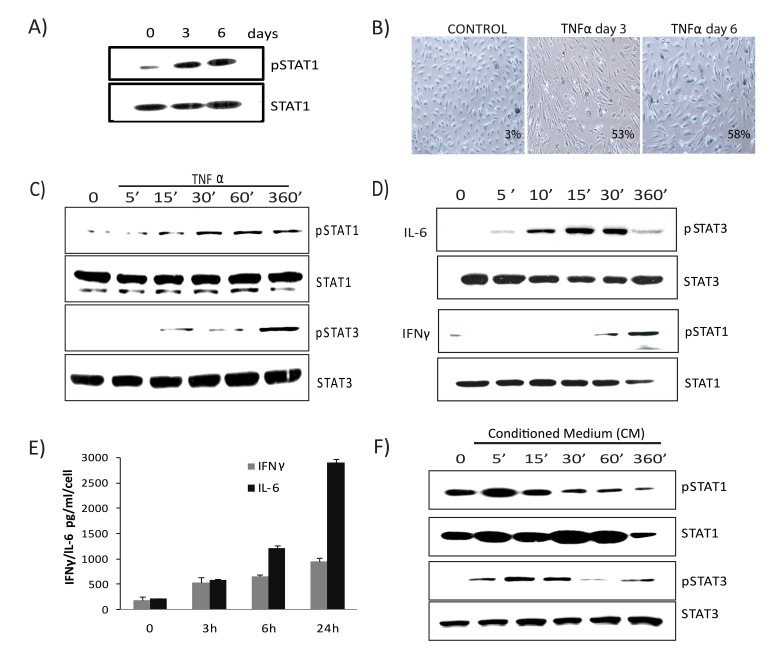
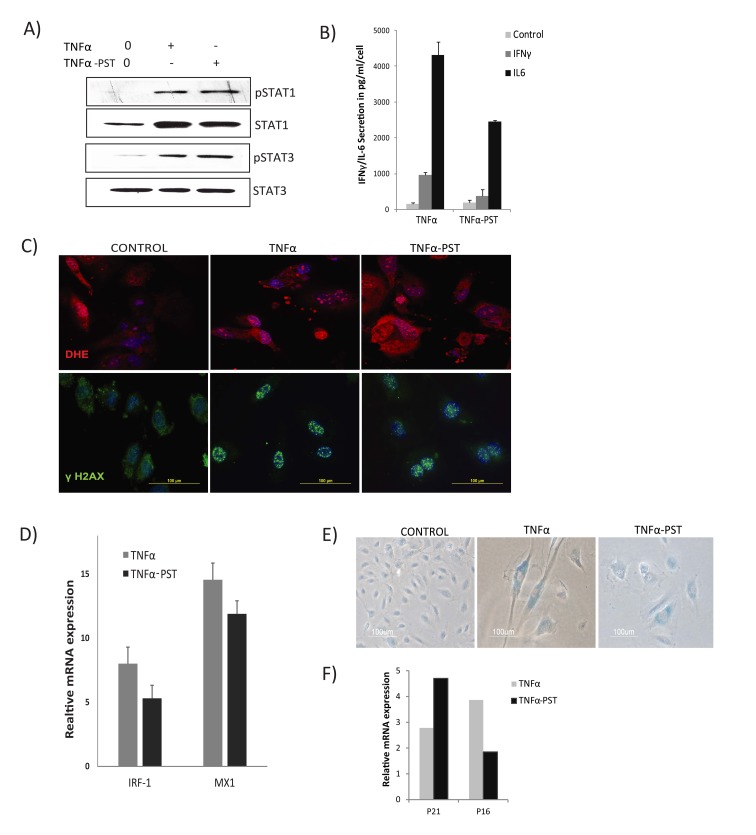
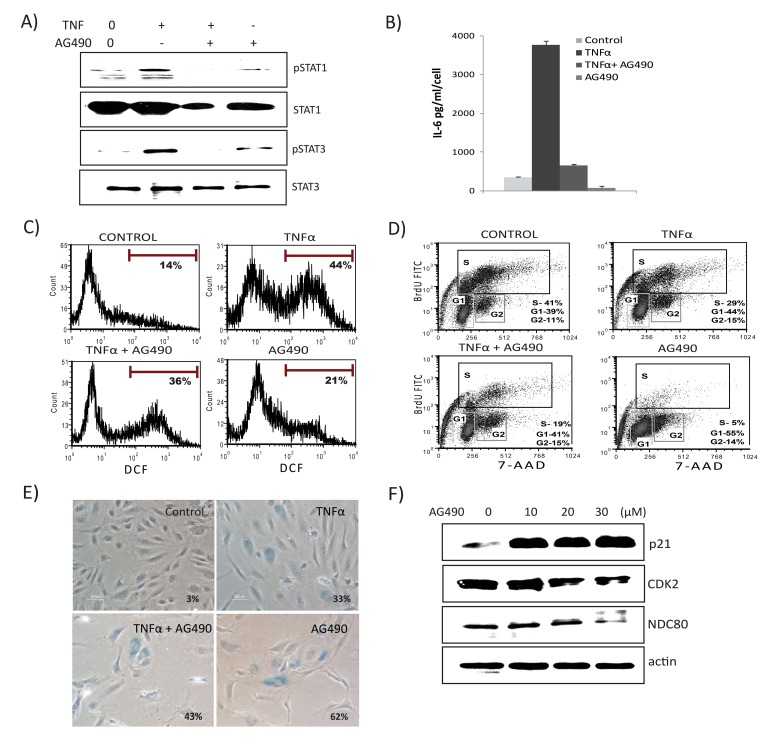
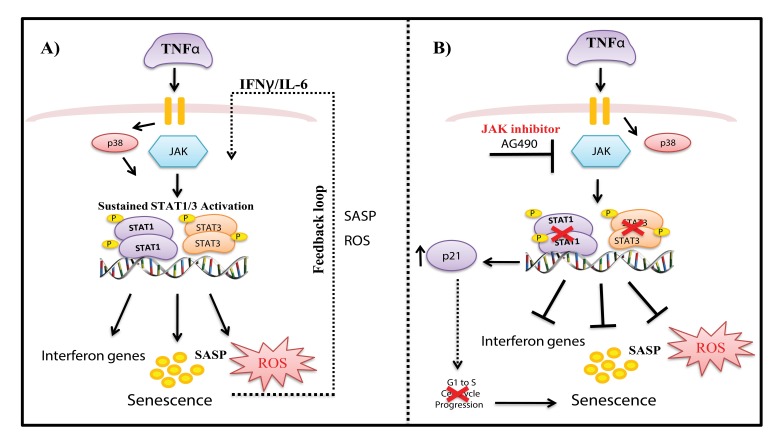
Cellular senescence is a cell fate program that entails essentially irreversible proliferative arrest in response to damage signals. Tumor necrosis factor-alpha (TNFα), an important pro-inflammatory cytokine secreted by some types of senescent cells, can induce senescence in mouse and human cells. However, downstream signaling pathways linking TNFα-related inflammation to senescence are not fully characterized. Using human umbilical vein endothelial cells (HUVECs) as a model, we show that TNFα induces permanent growth arrest and increases p21CIP1, p16INK4A, and SA-β-gal, accompanied by persistent DNA damage and ROS production. By gene expression profiling, we identified the crucial involvement of inflammatory and JAK/STAT pathways in TNFα-mediated senescence. We found that TNFα activates a STAT-dependent autocrine loop that sustains cytokine secretion and an interferon signature to lock cells into senescence. Furthermore, we show STAT1/3 activation is necessary for cytokine and ROS production during TNFα-induced senescence. However, inhibition of STAT1/3 did not rescue cells from proliferative arrest, but rather suppressed cell cycle regulatory genes and altered TNFα-induced senescence. Our findings suggest a positive feedback mechanism via the STAT pathway that sustains cytokine production and reveal a reciprocal regulatory role of JAK/STAT in TNFα-mediated senescence.
Keywords: DNA-damage; JAK/STAT pathway; inflammation; interferon response genes; senescence.
Conflict of interest statement
The authors declare no conflicts of interest.
Figures
References
-
- Tchkonia T, Zhu Y, van Deursen J, Campisi J, Kirkland JL. Cellular senescence and the senescent secretory phenotype: therapeutic opportunities. J Clin Invest. 2013;123:966–72. https://doi.org/10.1172/JCI64098 - DOI - PMC - PubMed
-
- Hayflick L, Moorhead PS. The serial cultivation of human diploid cell strains. Exp Cell Res. 1961;25:585–621. https://doi.org/10.1016/0014-4827(61)90192-6 - DOI - PubMed
-
- Sahin E, Colla S, Liesa M, Moslehi J, Müller FL, Guo M, Cooper M, Kotton D, Fabian AJ, Walkey C, Maser RS, Tonon G, Foerster F, et al. Telomere dysfunction induces metabolic and mitochondrial compromise. Nature. 2011;470:359–65. https://doi.org/10.1038/nature09787 - DOI - PMC - PubMed
-
- von Zglinicki T, Saretzki G, Ladhoff J, d'Adda di Fagagna F, Jackson SP. Human cell senescence as a DNA damage response. Mech Ageing Dev. 2005;126:111–17. https://doi.org/10.1016/j.mad.2004.09.034 - DOI - PubMed
-
- Herbig U, Jobling WA, Chen BP, Chen DJ, Sedivy JM. Telomere shortening triggers senescence of human cells through a pathway involving ATM, p53, and p21(CIP1), but not p16(INK4a) Mol Cell. 2004;14:501–13. https://doi.org/10.1016/S1097-2765(04)00256-4 - DOI - PubMed
MeSH terms
Substances
Grants and funding
LinkOut - more resources
Full Text Sources
Other Literature Sources
Molecular Biology Databases
Research Materials
Miscellaneous