Review
. 2017 Nov 27:51:123-141.
doi: 10.1146/annurev-genet-121415-121955.

Mosaicism in Cutaneous Disorders

Affiliations
Review

Mosaicism in Cutaneous Disorders

Young H Lim et al. Annu Rev Genet. .

Abstract

Genetic mosaicism arises when a zygote harbors two or more distinct genotypes, typically due to de novo, somatic mutation during embryogenesis. The clinical manifestations largely depend on the differentiation status of the mutated cell; earlier mutations target pluripotent cells and generate more widespread disease affecting multiple organ systems. If gonadal tissue is spared-as in somatic genomic mosaicism-the mutation and its effects are limited to the proband, whereas mosaicism also affecting the gametes, such as germline or gonosomal mosaicism, is transmissible. Mosaicism is easily appreciated in cutaneous disorders, as phenotypically distinct mutant cells often give rise to lesions in patterns determined by the affected cell type. Genetic investigation of cutaneous mosaic disorders has identified pathways central to disease pathogenesis, revealing novel therapeutic targets. In this review, we discuss examples of cutaneous mosaicism, approaches to gene discovery in these disorders, and insights into molecular pathobiology that have potential for clinical translation.

Keywords: RASopathy; epigenetic mosaicism; lines of Blaschko; nonsegmental mosaicism; revertant mosaicism; segmental mosaicism; somatic mutation.


Figures
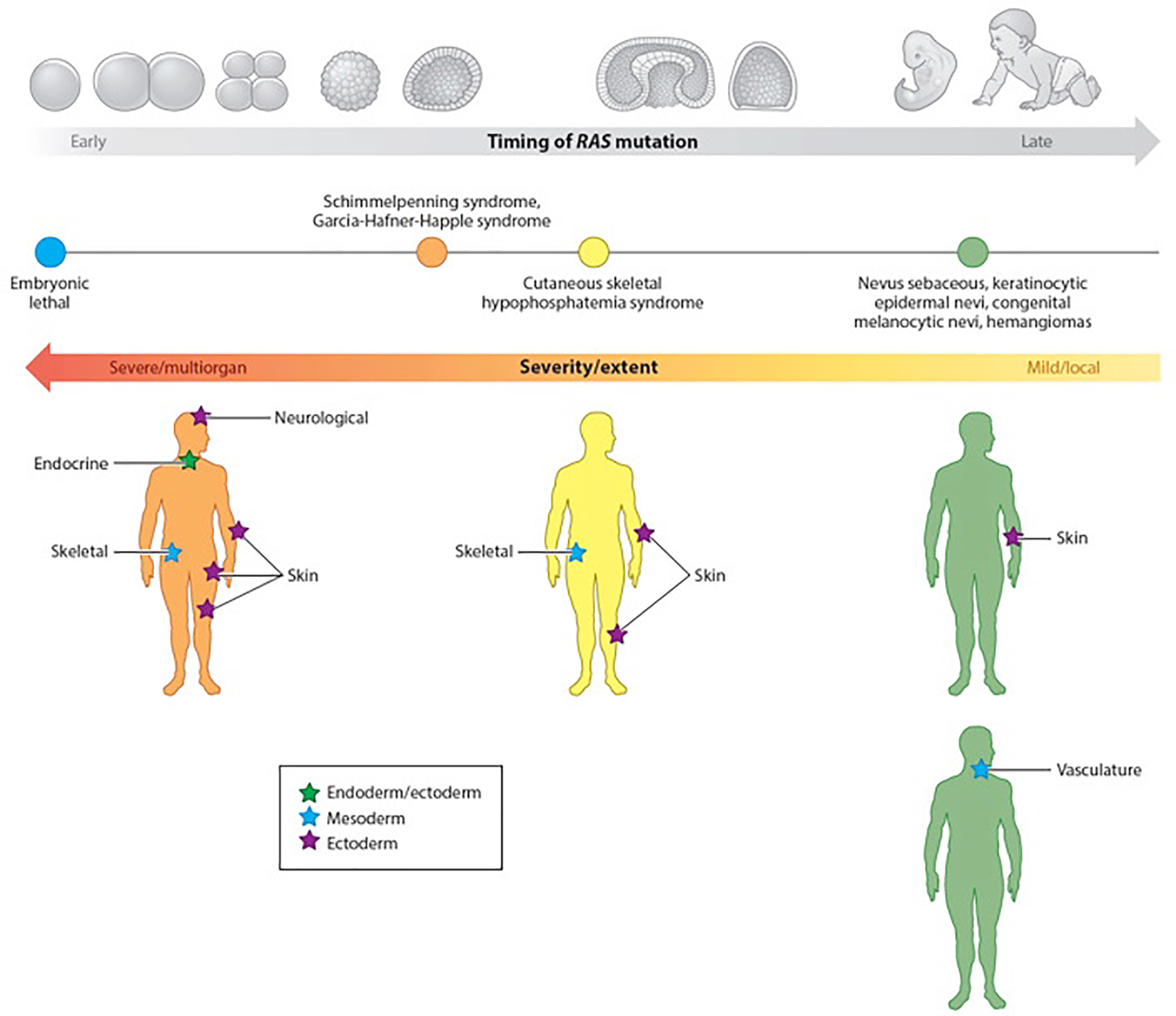
Figure 1.
Figure 1.. Mutation timing and end organ involvement.
Clinical manifestation of cutaneous, genomic mosaic disorders largely depends on the timing of mutation. Activating RAS mutations demonstrate a pleiotropic phenotype, with the severity and extent of disease dependent on the timing of mutation and the corresponding potency of the affected cell. The spectrum of disease includes effects on the endoderm (green star), mesoderm (blue stars), and ectoderm (purple stars). Stochastic, postzygotic mutation of a cell early in development leads to multilineage disease affecting end organs of all germ layers, as found in Schimmelpenning syndrome and Garcia-Hafner-Happle syndrome, both of which demonstrate neurological, endocrine, skeletal and skin phenotypes. Disorders such as cutaneous skeletal hypophosphatemia syndrome and phacomatosis pigmentokeratotica, which have phenotypes in the skin and bone or keratinocyte and melanocyte, respectively, result from mutation later in development of a cell with less potency. Mutation occurring in cells that have fully committed to one lineage (e.g., keratinocyte, melanocyte, blood vessels) is reflected by a milder clinical phenotype, in which the RASopathy is nonsyndromic and may be isolated tumors or single lesions.
Figure 2.
Figure 2.. Types of segmental mosaicism.
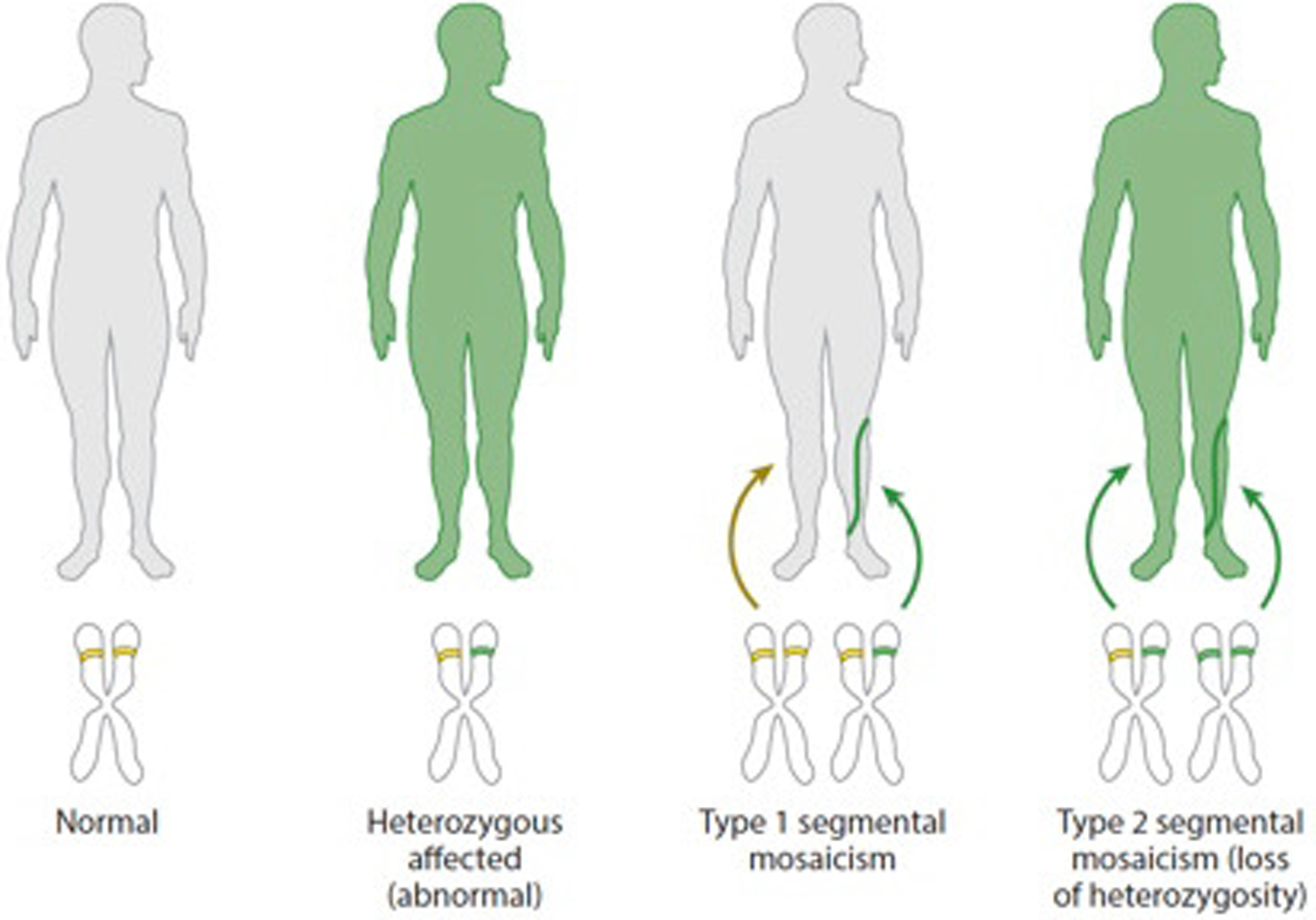
Segmental mosaicism refers to the Blaschko-linear patterning of cutaneous lesions that respect the midline: Single postzygotic mutations leading to segmental lesions reflect type 1 segmental mosaicism, by which the mutation is limited to lesional tissue in an otherwise wild-type individual. Type 2 segmental mosaicism occurs when a second mutagenesis event, such as loss of heterozygosity, occurs in individuals already carrying heritable mutations, leading to segments with more severe phenotype.
Figure 3.
Figure 3.. Epidermolytic ichthyosis (EI) versus ichthyosis with confetti (IWC).
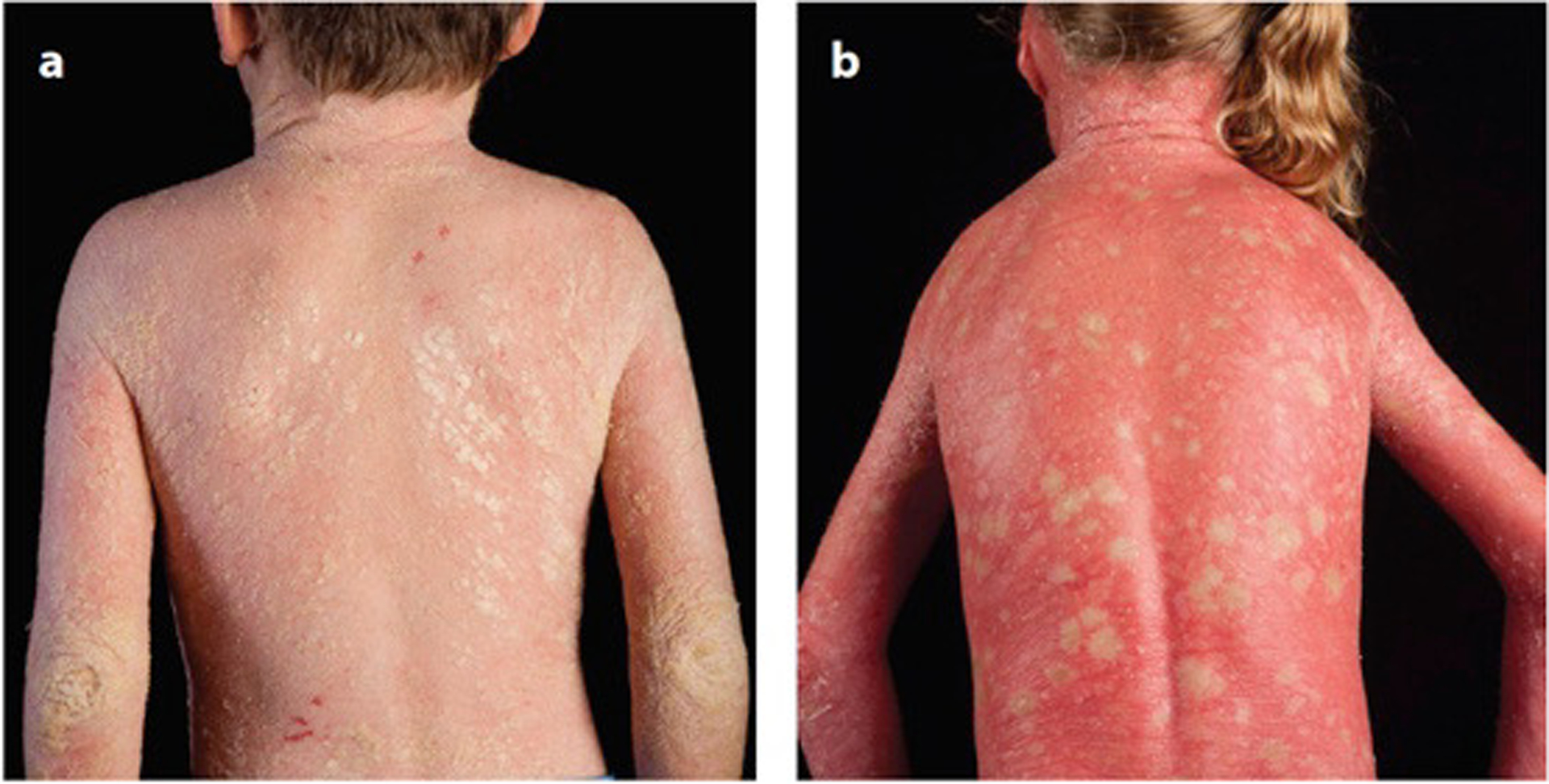
Age-matched patients with (a) EI due to KRT10 p.R156H mutation with extensive hyperkeratosis and plate-like scales and (b) IWC due to KRT10 mutation with erythroderma and confetti macules. Revertant mosaicism in IWC is demonstrated by the white macules of normal skin that are also histologically normal. To date, IWC has been associated with frameshift mutations targeting only the tail domains of KRT10 or KRT1, whereas mutations at other sites, such as the helical rod domains, lead to EI, which does not show clinical evidence of reversion.

References

    1. Agrawal N, Frederick MJ, Pickering CR, Bettegowda C, Chang K, et al. 2011. Exome sequencing of head and neck squamous cell carcinoma reveals inactivating mutations in NOTCH1. Science 333:1154–57 - PMC - PubMed
    1. Ahuja YR. 1960. A human mosaic involving eye and hair color differences. Acta Genet. Med. Gemellol. (Roma) 9:427–31 - PubMed
    1. Amary MF, Damato S, Halai D, Eskandarpour M, Berisha F, et al. 2011. Ollier disease and Maffucci syndrome are caused by somatic mosaic mutations of IDH1 and IDH2. Nat. Genet 43:1262–65 - PubMed
    1. Aoki Y, Niihori T, Kawame H, Kurosawa K, Ohashi H, et al. 2005. Germline mutations in HRAS proto-oncogene cause Costello syndrome. Nat. Genet 37:1038–40 - PubMed
    1. Arin MJ, Longley MA, Wang XJ, Roop DR. 2001. Focal activation of a mutant allele defines the role of stem cells in mosaic skin disorders. J. Cell Biol 152:645–49 - PMC - PubMed

Publication types

MeSH terms

LinkOut - more resources