


Traumatic Brain Injury Impairs Myogenic Constriction of Cerebral Arteries: Role of Mitochondria-Derived H2O2 and TRPV4-Dependent Activation of BKca Channels
- PMID: 29179622
- PMCID: PMC5865628
- DOI: 10.1089/neu.2017.5056
Traumatic Brain Injury Impairs Myogenic Constriction of Cerebral Arteries: Role of Mitochondria-Derived H2O2 and TRPV4-Dependent Activation of BKca Channels
Abstract
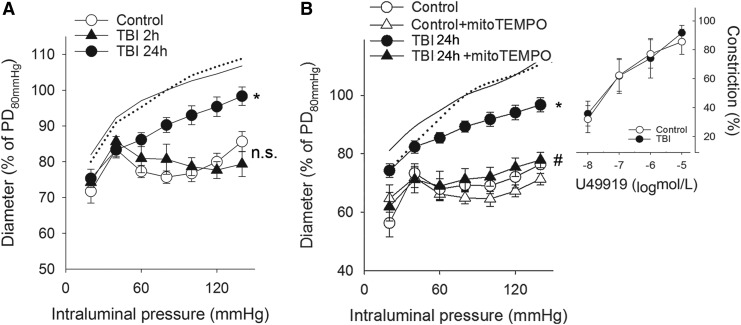
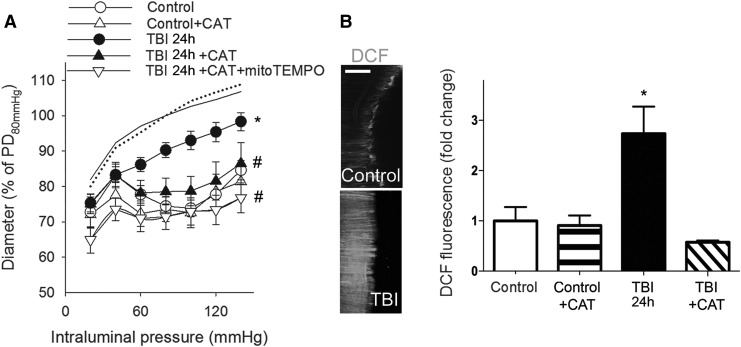
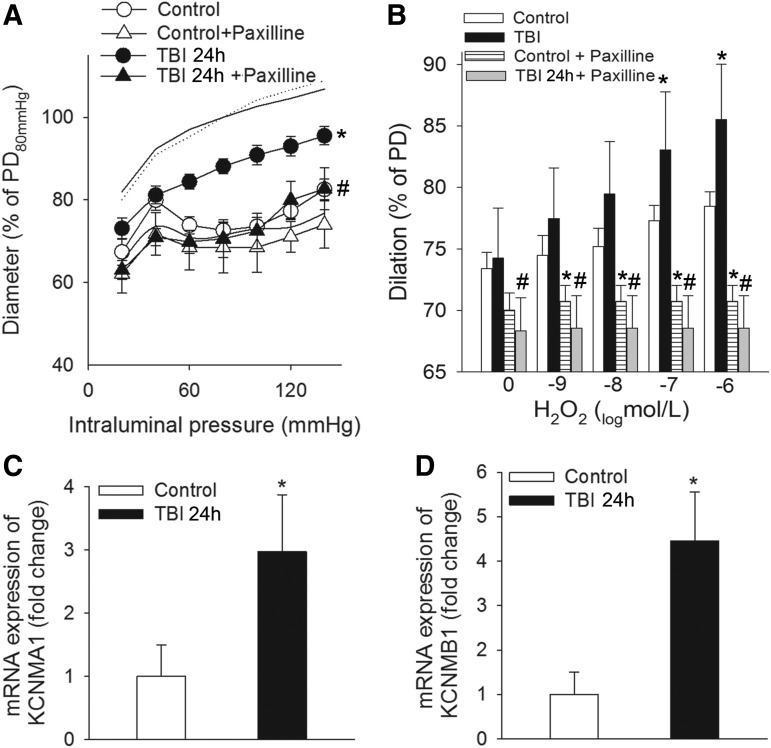
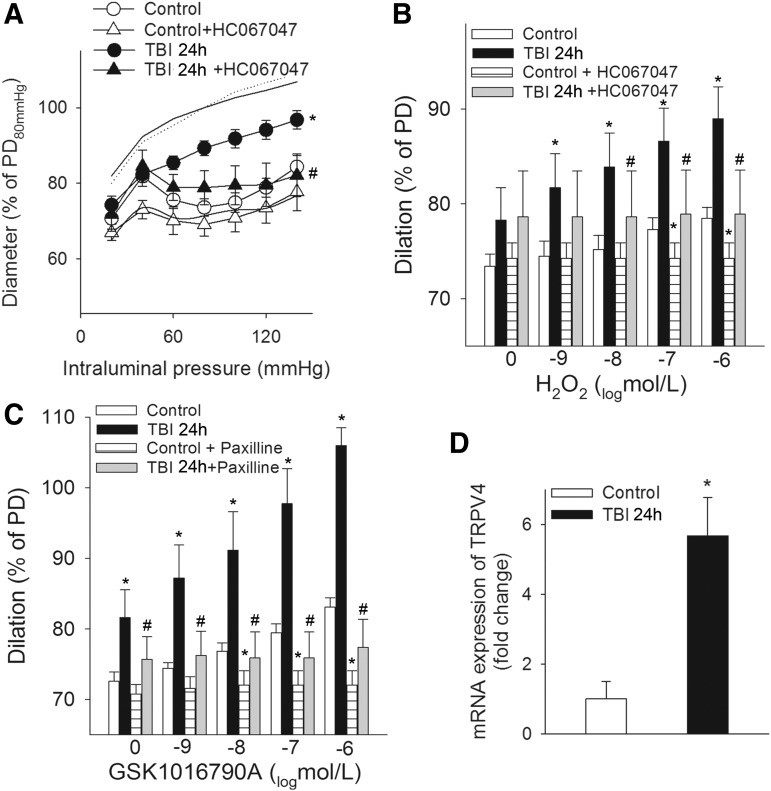
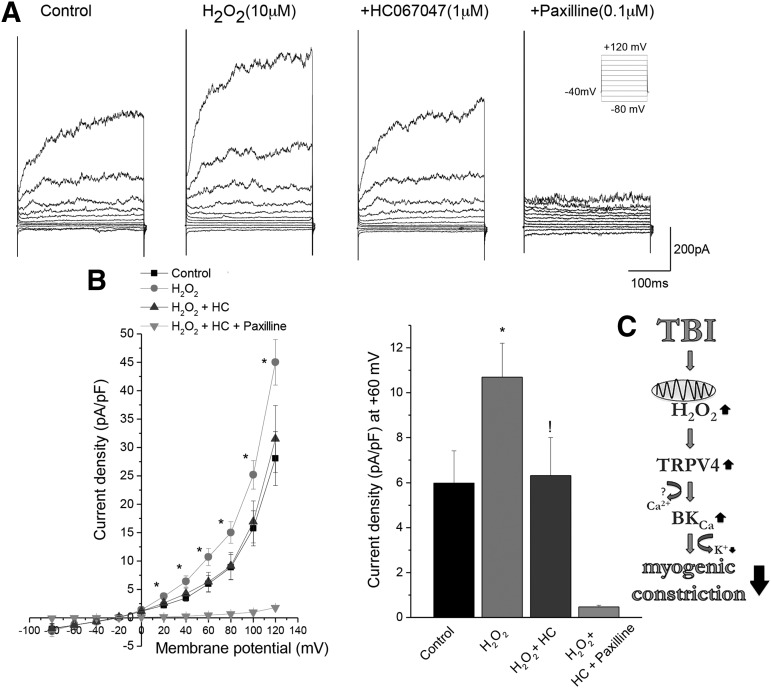
Traumatic brain injury (TBI) impairs autoregulation of cerebral blood flow, which contributes to the development of secondary brain injury, increasing mortality of patients. Impairment of pressure-induced myogenic constriction of cerebral arteries plays a critical role in autoregulatory dysfunction; however, the underlying cellular and molecular mechanisms are not well understood. To determine the role of mitochondria-derived H2O2 and large-conductance calcium-activated potassium channels (BKCa) in myogenic autoregulatory dysfunction, middle cerebral arteries (MCAs) were isolated from rats with severe weight drop-impact acceleration brain injury. We found that 24 h post-TBI MCAs exhibited impaired myogenic constriction, which was restored by treatment with a mitochondria-targeted antioxidant (mitoTEMPO), by scavenging of H2O2 (polyethylene glycol [PEG]-catalase) and by blocking both BKCa channels (paxilline) and transient receptor potential cation channel subfamily V member 4 (TRPV4) channels (HC 067047). Further, exogenous administration of H2O2 elicited significant dilation of MCAs, which was inhibited by blocking either BKCa or TRPV4 channels. Vasodilation induced by the TRPV4 agonist GSK1016790A was inhibited by paxilline. In cultured vascular smooth muscle cells H2O2 activated BKCa currents, which were inhibited by blockade of TRPV4 channels. Collectively, our results suggest that after TBI, excessive mitochondria-derived H2O2 activates BKCa channels via a TRPV4-dependent pathway in the vascular smooth muscle cells, which impairs pressure-induced constriction of cerebral arteries. Future studies should elucidate the therapeutic potential of pharmacological targeting of this pathway in TBI, to restore autoregulatory function in order to prevent secondary brain damage and decrease mortality.
Keywords: autoregulation; intracranial hypertension; oxidative stress; secondary injury.
Conflict of interest statement
No competing financial interests exist.
Figures
Comment in
-
mtROS-Induced TRPV4 Activation in Traumatic Brain Injury.J Neurotrauma. 2019 Feb 15;36(4):639. doi: 10.1089/neu.2018.5847. Epub 2018 Jul 5. J Neurotrauma. 2019. PMID: 29737240 Free PMC article. No abstract available.
References
-
- Roozenbeek B., Maas A.I., and Menon D.K. (2013). Changing patterns in the epidemiology of traumatic brain injury. Nat. Rev. Neurol. 9, 231–236 - PubMed
-
- Langlois J.A., and Sattin R.W. (2005). Traumatic brain injury in the United States: research and programs of the Centers for Disease Control and Prevention (CDC). J. Head Trauma Rehabil. 20, 187–188 - PubMed
-
- Tagliaferri F., Compagnone C., Korsic M., Servadei F., and Kraus J. (2006). A systematic review of brain injury epidemiology in Europe. Acta Neurochir. 148, 255–268 - PubMed
-
- Sahuquillo J., Poca M.A., and Amoros S. (2001). Current aspects of pathophysiology and cell dysfunction after severe head injury. Curr. Pharm. Des. 7, 1475–1503 - PubMed
-
- Overgaard J., and Tweed W.A. (1974). Cerebral circulation after head injury. 1. Cerebral blood flow and its regulation after closed head injury with emphasis on clinical correlations. J. Neurosurg. 41, 531–541 - PubMed
Grants and funding
LinkOut - more resources
Full Text Sources
Other Literature Sources
