


Modulation of antigen presenting cell functions during chronic HPV infection
- PMID: 29179871
- PMCID: PMC5883240
- DOI: 10.1016/j.pvr.2017.08.002
Modulation of antigen presenting cell functions during chronic HPV infection
Abstract
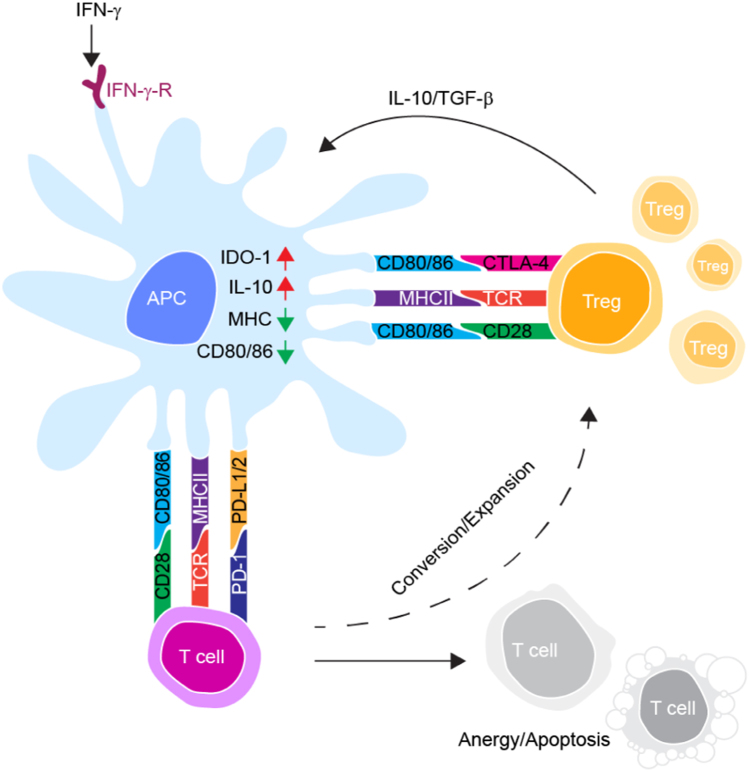
High-risk human papillomaviruses (HR-HPV) infect basal keratinocytes, where in some individuals they evade host immune responses and persist. Persistent HR-HPV infection of the cervix causes precancerous neoplasia that can eventuate in cervical cancer. Dendritic cells (DCs) are efficient in priming/cross-priming antigen-specific T cells and generating antiviral and antitumor cytotoxic CD8+ T cells. However, HR-HPV have adopted various immunosuppressive strategies, with modulation of DC function crucial to escape from the host adaptive immune response. HPV E6 and E7 oncoproteins alter recruitment and localization of epidermal DCs, while soluble regulatory factors derived from HPV-induced hyperplastic epithelium change DC development and influence initiation of specific cellular immune responses. This review focuses on current evidence for HR-HPV manipulation of antigen presentation in dendritic cells and escape from host immunity.
Copyright © 2017 The Authors. Published by Elsevier B.V. All rights reserved.
Figures
References
-
- Torre L.A., Bray F., Siegel R.L., Ferlay J., Lortet-Tieulent J., Jemal A. Global cancer statistics, 2012. CA Cancer J. Clin. 2015;65:87–108. - PubMed
-
- Masterson L., Lechner M., Loewenbein S., Mohammed H., Davies-Husband C., Fenton T. CD8+ T cell response to human papillomavirus 16 E7 is able to predict survival outcome in oropharyngeal cancer. Eur. J. Cancer. 2016;67:141–151. - PubMed
Publication types
MeSH terms
Substances
LinkOut - more resources
Full Text Sources
Other Literature Sources
Research Materials
