. 2017 Dec;29(12):3068-3084.
doi: 10.1105/tpc.17.00578. Epub 2017 Nov 27.

Intracellular Distribution of Manganese by the Trans-Golgi Network Transporter NRAMP2 Is Critical for Photosynthesis and Cellular Redox Homeostasis

Affiliations

Intracellular Distribution of Manganese by the Trans-Golgi Network Transporter NRAMP2 Is Critical for Photosynthesis and Cellular Redox Homeostasis

Santiago Alejandro et al. Plant Cell. 2017 Dec.

Abstract

Plants require trace levels of manganese (Mn) for survival, as it is an essential cofactor in oxygen metabolism, especially O2 production via photosynthesis and the disposal of superoxide radicals. These processes occur in specialized organelles, requiring membrane-bound intracellular transporters to partition Mn between cell compartments. We identified an Arabidopsis thaliana member of the NRAMP family of divalent metal transporters, NRAMP2, which functions in the intracellular distribution of Mn. Two knockdown alleles of NRAMP2 showed decreased activity of photosystem II and increased oxidative stress under Mn-deficient conditions, yet total Mn content remained unchanged. At the subcellular level, these phenotypes were associated with a loss of Mn content in vacuoles and chloroplasts. NRAMP2 was able to rescue the mitochondrial yeast mutant mtm1∆ In plants, NRAMP2 is a resident protein of the trans-Golgi network. NRAMP2 may act indirectly on downstream organelles by building up a cytosolic pool that is used to feed target compartments. Moreover, not only does the nramp2 mutant accumulate superoxide ions, but NRAMP2 can functionally replace cytosolic superoxide dismutase in yeast, indicating that the pool of Mn displaced by NRAMP2 is required for the detoxification of reactive oxygen species.


Figures

Figure 1.
Figure 1.
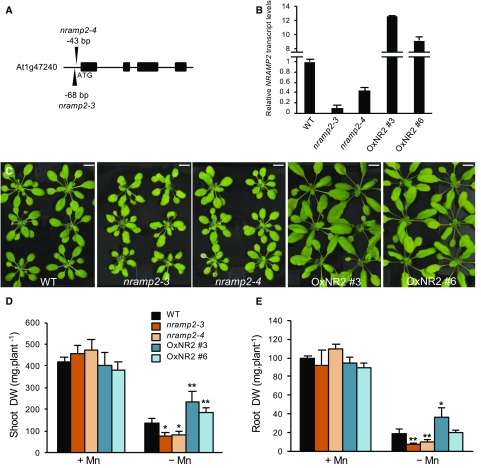
nramp2 Mutants Are Hypersensitive to Mn Deficiency. (A) Position of the T-DNA insertion in two nramp2 mutant alleles relative to the ATG start codon. (B) Relative NRAMP2 transcript abundance measured by qRT-PCR in nramp2 mutant alleles and in the two nramp2-3 complemented lines OxNR2 #3 and OxNR2 #6. Transcript levels are expressed relative to those of the reference gene ACTIN ±sd (n = 3 measurements per sample). (C) Phenotypes of plants of the indicated genetic backgrounds grown for one week in Mn-replete conditions (5 µM Mn SO4) followed by three additional weeks in Mn-free hydroponic conditions. Bars = 1 cm. (D) and (E) Shoot (D) and root (E) biomass production of the plants presented in (C). Data are from one representative experiment (n = 10 plants). (D) and (E) share color code legends. Mean ± sd. Asterisks indicate values significantly different from those of the wild type (Student’s t test, *P value < 0.05 and **P value < 0.01). DW, dry weight.
Figure 2.
Figure 2.
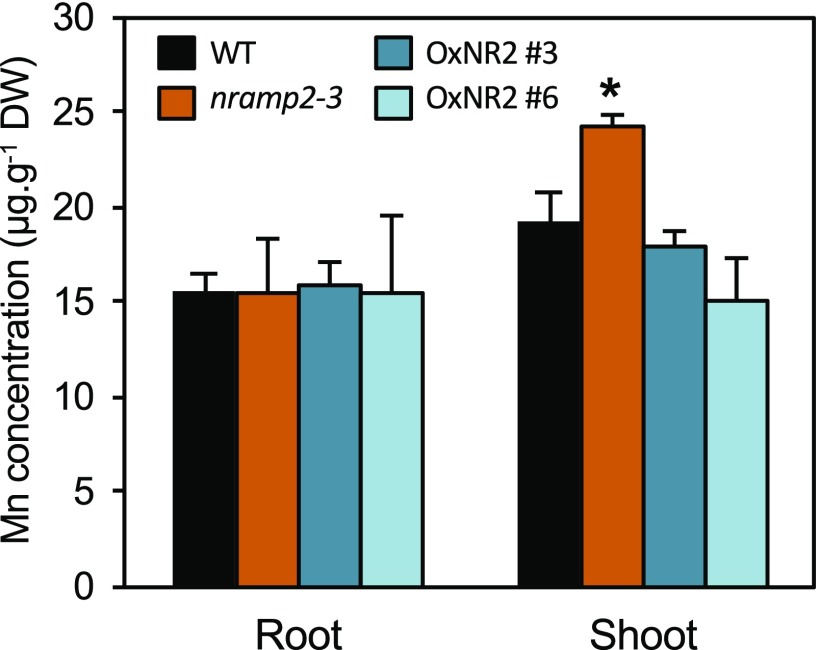
nramp2-3 Shows Mn Homeostasis Defects under Mn-Free Conditions. Mn content in the Mn-deficient plants presented in Figure 1 and in control plants grown in parallel in Mn-replete conditions shown in Supplemental Figure 1D. Data are from one representative experiment (n = 4 plants). DW, dry weight. Mean ± sd. Asterisks indicate values significantly different from those of the wild type (Student’s t test, *P value < 0.01).
Figure 3.
Figure 3.
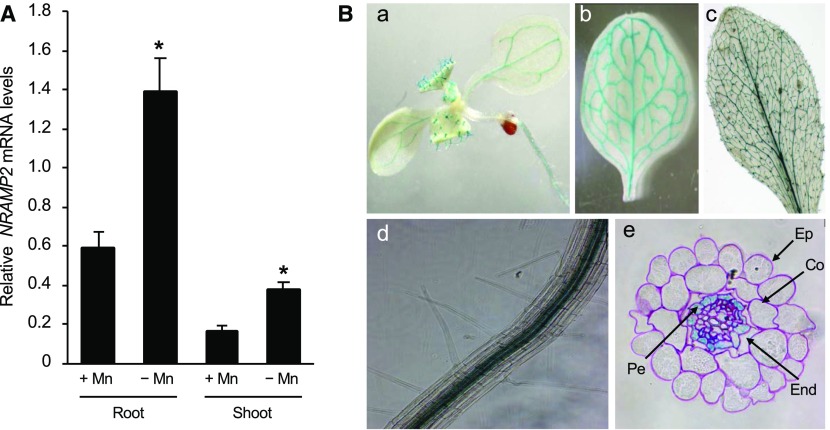
NRAMP2 Expression Analysis. (A) Relative NRAMP2 transcript abundance in roots and shoots measured by qRT-PCR. Transcript levels are expressed relative to those of the reference gene ACTIN ±sd (n = 3 technical replicates). Wild-type plants were grown hydroponically for 3 weeks in control (5 µM MnSO4) or in Mn-free (−Mn) conditions. Data are from one representative experiment (n = 3 plants). Mean ± sd. Asterisks indicate values significantly different from those of control conditions (Student’s t test, *P value < 0.01). (B) Histochemical staining of GUS activity in proNRAMP2:GUS-transformed Arabidopsis grown in Mn-replete conditions. (a) Six-day-old seedling; (b) young rosette leaf; (c) mature rosette leaf; (d) Primary root of a 1-week-old plant in the mature zone; (e) root cross section in the mature zone. Ep, epidermis; Co, cortex; End, endodermis; Pe, pericycle. Data are shown for one representative line out of three independent lines.
Figure 4.
Figure 4.
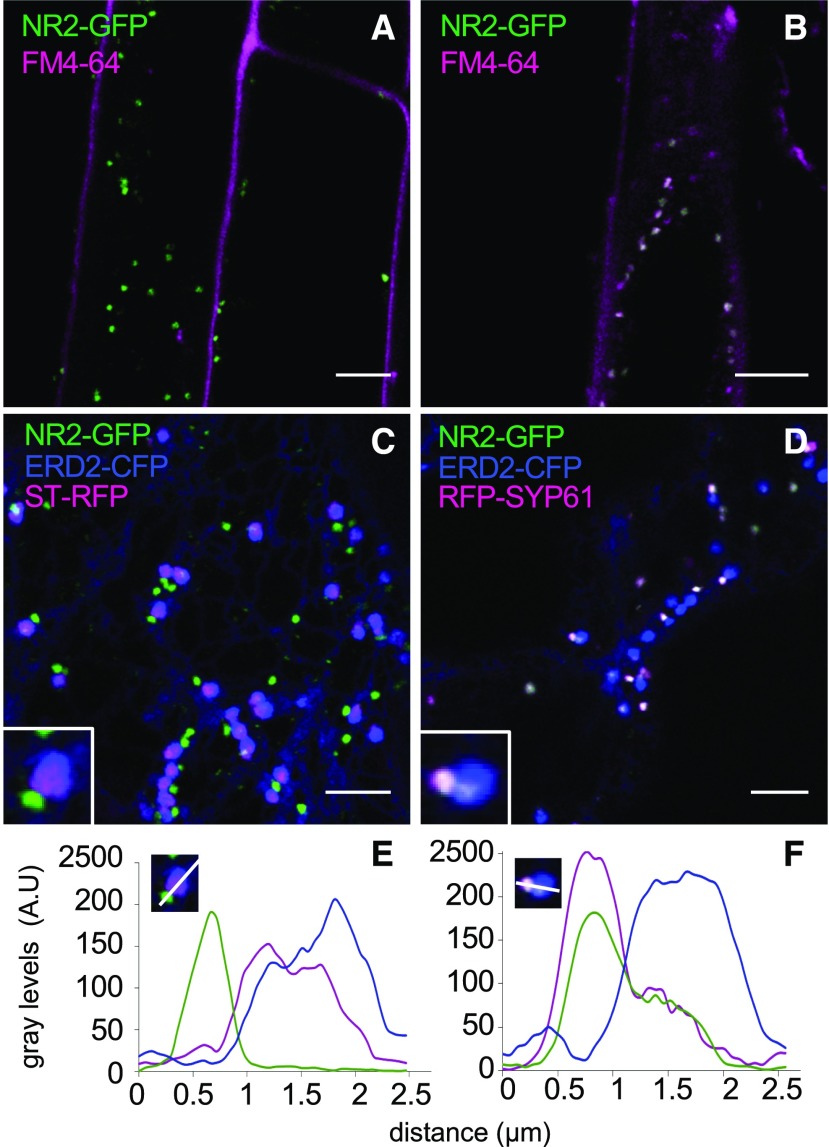
NRAMP2 Is Localized to the TGN. (A) and (B) Fluorescence pattern of the NRAMP2-GFP construct and kinetics of colocalization with the endocytic tracer FM4-64 ([A] 2 min; [B] 15 min) observed by confocal microscopy in roots of 5-d-old plants. (C) and (D) Colocalization of NRAMP2-GFP with markers for cis-Golgi (ERD2-CFP), trans-Golgi (ST-RFP), and TGN (SYP61-GFP) transiently coexpressed in tobacco leaves. Inserts show a close-up image of the association of NRAMP2-GFP with the various Golgi subcompartments. Bars = 5 µm. (E) and (F) Pixel intensity profiles of GFP (green), RFP (magenta), and CFP (blue) were measured along a line spanning the subcompartments magnified in the close-up insets shown in (C) and (D), respectively.
Figure 5.
Figure 5.
NRAMP2 Complements the smf2∆ and mtm1∆ Yeast Mutants. (A), (D), and (E) Growth tests of wild-type (BY4741) and mutant yeast strains smf1∆ (A), smf2∆ ([A] and [E]), mtm1∆ (D), and pmr1∆ (E) transformed with the pYPGE15 empty vector (E.V.) or the pYPGE15/NRAMP2 construct (NRAMP2). Fivefold serial dilutions were plated on SD-Ura supplemented or not (control) with the amount of EGTA indicated in (A) and (D) or 2 mM MnSO4 (E) and incubated at 30°C for 3 d. (A) NRAMP2 restores smf2∆ mutant tolerance to Mn deficiency. (B) Mn content measured by MP-AES in yeast strains grown in liquid SD -URA for 24 h. Mean ± sd (n = 3). Asterisks indicate values significantly different from those of the wild type (Student’s t test, *P value < 0.01). (C) In-gel SOD activity assay performed on proteins extracted from yeast strains grown as in (B). (D) NRAMP2 restores mtm1∆ mutant tolerance to Mn deficiency. (E) NRAMP2 fails to rescue pmr1∆ mutant sensitivity to excess Mn and does not reduce wild-type or smf2∆ tolerance to excess Mn.
Figure 6.
Figure 6.
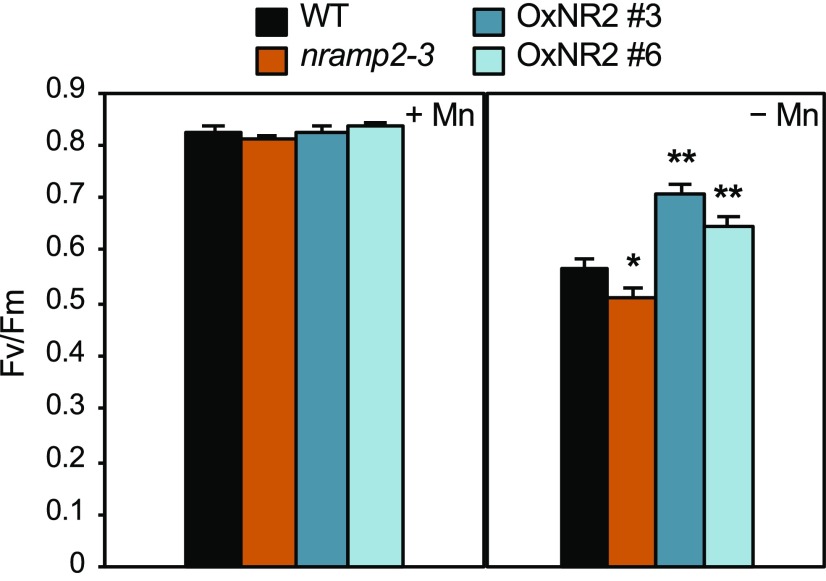
Photosynthetic Activity Is Impaired in nramp2-3. Maximum PSII efficiency (Fv/Fm) measured on rosette leaves of the wild type, nramp2-3, and two complemented lines grown for 4 weeks in hydroponic conditions in the presence of Mn (+Mn) or 1 week with Mn and transferred to medium without Mn for three additional weeks (−Mn). Mean ± sd (n = 10 leaves from 10 plants). Asterisks indicate values significantly different from those of the wild type (Student’s t test, *P value < 0.05 and **P value < 0.01).
Figure 7.
Figure 7.
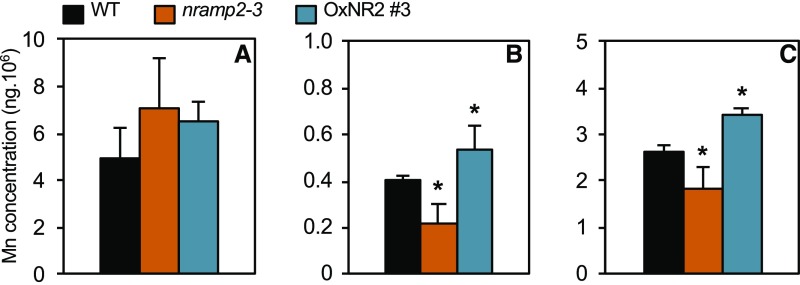
Vacuoles and Chloroplasts of the nramp2-3 Mutant Contain Less Mn Than the Wild Type. Mn content was measured on isolated protoplasts (A), chloroplasts (B), or vacuoles (C) in the wild type, nramp2-3, and the OxNR2 #3-complemented line grown in hydroponic cultures for 1 week in the presence of Mn followed by three additional weeks in the absence of Mn. All panels share color code legends. Metal concentration was determined by MP-AES and is expressed as nanograms per 106 protoplasts or organelles. Data are from one representative experiment (n = 4 plants). Mean ± sd. Asterisks indicate values significantly different from those of the wild type (Student’s t test, *P value < 0.01).
Figure 8.
Figure 8.
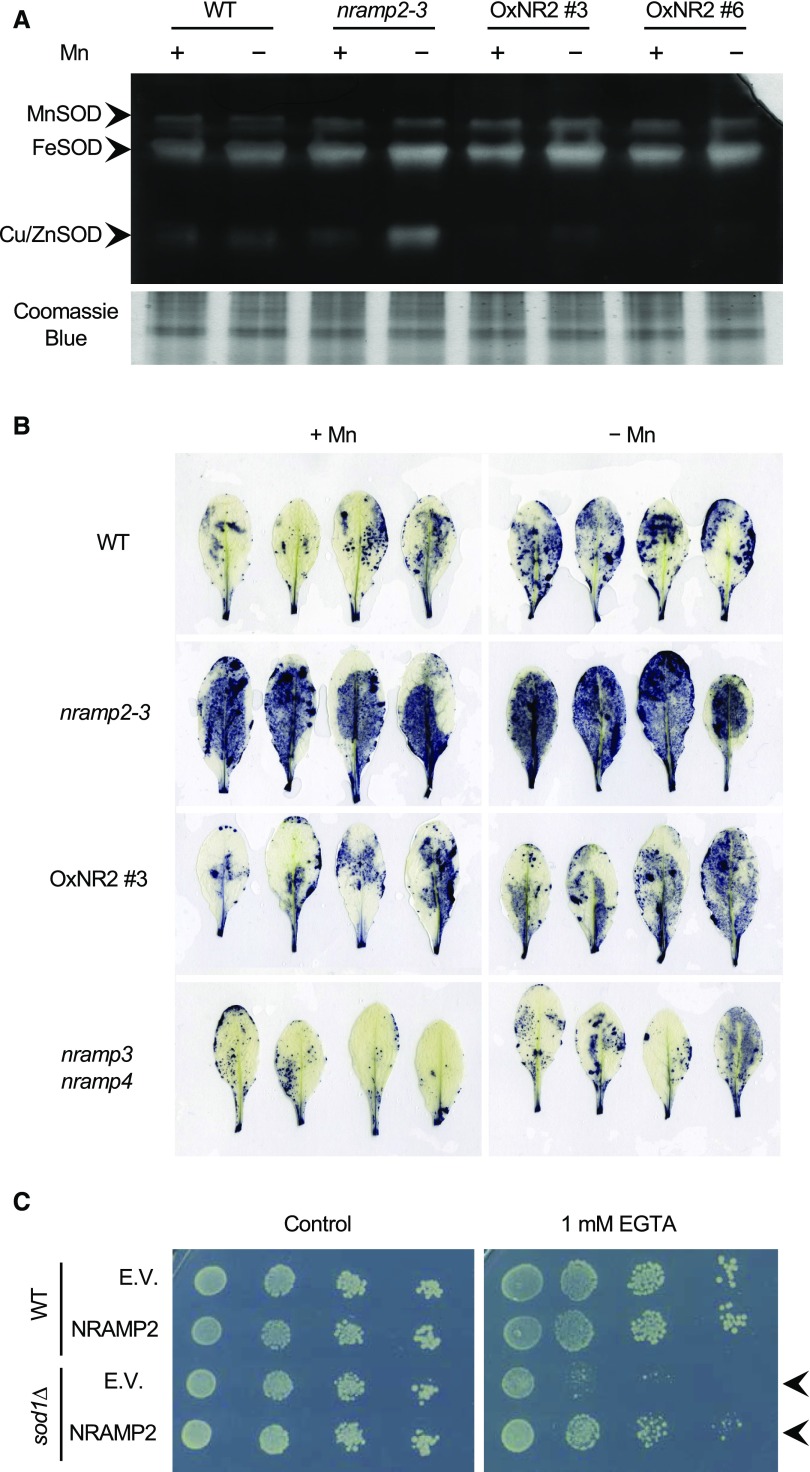
nramp2-3 Displays High Levels of Oxidative Stress. (A) and (B) Plants of the indicated genotypes were cultivated in hydroponic conditions for 4 weeks in the presence of Mn (+Mn) or 1 week with Mn and transferred to medium without Mn for three additional weeks (−Mn). (A) In-gel SOD activity assay performed using total proteins extracted from leaves. (B) Detection of superoxide ion production in Mn-replete or Mn-starved leaves by staining with NBT. (C) NRAMP2 rescues the sensitivity of the yeast sod1∆ mutant to Mn deficiency. Fivefold serial dilutions were plated on SD-Ura supplemented with 1 mM EGTA (right) or not (Control; left). Arrows indicate the growth rescue of smf2∆ by NRAMP2.
Figure 9.
Figure 9.
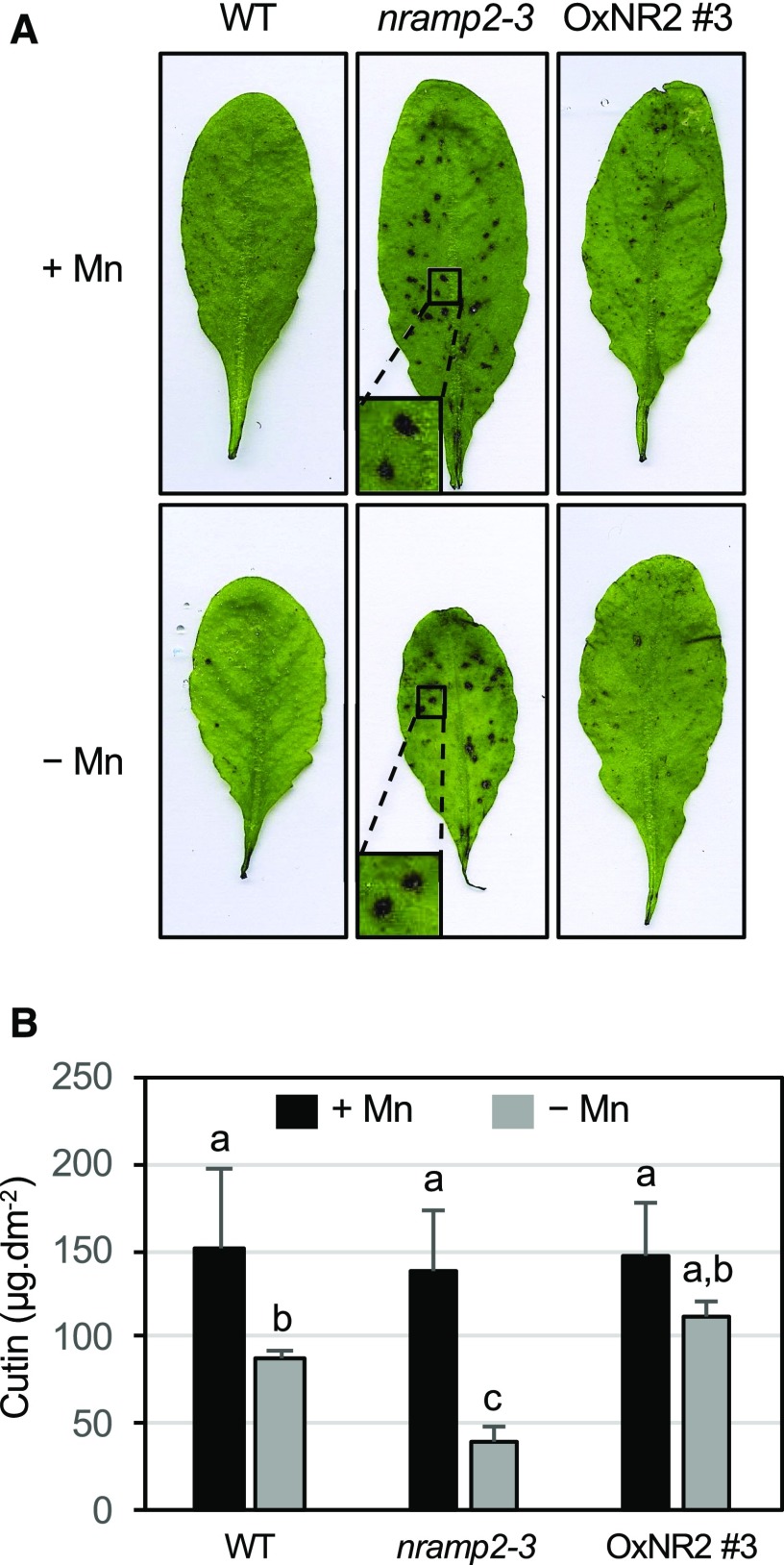
nramp2-3 Shows Cell Wall Permeability Defects. Plants of the indicated genotypes were grown in hydroponic conditions for 3 weeks in the presence of Mn followed by an additional week in the presence (+Mn) or absence of Mn (−Mn). (A) Permeability of the leaf surface was examined by staining entire leaves with TB for 10 min. Insets show a close-up view of the TB-stained spots on the leaves. (B) Cutin load per surface unit of leaf measured by gas chromatography-mass spectrometry. Mean ± sd (n = 4 leaves from four plants). Values that are not significantly different are noted with the same letter (ANOVA, α risk 5%; Supplemental File 1).
Figure 10.
Figure 10.
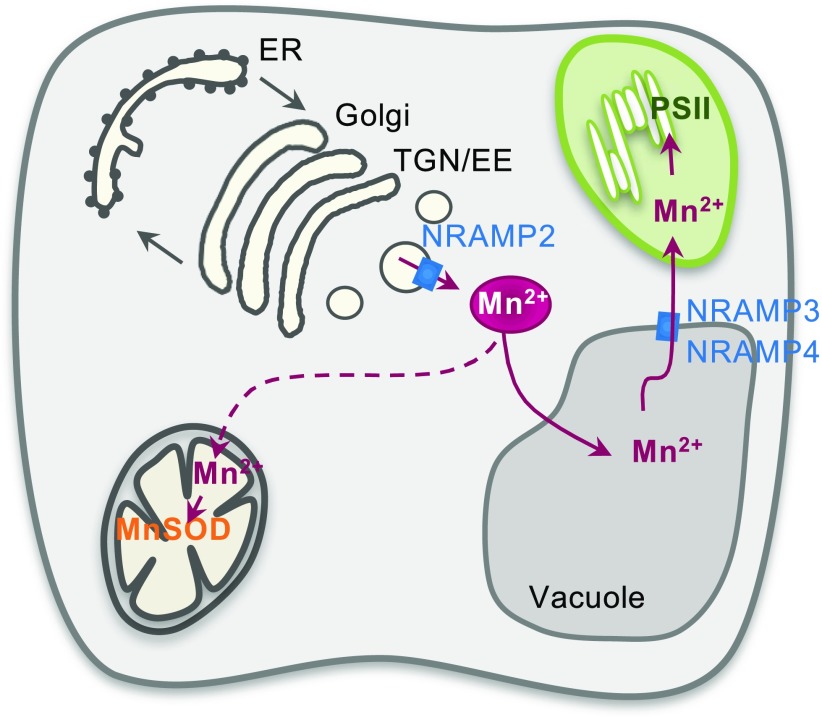
Hypothetical Model of the Function of NRAMP2 in Cellular Mn Distribution. When NRAMP2 is nearly absent (nramp2 knockdown mutants), plants are hypersensitive to Mn deficiency and PSII activity is markedly impaired. NRAMP2 is a transporter of the TGN membrane where it likely exports Mn from the TGN lumen to the cytosol. In doing so, NRAMP2 builds up a pool of Mn (red circle) that, based on the pleiotropic effects of the NRAMP2 mutation, is used to feed an array of downstream organelles: vacuoles and chloroplasts, since both display decreased Mn content in nramp2-3, and mitochondria based on the ability of NRAMP2 to complement yeast mtm1∆. Combining nramp2-3 with nramp3-2 and nramp4-2 mutations suggests that NRAMP2 and NRAMP3/NRAMP4 act in concert to provide Mn to the PSII, NRAMP2 being epistatic to the other two.

Comment in

References

    1. Agorio A., Giraudat J., Bianchi M.W., Marion J., Espagne C., Castaings L., Lelièvre F., Curie C., Thomine S., Merlot S. (2017). Phosphatidylinositol 3-phosphate-binding protein AtPH1 controls the localization of the metal transporter NRAMP1 in Arabidopsis. Proc. Natl. Acad. Sci. USA 114: E3354–E3363. - PMC - PubMed
    1. Allen M.D., Kropat J., Tottey S., Del Campo J.A., Merchant S.S. (2007). Manganese deficiency in Chlamydomonas results in loss of photosystem II and MnSOD function, sensitivity to peroxides, and secondary phosphorus and iron deficiency. Plant Physiol. 143: 263–277. - PMC - PubMed
    1. Barberon M., Vermeer J.E., De Bellis D., Wang P., Naseer S., Andersen T.G., Humbel B.M., Nawrath C., Takano J., Salt D.E., Geldner N. (2016). Adaptation of root function by nutrient-induced plasticity of endodermal differentiation. Cell 164: 447–459. - PubMed
    1. Bolte S., Cordelières F.P. (2006). A guided tour into subcellular colocalization analysis in light microscopy. J. Microsc. 224: 213–232. - PubMed
    1. Brandizzi F., Frangne N., Marc-Martin S., Hawes C., Neuhaus J.M., Paris N. (2002). The destination for single-pass membrane proteins is influenced markedly by the length of the hydrophobic domain. Plant Cell 14: 1077–1092. - PMC - PubMed

Publication types

MeSH terms