


Decrease in Seminal HIV-1 RNA Load After Praziquantel Treatment of Urogenital Schistosomiasis Coinfection in HIV-Positive Men-An Observational Study
- PMID: 29181419
- PMCID: PMC5695621
- DOI: 10.1093/ofid/ofx199
Decrease in Seminal HIV-1 RNA Load After Praziquantel Treatment of Urogenital Schistosomiasis Coinfection in HIV-Positive Men-An Observational Study
Abstract
Background: Urogenital schistosomiasis due to Schistosoma hematobium infection is hypothesized to cause increased HIV-1 RNA shedding in semen in HIV co-infected men as result of chronic egg-induced inflammation in the prostate and the seminal vesicles. The effect of treatment with the antihelminthic agent praziquantel on seminal HIV-1 RNA load was assessed in this study.
Methods: HIV-1 RNA load was determined in blood plasma and semen at baseline and at 10-week follow-up. Praziquantel was administered at baseline and two weeks later.
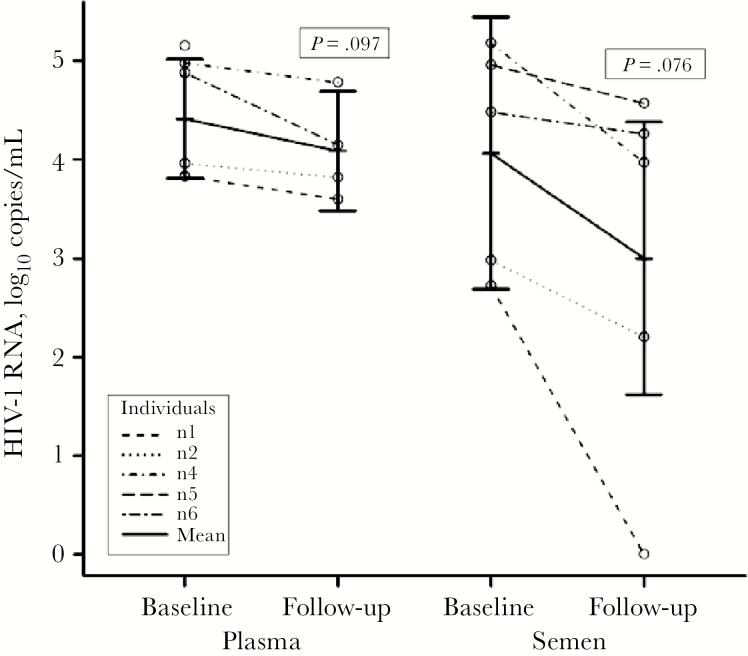
Results: Eighteen HIV-positive men with S. haematobium co-infection were enrolled into the study. Status of antiretroviral therapy (ART): 6 ART-naïve and 12 ART-experienced. All participants became egg-negative in urine at follow-up. Among the ART-naïve men, the mean HIV-1 RNA load decreased by 0.32 log10 copies per mL (4.41 vs 4.09) in blood plasma from baseline to follow-up, and in semen by 1.06 log10 copies per mL (4.06 vs 3.00).
Conclusions: This study demonstrated a decline in seminal HIV-1 RNA load following praziquantel treatment of urogenital schistosomiasis infection in HIV-positive men. The finding needs further exploration in a larger randomized study targeting praziquantel as a supplementary preventive measure of sexual transmission of HIV-1 in S. haematobium endemic areas in sub-Saharan Africa.
Keywords: HIV; HIV-1 RNA; Schistosoma haematobium; praziquantel; semen; urogenital schistosomiasis.
Figures
References
-
- Gryseels B, Polman K, Clerinx J, Kestens L. Human schistosomiasis. Lancet 2006; 368:1106–18. - PubMed
-
- Bustinduy A, King C, Scott J et al. . HIV and schistosomiasis co-infection in African children. Lancet Infect Dis 2014; 14:640–9. - PubMed
-
- World Health Organization. Report of an informal working group on urogenital schistosomiasis and HIV transmission 2009. Available at: http://whqlibdoc.who.int/hq/2010/WHO_HTM_NTD_PCT_2010.5_eng.pdf. Accessed 15 February 2016.
LinkOut - more resources
Full Text Sources
Other Literature Sources
