Supporting surveillance capacity for antimicrobial resistance: Laboratory capacity strengthening for drug resistant infections in low and middle income countries
- PMID: 29181453
- PMCID: PMC5686477
- DOI: 10.12688/wellcomeopenres.12523.1
Supporting surveillance capacity for antimicrobial resistance: Laboratory capacity strengthening for drug resistant infections in low and middle income countries
Abstract
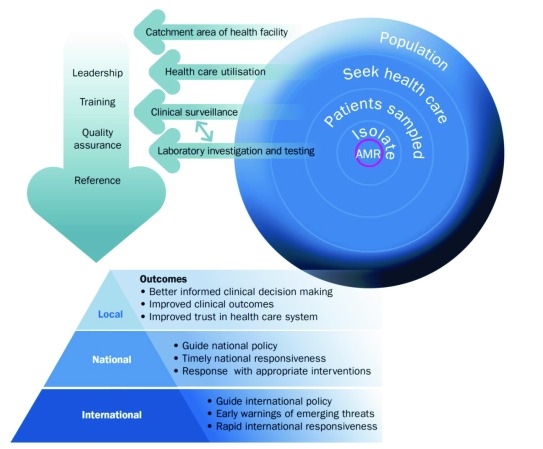
Development of antimicrobial resistance (AMR) threatens our ability to treat common and life threatening infections. Identifying the emergence of AMR requires strengthening of surveillance for AMR, particularly in low and middle-income countries (LMICs) where the burden of infection is highest and health systems are least able to respond. This work aimed, through a combination of desk-based investigation, discussion with colleagues worldwide, and visits to three contrasting countries (Ethiopia, Malawi and Vietnam), to map and compare existing models and surveillance systems for AMR, to examine what worked and what did not work. Current capacity for AMR surveillance varies in LMICs, but and systems in development are focussed on laboratory surveillance. This approach limits understanding of AMR and the extent to which laboratory results can inform local, national and international public health policy. An integrated model, combining clinical, laboratory and demographic surveillance in sentinel sites is more informative and costs for clinical and demographic surveillance are proportionally much lower. The speed and extent to which AMR surveillance can be strengthened depends on the functioning of the health system, and the resources available. Where there is existing laboratory capacity, it may be possible to develop 5-20 sentinel sites with a long term view of establishing comprehensive surveillance; but where health systems are weaker and laboratory infrastructure less developed, available expertise and resources may limit this to 1-2 sentinel sites. Prioritising core functions, such as automated blood cultures, reduces investment at each site. Expertise to support AMR surveillance in LMICs may come from a variety of international, or national, institutions. It is important that these organisations collaborate to support the health systems on which AMR surveillance is built, as well as improving technical capacity specifically relating to AMR surveillance. Strong collaborations, and leadership, drive successful AMR surveillance systems across countries and contexts.
Keywords: antibiotic resistance; antimicrobial; drug; infection; surveillance.
Conflict of interest statement
Competing interests: No competing interests were disclosed.
Figures
References
-
- O'Neill J: Antimicrobial Resistance: Tackling a crisis for the health and wealth of nations.2014; (accessed 6.6.16). Reference Source
-
- GBD 2013 DALYs and HALE Collaborators, . Murray CJ, Barber RM, et al. : Global, regional, and national disability-adjusted life years (DALYs) for 306 diseases and injuries and healthy life expectancy (HALE) for 188 countries, 1990–2013: quantifying the epidemiological transition. Lancet. 2015;386(10009):2145–91. 10.1016/S0140-6736(15)61340-X - DOI - PMC - PubMed
-
- World Health Organization: Antimicrobial resistance: global report on surveillance.2014; (accessed 05.05.16). Reference Source
Grants and funding
LinkOut - more resources
Full Text Sources
Other Literature Sources