


Adjuvant Biological Therapies in Chronic Leg Ulcers
- PMID: 29182584
- PMCID: PMC5751164
- DOI: 10.3390/ijms18122561
Adjuvant Biological Therapies in Chronic Leg Ulcers
Abstract
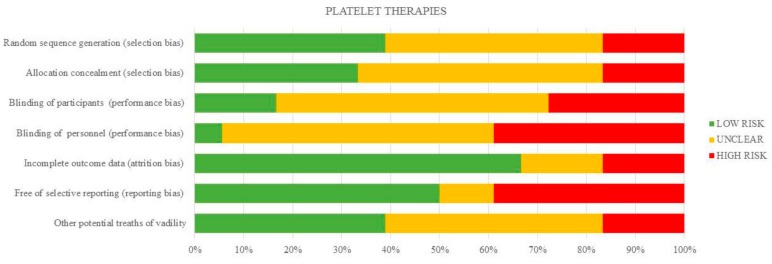
Current biological treatments for non-healing wounds aim to address the common deviations in healing mechanisms, mainly inflammation, inadequate angiogenesis and reduced synthesis of extracellular matrix. In this context, regenerative medicine strategies, i.e., platelet rich plasmas and mesenchymal stromal cell products, may form part of adjuvant interventions in an integral patient management. We synthesized the clinical experience on ulcer management using these two categories of biological adjuvants. The results of ten controlled trials that are included in this systematic review favor the use of mesenchymal stromal cell based-adjuvants for impaired wound healing, but the number and quality of studies is moderate-low and are complicated by the diversity of biological products. Regarding platelet-derived products, 18 controlled studies investigated their efficacy in chronic wounds in the lower limb, but the heterogeneity of products and protocols hinders clinically meaningful quantitative synthesis. Most patients were diabetic, emphasizing an unmet medical need in this condition. Overall, there is not sufficient evidence to inform routine care, and further clinical research is necessary to realize the full potential of adjuvant regenerative medicine strategies in the management of chronic leg ulcers.
Keywords: biological therapies; bone marrow concentrates; chronic leg ulcer; mesenchymal stromal cells; platelet rich plasma; stromal vascular fraction.
Conflict of interest statement
The authors declare no conflict of interest.
Figures


References
-
- Fife C.E., Carter M.J. Wound care outcomes and associated cost among patients treated in us outpatient wound centers: Data from the US wound registry. Wounds Compend. Clin. Res. Pract. 2012;24:10–17. - PubMed
-
- Global Industry Analysis, I. Advances Wound Care—A Global Strategies Bussines Report. [(accessed on 4 October 2017)]; Available online: http://www.strategyr.com/Advanced_Wound_Care_Market_Report.asp#sthash.FT....
-
- Fife C., Walker D., Thomson B., Carter M. Limitations of daily living activities in patients with venous stasis ulcers undergoing compression bandaging: Problems with the concept of self-bandaging. Wounds Compend. Clin. Res. Pract. 2007;19:255–257. - PubMed
Publication types
MeSH terms
LinkOut - more resources
Full Text Sources
Other Literature Sources
Medical
