


Intrapartum antibiotics for GBS prophylaxis alter colonization patterns in the early infant gut microbiome of low risk infants
- PMID: 29184093
- PMCID: PMC5705725
- DOI: 10.1038/s41598-017-16606-9
Intrapartum antibiotics for GBS prophylaxis alter colonization patterns in the early infant gut microbiome of low risk infants
Abstract
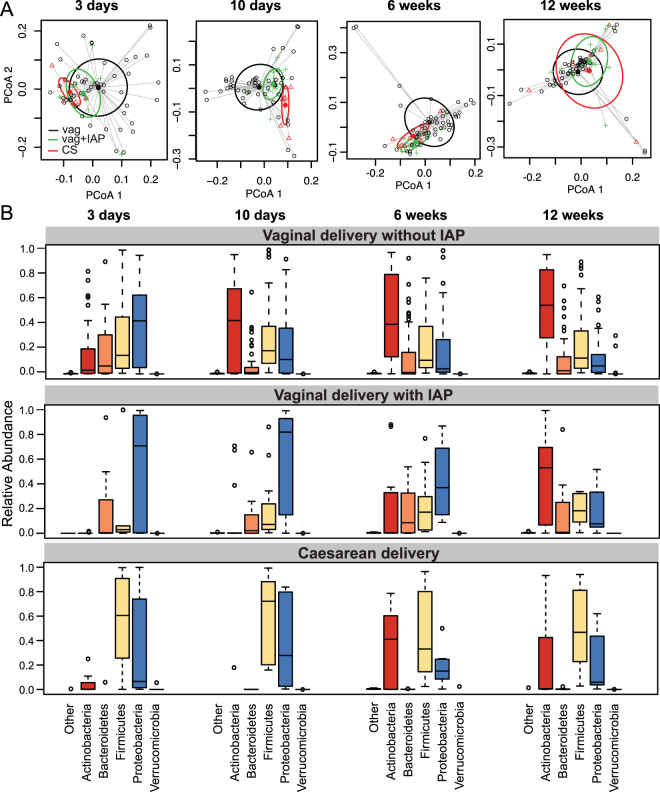
Early life microbial colonization and succession is critically important to healthy development with impacts on metabolic and immunologic processes throughout life. A longitudinal prospective cohort was recruited from midwifery practices to include infants born at full term gestation to women with uncomplicated pregnancies. Here we compare bacterial community succession in infants born vaginally, with no exposure to antibiotics (n = 53), with infants who were exposed to intrapartum antibiotic prophylaxis (IAP) for Group B Streptococcus (GBS; n = 14), and infants born by C-section (n = 7). Molecular profiles of the 16 S rRNA genes indicate that there is a delay in the expansion of Bifidobacterium, which was the dominate infant gut colonizer, over the first 12 weeks and a persistence of Escherichia when IAP for GBS exposure is present during vaginal labour. Longer duration of IAP exposure increased the magnitude of the effect on Bifidobacterium populations, suggesting a longer delay in microbial community maturation. As with prior studies, we found altered gut colonisation following C-section that included a notable lack of Bacteroidetes. This study found that exposure of infants to IAP for GBS during vaginal birth affected aspects of gut microbial ecology that, although dramatic at early time points, disappeared by 12 weeks of age in most infants.
Conflict of interest statement
The authors declare that they have no competing interests.
Figures

References
Publication types
MeSH terms
Substances
Grants and funding
LinkOut - more resources
Full Text Sources
Other Literature Sources
Medical
Research Materials
