


A craniofacial-specific monosynaptic circuit enables heightened affective pain
- PMID: 29184209
- PMCID: PMC5819335
- DOI: 10.1038/s41593-017-0012-1
A craniofacial-specific monosynaptic circuit enables heightened affective pain
Erratum in
-
Publisher Correction: A craniofacial-specific monosynaptic circuit enables heightened affective pain.Nat Neurosci. 2018 Jun;21(6):896. doi: 10.1038/s41593-018-0103-7. Nat Neurosci. 2018. PMID: 29549316
Abstract
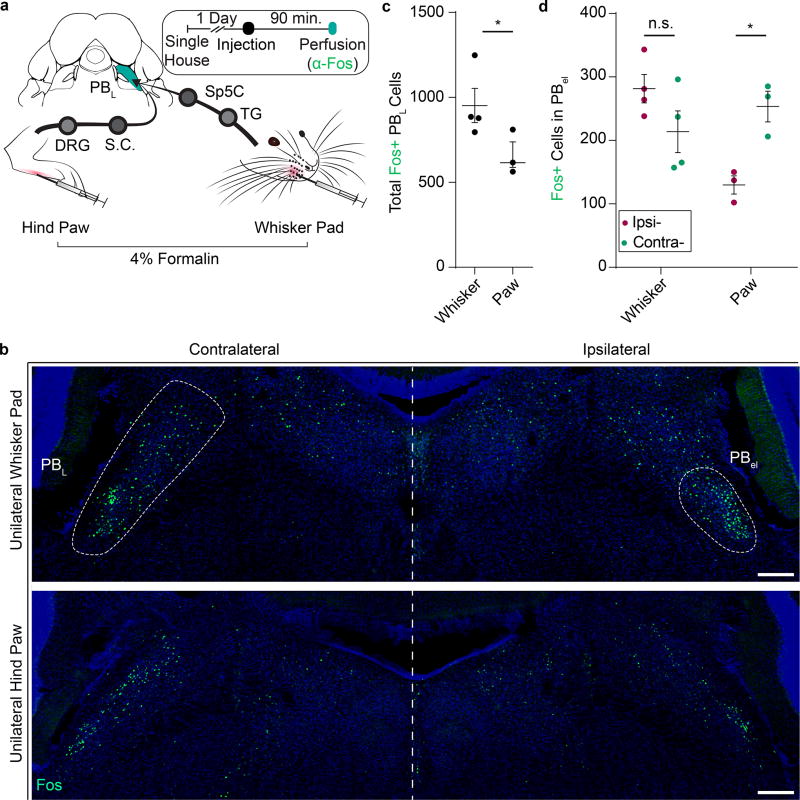
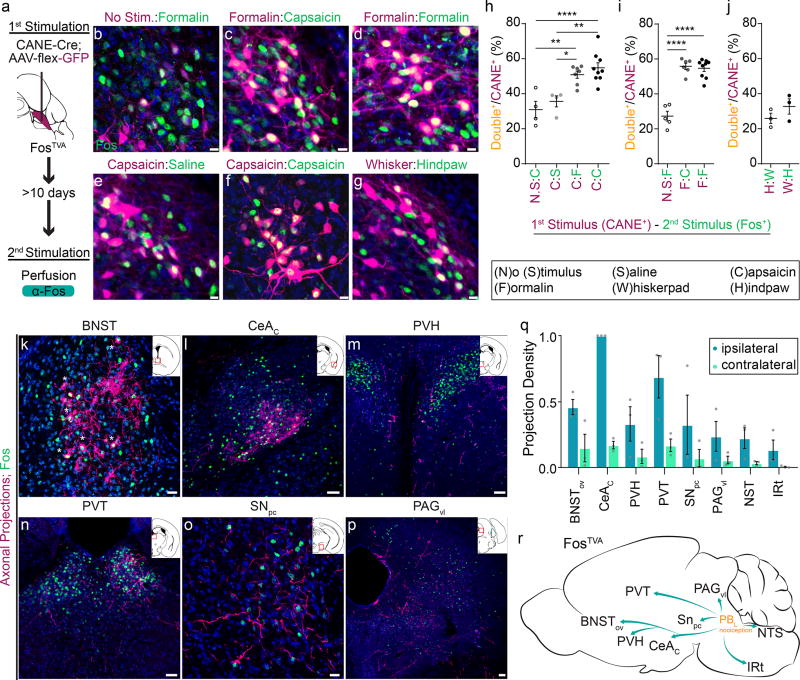
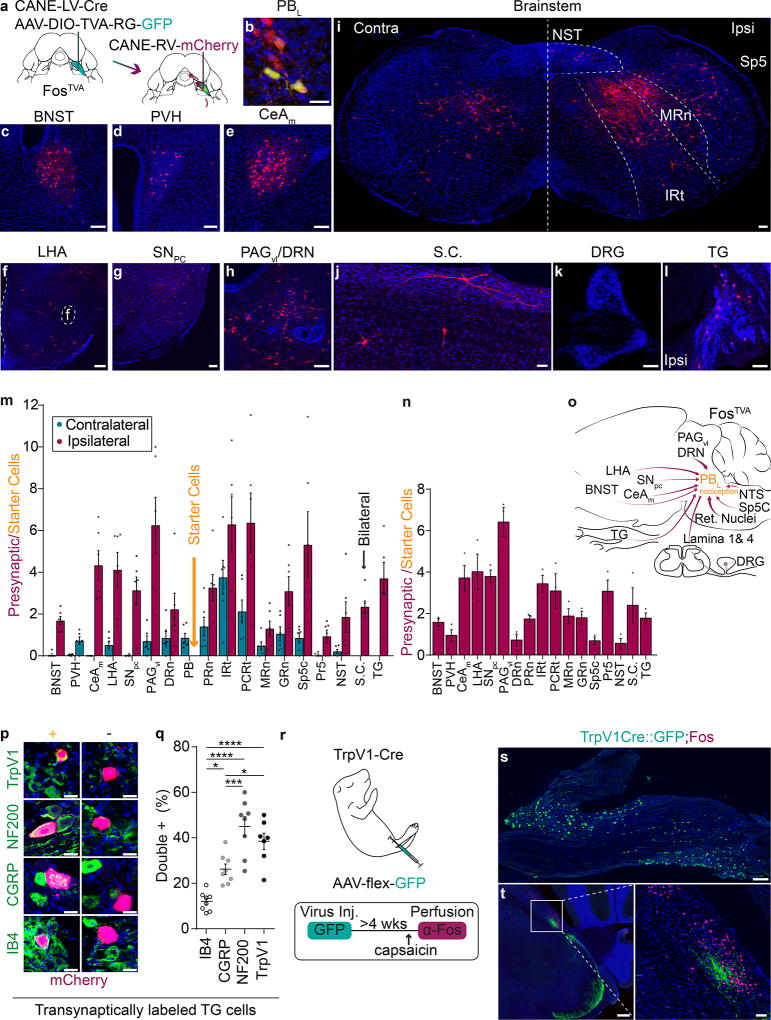
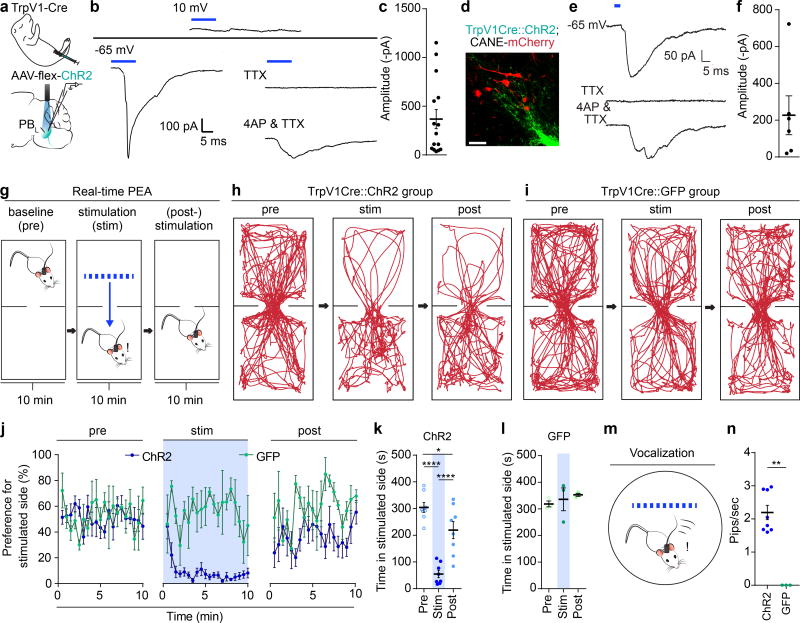
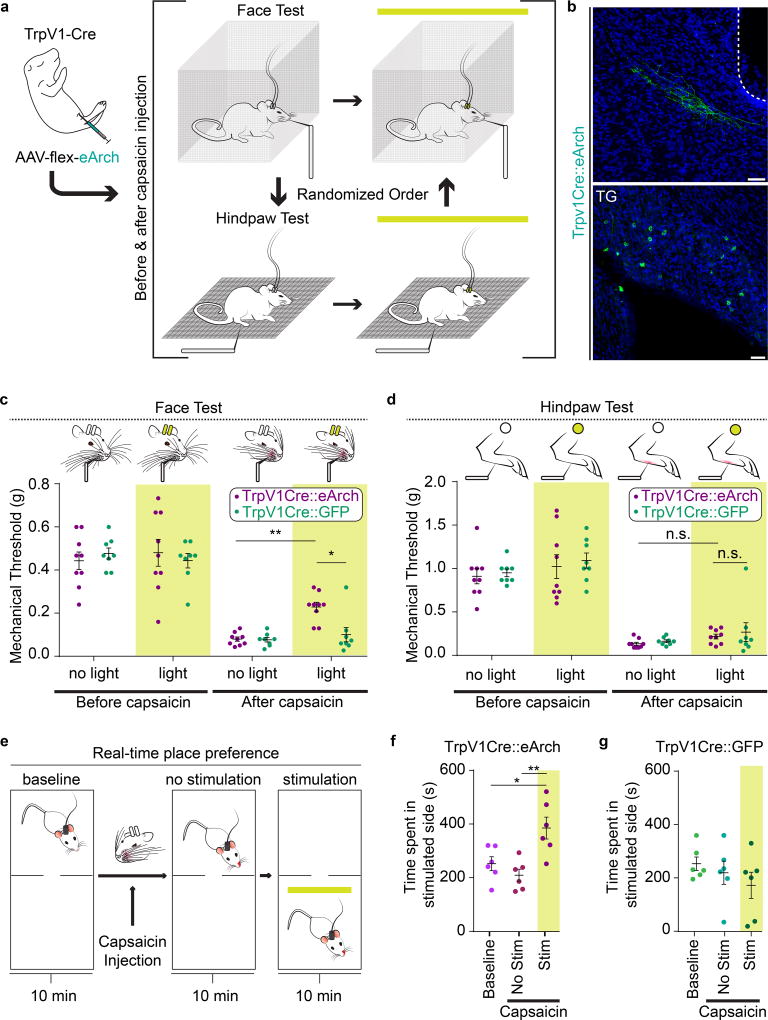
Humans often rank craniofacial pain as more severe than body pain. Evidence suggests that a stimulus of the same intensity induces stronger pain in the face than in the body. However, the underlying neural circuitry for the differential processing of facial versus bodily pain remains unknown. Interestingly, the lateral parabrachial nucleus (PBL), a critical node in the affective pain circuit, is activated more strongly by noxious stimulation of the face than of the hindpaw. Using a novel activity-dependent technology called CANE developed in our laboratory, we identified and selectively labeled noxious-stimulus-activated PBL neurons and performed comprehensive anatomical input-output mapping. Surprisingly, we uncovered a hitherto uncharacterized monosynaptic connection between cranial sensory neurons and the PBL-nociceptive neurons. Optogenetic activation of this monosynaptic craniofacial-to-PBL projection induced robust escape and avoidance behaviors and stress calls, whereas optogenetic silencing specifically reduced facial nociception. The monosynaptic circuit revealed here provides a neural substrate for heightened craniofacial affective pain.
Figures
References
-
- Waldman SD. Atlas of common pain syndromes. Elsevier Health Sciences; 2011.
-
- Zakrzewska JM, Wu J, Williams MM, Phillips N, Pavitt SH. Evaluating the impact of trigeminal neuralgia. Pain. 2017 - PubMed
-
- Smith JG, et al. The psychosocial and affective burden of posttraumatic neuropathy following injuries to the trigeminal nerve. Journal of orofacial pain. 2013;27:293–303. - PubMed
-
- Schmidt K, Schunke O, Forkmann K, Bingel U. Enhanced Short-Term Sensitization of Facial Compared With Limb Heat Pain. The Journal of Pain. 2015;16:781–790. - PubMed
-
- Schmidt K, et al. The differential effect of trigeminal vs. peripheral pain stimulation on visual processing and memory encoding is influenced by pain-related fear. NeuroImage. 2016;134:386–395. - PubMed
MeSH terms
Grants and funding
LinkOut - more resources
Full Text Sources
Other Literature Sources
Molecular Biology Databases
Research Materials
