Review of Prader-Willi syndrome: the endocrine approach
- PMID: 29184809
- PMCID: PMC5682385
- DOI: 10.21037/tp.2017.09.04
Review of Prader-Willi syndrome: the endocrine approach
Abstract
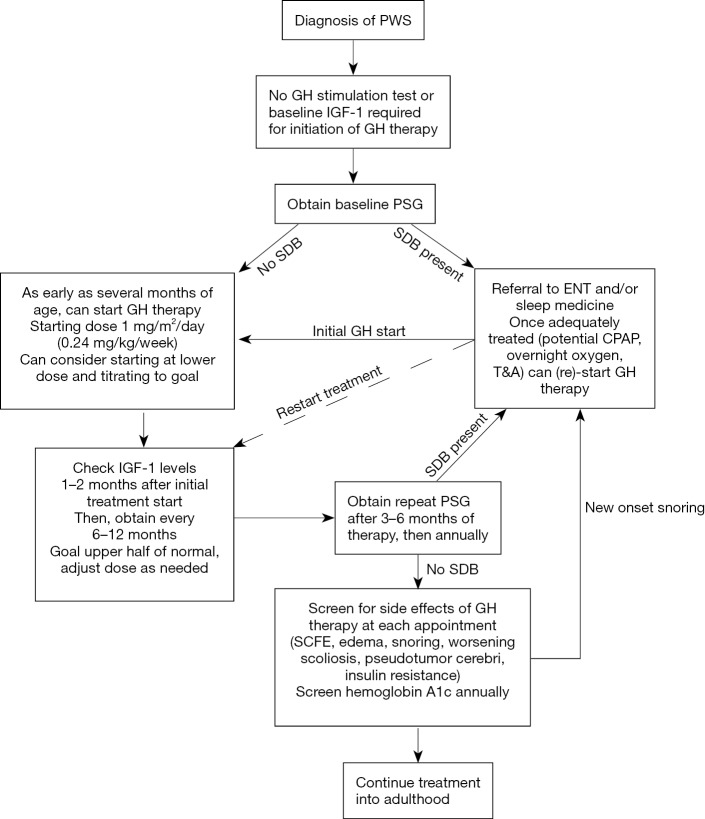
Prader-Willi syndrome (PWS) is a complex genetic disorder with implications on the endocrine and neurologic systems, metabolism, and behavior. Early in life, PWS is characterized by hypotonia and failure to thrive, followed by obesity and hyperphagia. Patients with PWS develop hypothalamic dysfunction which may lead growth hormone deficiency (GHD), hypogonadism, hypothyroidism, adrenal insufficiency, and poor bone mineral density (BMD). In addition to hypothalamic dysfunction, individuals with PWS have increased risk for obesity which may be complicated by metabolic syndrome and type 2 diabetes mellitus (T2DM). In this paper, we will review the current literature pertaining to the endocrine concerns of PWS and current recommendations for screening and management of these conditions.
Keywords: Endocrinology; Prader-Willi syndrome (PWS); review.
Conflict of interest statement
Conflicts of Interest: The authors have no conflicts of interest to declare.
Figures
References
Publication types
LinkOut - more resources
Full Text Sources
Other Literature Sources