


Systematic Review and Meta-Analysis of Human Skin Diseases Due to Particulate Matter
- PMID: 29186837
- PMCID: PMC5750877
- DOI: 10.3390/ijerph14121458
Systematic Review and Meta-Analysis of Human Skin Diseases Due to Particulate Matter
Abstract
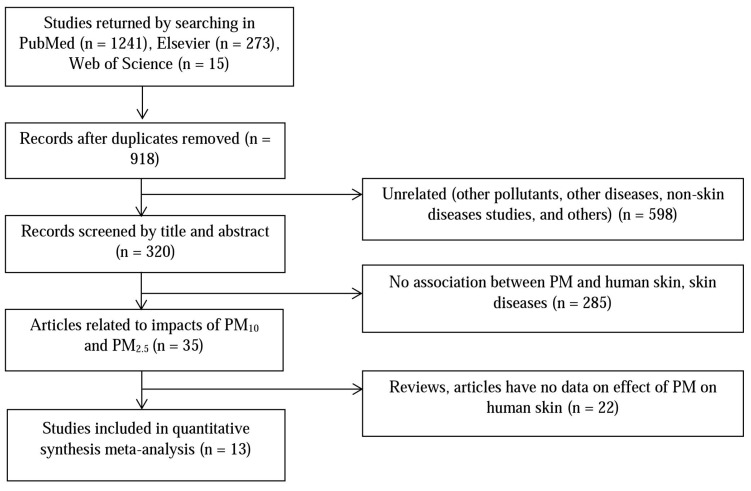
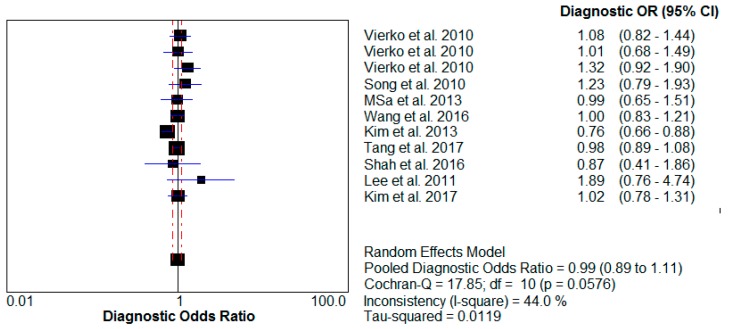
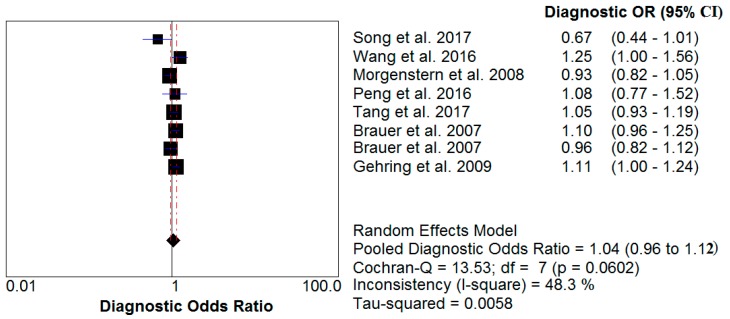
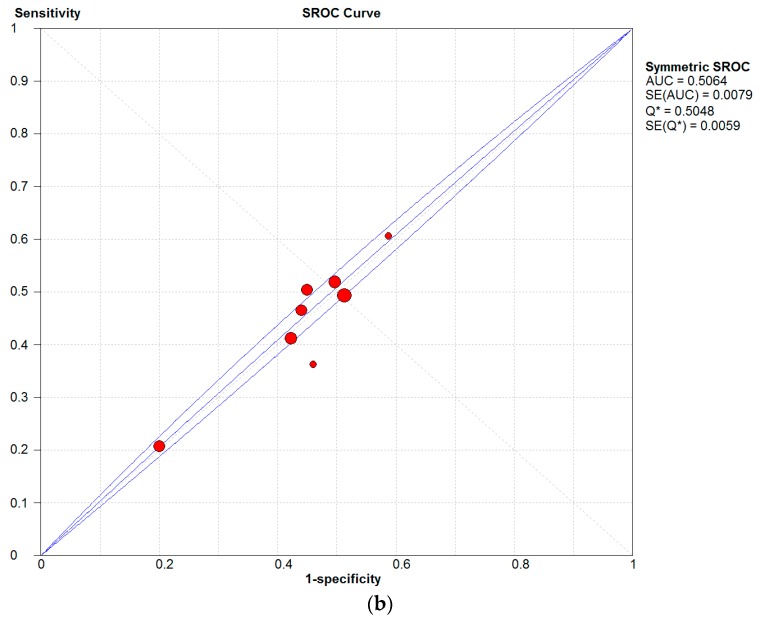
This study investigated the effects of particulate matter (PM) on human skin diseases by conducting a systematic review of existing literature and performing a meta-analysis. It considered articles reporting an original effect of PM on human skin. From among 918 articles identified, 13 articles were included for further consideration after manual screening of the articles resulted in the exclusion of articles that did not contain data, review articles, editorials, and also articles in languages other than English. Random-effects models and forest plots were used to estimate the effect of PM on the skin by Meta-Disc analysis. According to people's reports of exposure and negative skin effects (atopic dermatitis (AD), eczema, and skin aging, etc.) due to air pollution, the summary relative risk (odds ratio) of PM10 was determined to be 0.99 (95% confidence interval (CI) 0.89-1.11) whereas PM2.5 was determined to be 1.04 (95% CI 0.96-1.12). Simultaneously, there was a different extent of impact between PM10 and PM2.5 on atopic dermatitis (AD) for those of young age: the odds ratio of PM10 and PM2.5 were 0.96 (95% CI 0.83-1.11; I² = 62.7%) and 1.05 (95% CI 0.95-1.16; I² = 46%), respectively. Furthermore, the results suggest an estimated increase of disease incidence per 10 μg/m³ PM of 1.01% (0.08-2.05) due to PM10 and 1.60% (0.45-2.82) due to PM2.5. Following the results, PM10 and PM2.5 are associated with increased risks of human skin diseases, especially AD, whose risk is higher in infants and school children. With its smaller size and a high concentration of metals, PM2.5 is more closely related to AD in younger people, compared to PM10.
Keywords: PM10; PM2.5; human skin diseases; meta-analysis; particulate matter (PM).
Conflict of interest statement
The authors declare that they have no competing interests.
Figures
References
-
- SOGA . State of Global Air. A Special Report on Global Exposure to Air Pollution and Its Disease Burden. Health Effects Institute; Cambridge, MA, USA: 2017. pp. 1–15.
-
- WHO Ambient (Outdoor) Air Quality and Health. [(accessed on 5 July 2017)]; Available online: http://www.who.int/mediacentre/factsheets/fs313/en/
-
- Noh J., Sohn J., Cho J., Cho S.K., Choi Y.J., Kim C., Shin D.C. Short-term effects of ambient air pollution on emergency department visits for asthma: An assessment of effect modification by prior allergic disease history. J. Prev. Med. Public Health. 2016;49:329–341. doi: 10.3961/jpmph.16.038. - DOI - PMC - PubMed
Publication types
MeSH terms
Substances
LinkOut - more resources
Full Text Sources
Other Literature Sources
Medical
