


Estimating Free and Added Sugar Intakes in New Zealand
- PMID: 29186927
- PMCID: PMC5748743
- DOI: 10.3390/nu9121292
Estimating Free and Added Sugar Intakes in New Zealand
Erratum in
-
Erratum: Estimating Free and Added Sugar Intakes in New Zealand; Nutrients 2017, 9, 1292.Nutrients. 2018 May 18;10(5):638. doi: 10.3390/nu10050638. Nutrients. 2018. PMID: 29783664 Free PMC article.
Abstract
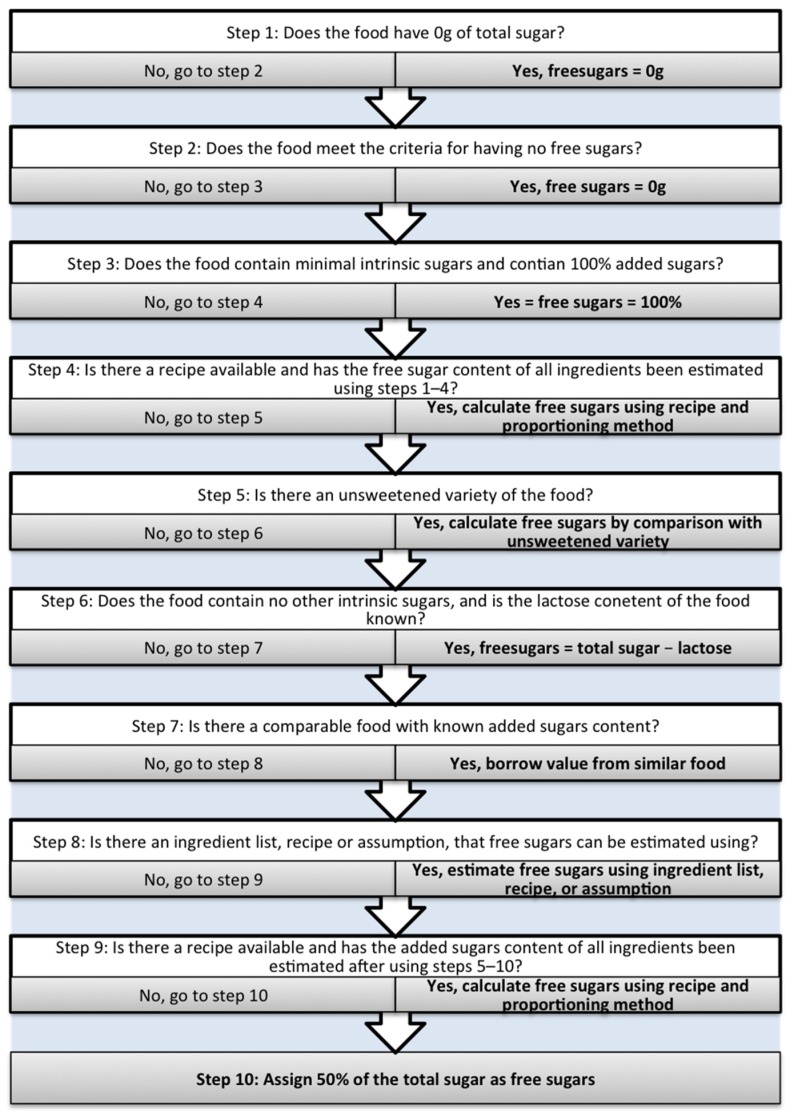
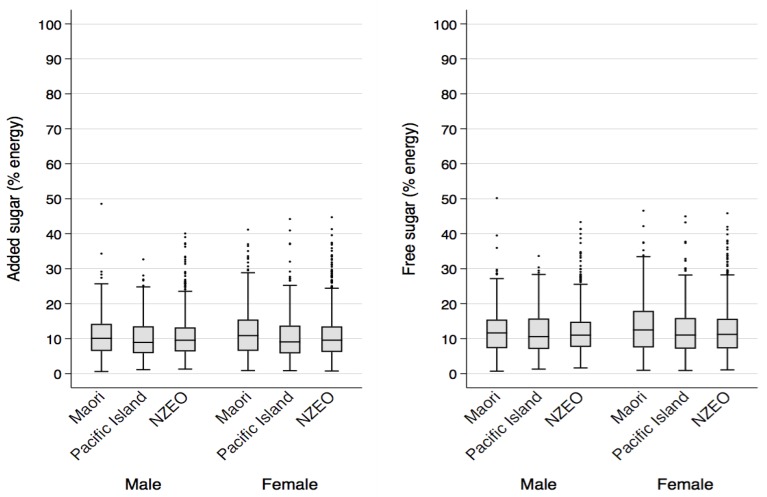
The reduction of free or added sugar intake (sugars added to food and drinks as a sweetener) is almost universally recommended to reduce the risk of obesity-related diseases and dental caries. The World Health Organisation recommends intakes of free sugars of less than 10% of energy intake. However, estimating and monitoring intakes at the population level is challenging because free sugars cannot be analytically distinguished from naturally occurring sugars and most national food composition databases do not include data on free or added sugars. We developed free and added sugar estimates for the New Zealand (NZ) food composition database (FOODfiles 2010) by adapting a method developed for Australia. We reanalyzed the 24 h recall dietary data collected for 4721 adults aged 15 years and over participating in the nationally representative 2008/09 New Zealand Adult Nutrition Survey to estimate free and added sugar intakes. The median estimated intake of free and added sugars was 57 and 49 g/day respectively and 42% of adults consumed less than 10% of their energy intake from free sugars. This approach provides more direct estimates of the free and added sugar contents of New Zealand foods than previously available and will enable monitoring of adherence to free sugar intake guidelines in future.
Keywords: New Zealand; added sugars; carbohydrate; dietary guidelines; dietary intake; dietary sugars; free sugars; nutrition recommendations; population survey; sucrose.
Conflict of interest statement
The authors declare no conflict of interest.
Figures
References
MeSH terms
Substances
LinkOut - more resources
Full Text Sources
Other Literature Sources
