


"It wasn't as bad as I thought it would be": a qualitative study of early stage non-small cell lung cancer patients after treatment
- PMID: 29187237
- PMCID: PMC5708159
- DOI: 10.1186/s13104-017-2956-3
"It wasn't as bad as I thought it would be": a qualitative study of early stage non-small cell lung cancer patients after treatment
Abstract
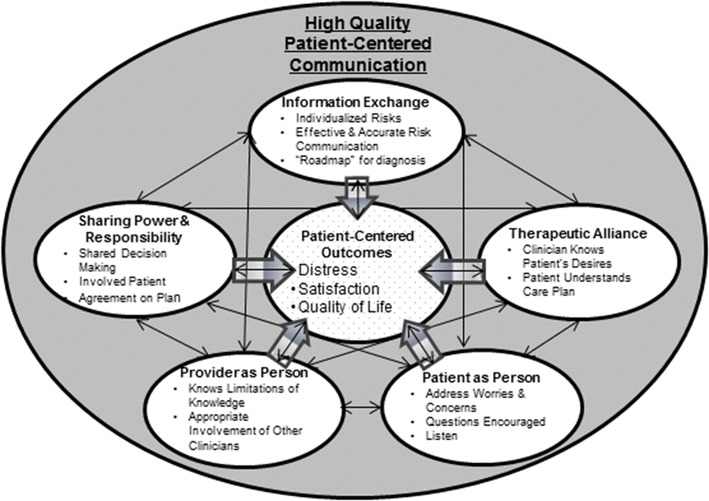
Objective: While surgical resection is recommended for most patients with early stage lung cancer, stereotactic body radiotherapy (SBRT) is being increasingly utilized. Provider-patient communication regarding risks/benefits of each approach may be a modifiable factor leading to improved patient-centered outcomes. Our objective was to determine a framework and recommended strategies on how to best communicate with patients with early stage non-small cell lung cancer (NSCLC) in the post-treatment setting. We qualitatively evaluated the experiences of 11 patients with early clinical stage NSCLC after treatment, with a focus on treatment experience, knowledge obtained, communication, and recommendations. We used conventional content analysis and a patient-centered communication theoretical model to guide our understanding.
Results: Five patients received surgery and six received SBRT. Both treatments were generally well-tolerated. Few participants reported communication deficits around receiving follow-up information, although several had remaining questions about their treatment outcome (mainly those who underwent SBRT). They described feeling anxious regarding their first surveillance CT scan and clinician visit. Overall, participants remained satisfied with care because of implicit trust in their clinicians rather than explicit communication. Communication gaps remain but may be addressed by a trusting relationship with the clinician. Patients recommend clinicians give thorough explanations and personalize when possible.
Keywords: Communication; Patient-centered outcomes; Thoracic diseases.
References
-
- Louie AV, van Werkhoven E, Chen H, et al. Patient reported outcomes following stereotactic ablative radiotherapy or surgery for stage IA non-small-cell lung cancer: results from the ROSEL multicenter randomized trial. Radiother Oncol. 2015;117:44–48. doi: 10.1016/j.radonc.2015.08.011. - DOI - PubMed
MeSH terms
Grants and funding
LinkOut - more resources
Full Text Sources
Other Literature Sources
Medical
Research Materials
