


The Skull of Epidolops ameghinoi from the Early Eocene Itaboraí Fauna, Southeastern Brazil, and the Affinities of the Extinct Marsupialiform Order Polydolopimorphia
- PMID: 29187780
- PMCID: PMC5684316
- DOI: 10.1007/s10914-016-9357-6
The Skull of Epidolops ameghinoi from the Early Eocene Itaboraí Fauna, Southeastern Brazil, and the Affinities of the Extinct Marsupialiform Order Polydolopimorphia
Abstract
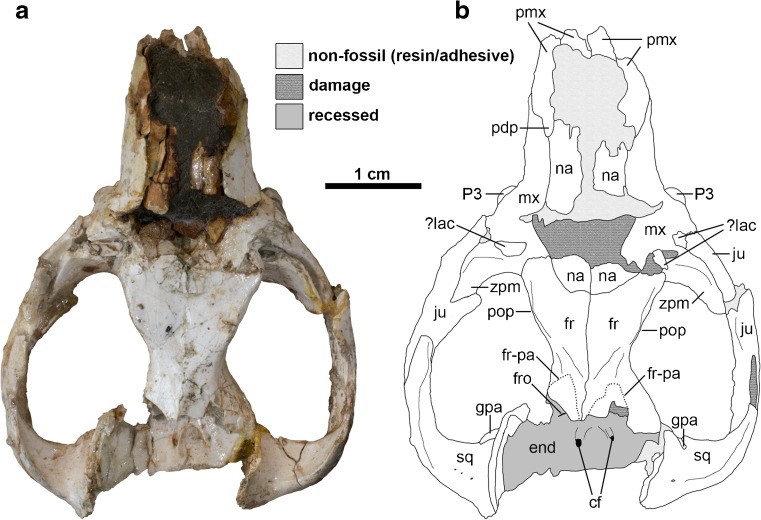
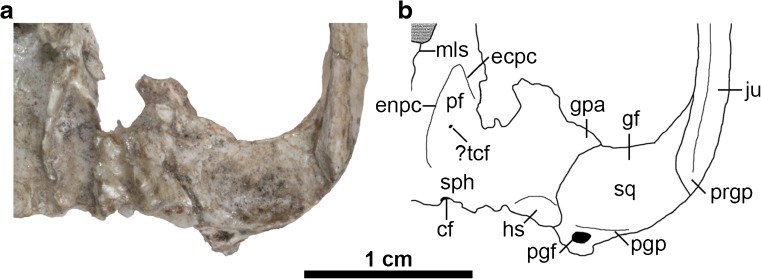
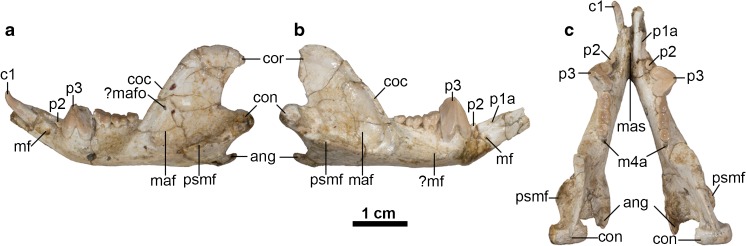
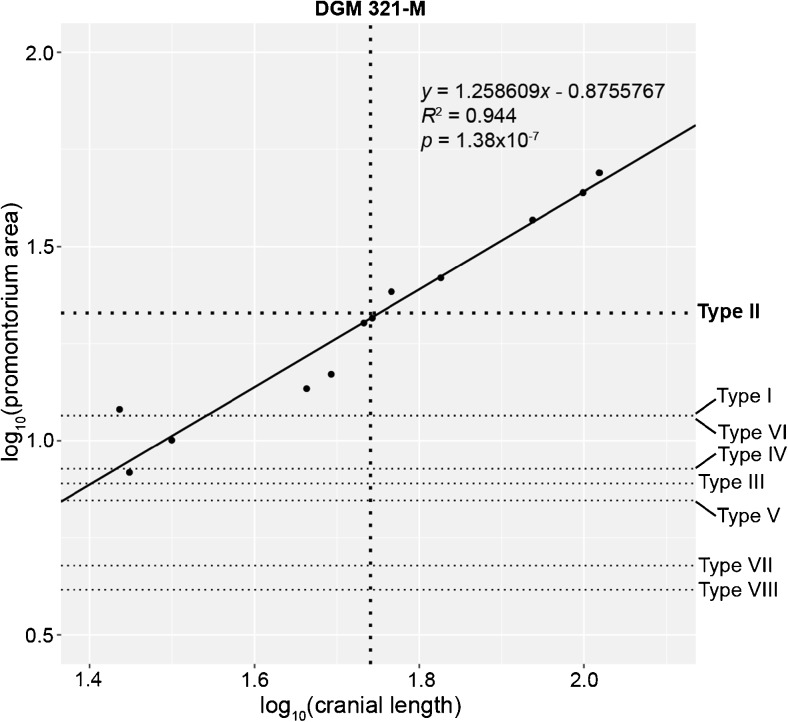
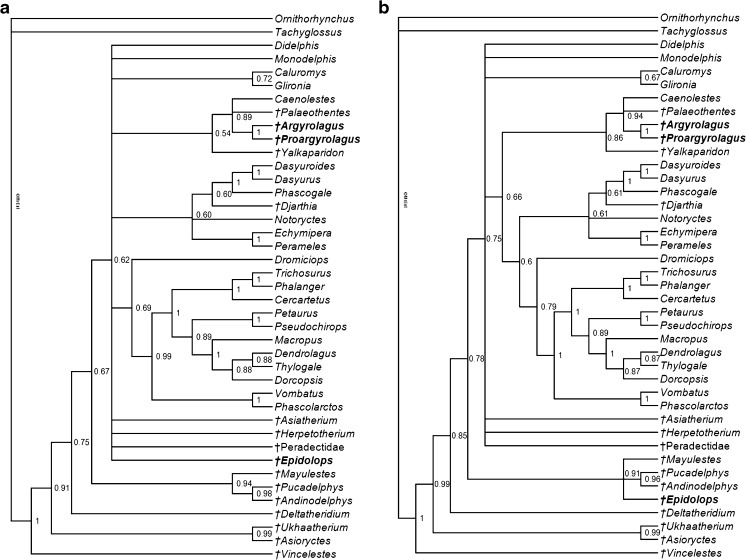
The skull of the polydolopimorphian marsupialiform Epidolops ameghinoi is described in detail for the first time, based on a single well-preserved cranium and associated left and right dentaries plus additional craniodental fragments, all from the early Eocene (53-50 million year old) Itaboraí fauna in southeastern Brazil. Notable craniodental features of E. ameghinoi include absence of a masseteric process, very small maxillopalatine fenestrae, a prominent pterygoid fossa enclosed laterally by a prominent ectopterygoid crest, an absent or tiny transverse canal foramen, a simple, planar glenoid fossa, and a postglenoid foramen that is immediately posterior to the postglenoid process. Most strikingly, the floor of the hypotympanic sinus was apparently unossified, a feature found in several stem marsupials but absent in all known crown marsupials. "Type II" marsupialiform petrosals previously described from Itaboraí plausibly belong to E. ameghinoi; in published phylogenetic analyses, these petrosals fell outside (crown-clade) Marsupialia. "IMG VII" tarsals previously referred to E. ameghinoi do not share obvious synapomorphies with any crown marsupial clade, nor do they resemble those of the only other putative polydolopimorphians represented by tarsal remains, namely the argyrolagids. Most studies have placed Polydolopimorphia within Marsupialia, related to either Paucituberculata, or to Microbiotheria and Diprotodontia. However, diprotodonty almost certainly evolved independently in polydolopimorphians, paucituberculatans and diprotodontians, and Epidolops does not share obvious synapomorphies with any marsupial order. Epidolops is dentally specialized, but several morphological features appear to be more plesiomorphic than any crown marsupial. It seems likely Epidolops that falls outside Marsupialia, as do morphologically similar forms such as Bonapartherium and polydolopids. Argyrolagids differ markedly in their known morphology from Epidolops but share some potential apomorphies with paucituberculatans. It is proposed that Polydolopimorphia as currently recognised is polyphyletic, and that argyrolagids (and possibly other taxa currently included in Argyrolagoidea, such as groeberiids and patagoniids) are members of Paucituberculata. This hypothesis is supported by Bayesian non-clock phylogenetic analyses of a total evidence matrix comprising DNA sequence data from five nuclear protein-coding genes, indels, retroposon insertions, and morphological characters: Epidolops falls outside Marsupialia, whereas argyrolagids form a clade with the paucituberculatans Caenolestes and Palaeothentes, regardless of whether the Type II petrosals and IMG VII tarsals are used to score characters for Epidolops or not. There is no clear evidence for the presence of crown marsupials at Itaboraí, and it is possible that the origin and early evolution of Marsupialia was restricted to the "Austral Kingdom" (southern South America, Antarctica, and Australia).
Keywords: Argyrolagidae; Eocene; Epidolops; Itaboraí; Marsupialia; Marsupialiformes; Polydolopimorphia.
Figures





References
-
- Abbie AA. A masticatory adaptation peculiar to some diprotodont marsupials. Proc Zool Soc Lond. 1939;B109(2):261–279.
-
- Abello MA. Analysis of dental homologies and phylogeny of Paucituberculata (Mammalia: Marsupialia) Biol J Linn Soc. 2013;109(2):441–465.
-
- Abello MA, Candela AM. Postcranial skeleton of the Miocene marsupial Palaeothentes (Paucituberculata, Palaeothentidae): paleobiology and phylogeny. J Vertebr Paleontol. 2010;30(5):1515–1527.
-
- Abello MA, Rubilar-Rogers D. Revisión del género Abderites Ameghino, 1887 (Marsupialia, Paucituberculata) Ameghiniana. 2012;48(3):605–620.
-
- Ameghino F. Notices préliminaires sur les mammifères nouveaux des terrains crétacés de Patagonie. Boletín de la Academia Nacional de Ciencias de Córdoba. 1902;17:5–70.
LinkOut - more resources
Full Text Sources
Other Literature Sources