


Cardiac structure and function in elite Native Hawaiian and Pacific Islander Rugby Football League athletes: an exploratory study
- PMID: 29189933
- PMCID: PMC5889413
- DOI: 10.1007/s10554-017-1285-x
Cardiac structure and function in elite Native Hawaiian and Pacific Islander Rugby Football League athletes: an exploratory study
Abstract
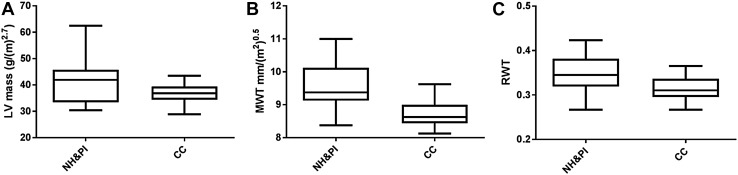
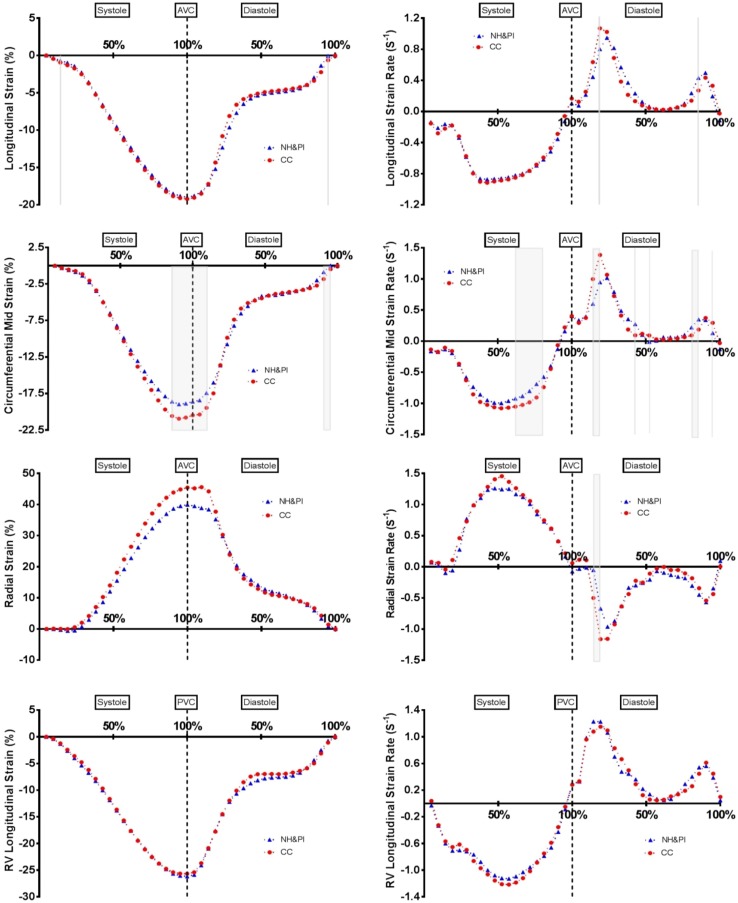
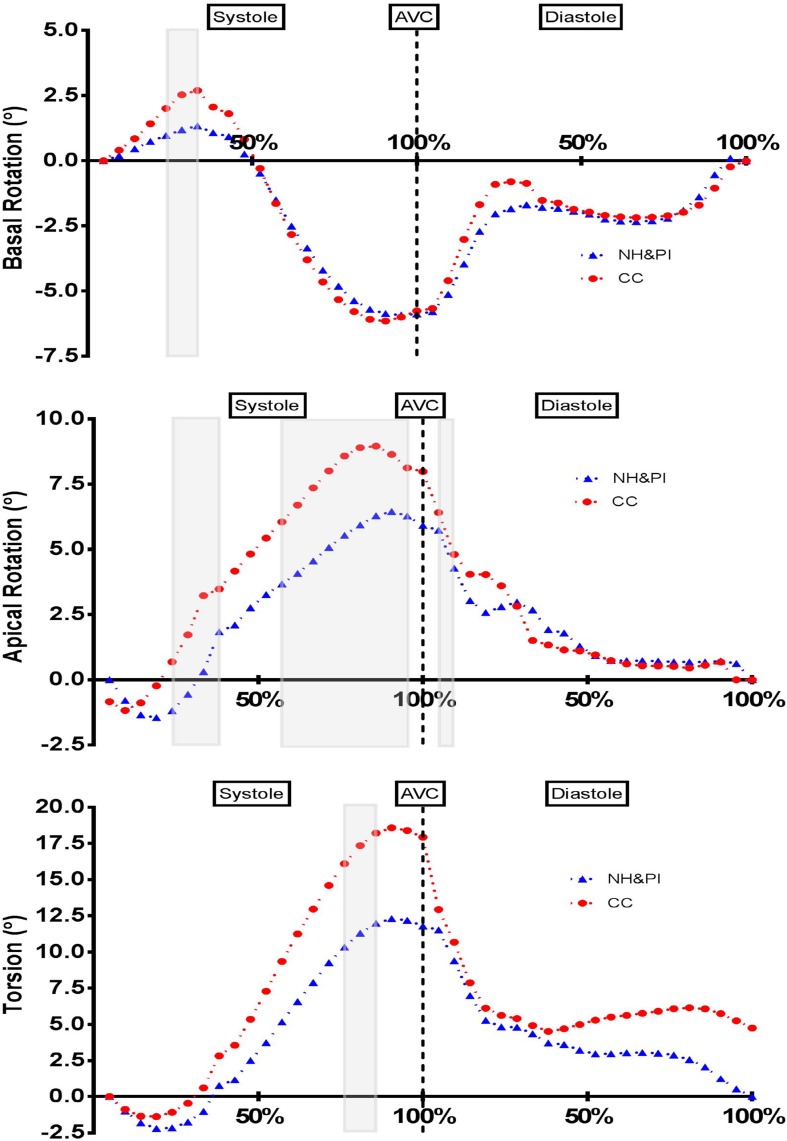
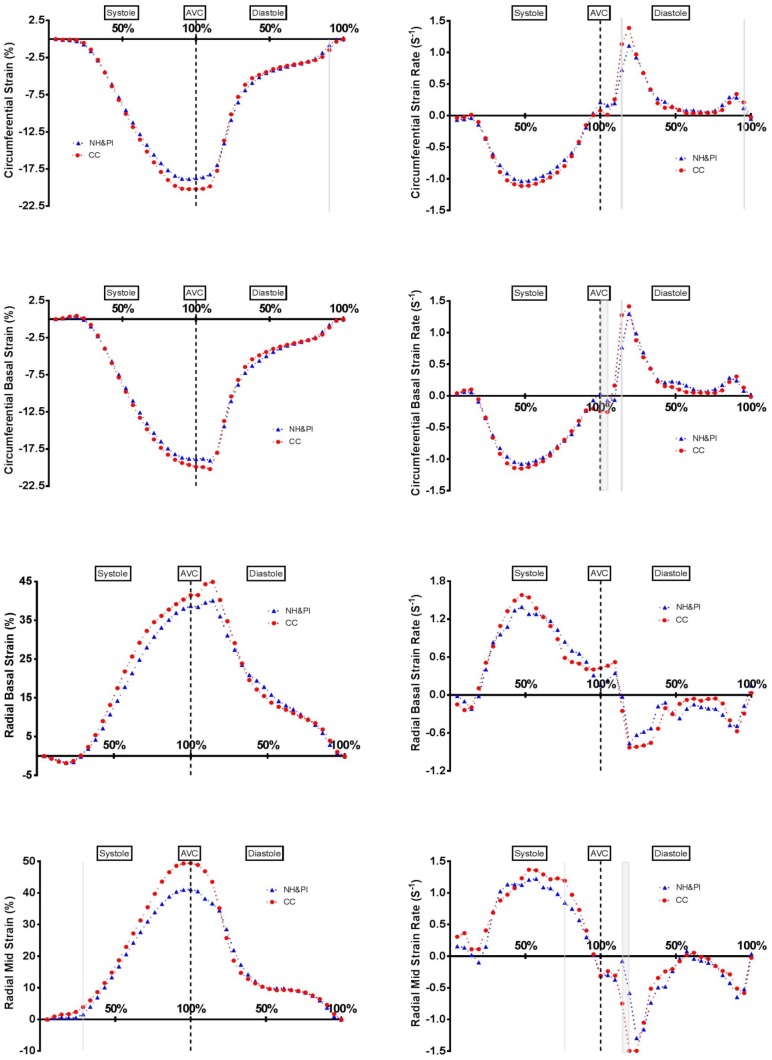
The aim of this exploratory study was to define the Athletes Heart (AH) phenotype in Native Hawaiian & Pacific Islander (NH&PI) Rugby Football League (RFL) athletes. Specifically, (1) to describe conventional echocardiographic indices of left ventricle (LV) and right ventricle (RV) structure and function in NH&PI RFL players and matched RFL Caucasian controls (CC) and (2) to demonstrate LV and RV mechanics in these populations. Ethnicity is a contributory factor to the phenotypical expression of the AH. There are no data describing the cardiac phenotype in NH&PI athletes. Twenty-one male elite NH&PI RFL athletes were evaluated using conventional echocardiography and myocardial speckle tracking, allowing the assessment of global longitudinal strain (ε) and strain rate (SR); and basal, mid and global radial and circumferential ε and SR. Basal and apical rotation and twist were also assessed. Results were compared with age-matched Caucasian counterparts (CC; n = 21). LV mass [42 ± 9 versus 37 ± 4 g/(m2.7)], mean LV wall thickness (MWT: 9.5 ± 0.7 and 8.7 ± 0.4 mm), relative wall thickness (RWT: 0.35 ± 0.04 and 0.31 ± 0.03) and RV wall thickness (5 ± 1 and 4 ± 1 mm, all p < 0.05) were greater in NH&PI compared with CC. LV and RV cavity dimensions and standard indices of LV and RV systolic and diastolic function were similar between groups. NH&PI demonstrated reduced peak LV mid circumferential ε and early diastolic SR, as well as reduced global radial ε. There was reduced basal rotation at 25-35% systole, reduced apical rotation at 25-40% and 60-100% systole and reduced twist at 85-95% systole in NH&PI athletes. There were no differences between the two groups in RV wall mechanics. When compared to Caucasian controls, NH&PI rugby players have a greater LV mass, MWT and RWT with concomitant reductions in circumferential and twist mechanics. This data acts to prompt further research in NH&PI athletes.
Keywords: Athletes heart; Echocardiography; Ethnicity; Left ventricle; Right ventricle; Strain imaging.
Conflict of interest statement
Conflict of interest
The authors declare that they have no conflict of interest.
Ethical approval
All procedures performed in studies involving human participants were in accordance with the ethical standards of the institutional and/or national research committee and with the 1964 Helsinki declaration and its later amendments or comparable ethical standards.
Informed consent
Informed consent was obtained from all individual participants included in the study.
Figures
References
-
- Prior DL, La Gerche A (2012) The athlete’s heart. Heart 98: 947 – 55 - PubMed
-
- Basavarajaiah S, Boraita A, Whyte G, Wilson M, Carby L, Shah A, et al. Ethnic differences in left ventricular remodelling in highly-trained athletes relevance to differentiating physiologic left ventricular hypertrophy from hypertrophic cardiomyopathy. J Am Coll Cardiol. 2008;51:2256–2262. doi: 10.1016/j.jacc.2007.12.061. - DOI - PubMed
MeSH terms
LinkOut - more resources
Full Text Sources
Other Literature Sources
Research Materials
Miscellaneous
